Why Preparing Your HVAC for the Transition to Cooling Matters
Preparing your HVAC for the transition to cooling is one of the smartest things you can do as a homeowner before summer heat arrives in Greenville, IN. Nearly half of all the energy used in a typical home goes toward heating and cooling — so a system that isn't ready for the season can quietly drain your wallet before you even notice.
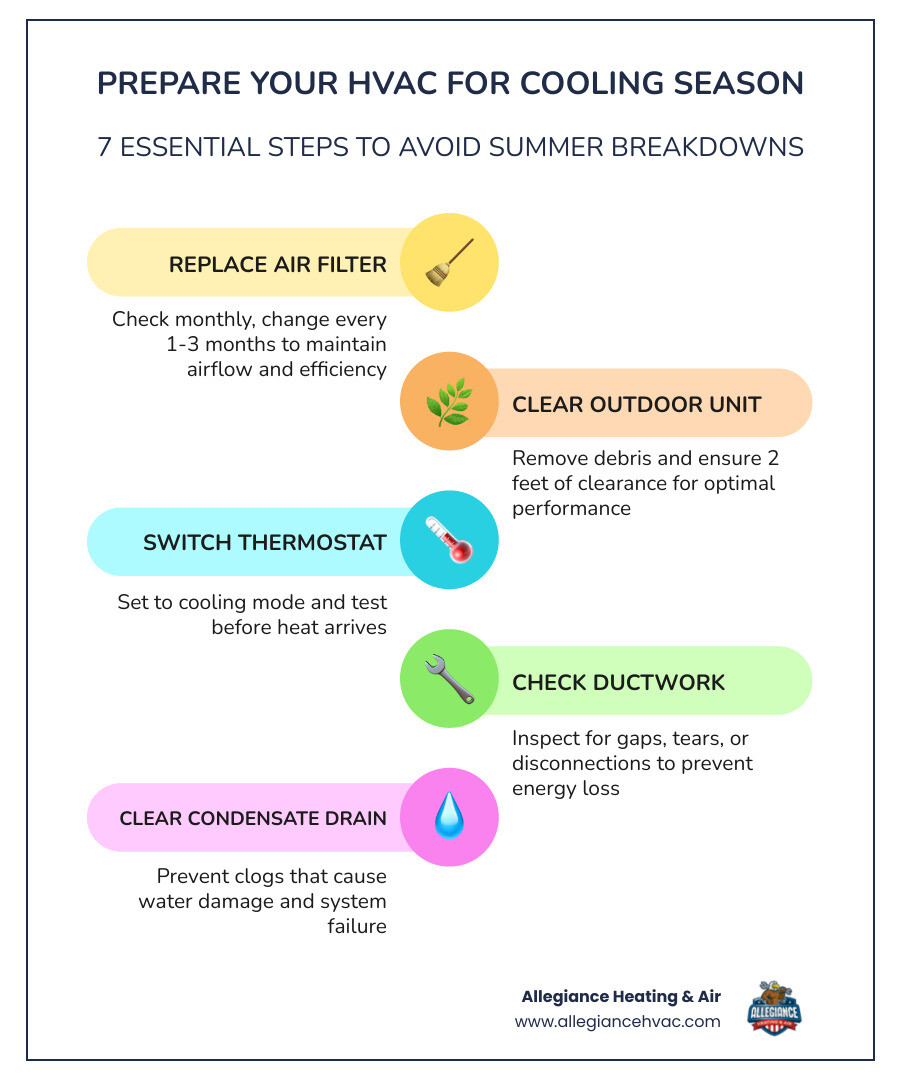
Here's a quick overview of the key steps to get your system cooling-ready:
1. Replace your air filter - Check it monthly; change it at least every 1-3 months
2. Clear the outdoor condenser unit - Remove debris and maintain at least 2 feet of clearance around the unit
3. Switch your thermostat to cooling mode - Test it before temperatures spike
4. Check your ductwork - Look for visible gaps, tears, or disconnected sections
5. Clear the condensate drain line - Prevent clogs before they cause water damage
6. Seal air leaks - Weatherstrip doors and windows to keep cool air in
7. Schedule a professional tune-up - Have a technician check refrigerant levels, clean coils, and inspect electrical components
Most homeowners don't think about their AC until the first hot day — and that's exactly when problems show up. A little preparation in early spring means your system runs efficiently, your home stays comfortable, and you avoid emergency service calls when demand is highest.
Why Preparing Your HVAC for the Transition to Cooling is Essential
When the temperatures start to climb across Floyd and Clark Counties, your HVAC system undergoes a massive shift in responsibility. During the winter, it worked to generate and distribute heat; now, it must pull heat out of your home and manage humidity. This "big switch" is a stress test for any mechanical system.
System Reliability and Longevity
Think of your air conditioner like a car about to go on a cross-country road trip. You wouldn't just hop in and drive 2,000 miles without checking the oil and tires. Similarly, Regular Maintenance for AC Matters because it identifies small wear-and-tear issues—like a frayed fan belt or a struggling capacitor—before they turn into a total system failure on a 90-degree afternoon. By taking these steps, you are effectively prolonging your AC's lifespan.
Lower Utility Bills
Efficiency is the name of the game. A system that is struggling against dirty coils or clogged filters has to run longer and work harder to reach your desired temperature. Statistics show that improper installation or poor maintenance can reduce system efficiency by up to 30%. By preparing your hvac for the transition to cooling, you ensure that every watt of electricity you pay for actually goes toward cooling your home, not just fighting internal friction and buildup.
Indoor Air Quality
During the transition, dust and allergens that settled during the winter can be kicked up and circulated through your home. Taking the time to follow Ways to Make Sure Your HVAC System is Ready for Summer includes cleaning the "lungs" of your home. This prevents mold growth in damp areas and keeps pollen and dust from triggering seasonal allergies for your family.
Essential DIY Steps for Your Spring HVAC Checklist
While some tasks require a pro, there is plenty you can do yourself to get the ball rolling. We recommend starting your HVAC Spring Checklist as soon as the threat of the last frost has passed.
Preparing Your HVAC for the Transition to Cooling: The Outdoor Unit
The outdoor condenser unit is the workhorse of your cooling system. Over the winter, it likely collected leaves, twigs, and maybe even some wind-blown trash.
• Clear the Perimeter: Ensure there is at least a two-foot "dead zone" around the unit. Trim back any shrubs, tall grass, or flowers that have grown too close. Your AC needs to "breathe" to release the heat it gathered from inside.
• Debris Removal: Turn off the power to the unit at the outdoor disconnect box. Use a gloved hand to remove any large debris from the top or sides.
• Gently Hose the Coils: Using a garden hose (not a pressure washer, which can damage the delicate fins), gently spray the exterior coils to wash away dust and pollen.
• Inspect the Fins: Look for bent aluminum fins. While minor bending is normal, widespread damage can block airflow.
Inspecting and Replacing Air Filters
This is arguably the most important DIY task. A dirty filter restricts airflow, which can cause your indoor evaporator coil to freeze over, potentially damaging the compressor—the most expensive part of your system.
When selecting a filter, look at the MERV (Minimum Efficiency Reporting Value) rating. For most homes in the Louisville and Southern Indiana area, a MERV rating between 8 and 11 provides a great balance between air filtration and system airflow. High-MERV filters (13+) are great for allergies but can sometimes be too restrictive for older systems. Always check your owner's manual for compatibility. Following these essential air conditioner maintenance steps will keep your air fresh and your equipment safe.
DIY Maintenance Tool List:
• Garden hose (for the outdoor unit)
• Screwdriver (to check vent covers)
• Vacuum with brush attachment (for indoor registers)
• New air filters (correct size for your unit)
• Vinegar and water (for the condensate drain line)
Optimizing Airflow and Thermostat Settings for Efficiency
Once the hardware is clean, it’s time to look at the "brain" of your system: the thermostat. How you manage your settings can lead to massive savings.
Smart Strategies for Preparing Your HVAC for the Transition to Cooling
The Department of Energy suggests that the closer your indoor temperature is to the outdoor temperature, the lower your bill will be.
• The Golden Number: Aim for 78°F when you are home. While it might sound warm, utilizing ceiling fans can make a room feel up to 4 degrees cooler through the "wind chill effect."
• The "Away" Buffer: When you leave for work, don't turn the AC off entirely. Instead, raise it by 7-10 degrees. This prevents the house from becoming a "heat soak" that takes hours to cool back down.
• Thermostat Placement: Ensure your thermostat isn't near a lamp, a sunny window, or a kitchen appliance. If it "feels" extra heat from these sources, it will tell the AC to run even when the rest of the house is cool.
For those looking for efficient home cooling solutions, upgrading to a smart thermostat is a game-changer. These devices can save approximately $100 a year by automatically adjusting to your schedule.
• Energy Savings — Manual Thermostat: Low (depends on user) — Smart Thermostat: High (automatic optimization)
• Remote Access — Manual Thermostat: No — Smart Thermostat: Yes (via smartphone)
• Learning Capability — Manual Thermostat: No — Smart Thermostat: Yes (adapts to your habits)
• Humidity Control — Manual Thermostat: Limited — Smart Thermostat: Advanced
Sealing Leaks and Improving Insulation
Your AC works hard to create cool air; don't let it escape through the cracks! Leaky ducts can lose up to 30% of the air passing through them. Check your attic and crawlspace for disconnected duct sections. Using mastic sealant or foil-backed tape (not standard "duct" tape) to seal seams can improve efficiency by 20%.
Don't forget the "envelope" of your home. Check for drafts around doors and windows. Simple weatherstripping or a bead of caulk can keep the humid Indiana air outside where it belongs. For more details, consult our air conditioner maintenance guide.
When to Schedule Professional Air Conditioning Services
DIY steps are fantastic, but they don't replace the trained eye of a technician. There are certain things homeowners simply shouldn't—or can't—do safely.
Refrigerant Levels and Electrical Connections
Air conditioning systems are closed loops. If your refrigerant is low, it means you have a leak. A professional must find the leak, repair it, and "recharge" the system to the exact manufacturer specifications. We also check electrical connections that can loosen over time due to vibration, preventing potential fire hazards or system shorts.
System Calibration and Warranty Protection
Modern HVAC units are complex pieces of machinery. During a professional tune-up, we calibrate the blower motor, test the starting capacitor, and ensure the reversing valve (if you have a heat pump) is functioning correctly. Furthermore, many manufacturers require annual professional maintenance to keep your warranty valid.
Scheduling your Air Conditioning Services in the spring is vital because summer is the worst time for an AC breakdown. When the heat hits 95 degrees in July, every HVAC company in the region is flooded with calls. A spring visit ensures you are at the front of the line.
Frequently Asked Questions about Summer HVAC Prep
How often should I change my air filter during the cooling season?
You should check your filter every 30 days. If you have pets, live in a dusty area, or have family members with allergies, you will likely need to change it every month. At a bare minimum, it should be replaced every 90 days. A clean filter is the best way to ensure regular maintenance for AC matters for your wallet.
Why is my air conditioner making a strange noise during startup?
Rattling, buzzing, or hissing are "cries for help." A rattling noise might be a loose panel or a failing motor bearing. Hissing often indicates a refrigerant leak. If you hear anything unusual during your spring test run, turn the system off and call us immediately to prevent further damage.
Does closing vents in unused rooms help save energy?
Actually, no! Modern HVAC systems are designed with a specific "static pressure" in mind. Closing more than 20% of your vents can disrupt this balance, causing the system to work harder and potentially leading to a frozen coil or a cracked heat exchanger. It is best to keep at least 80% of your supply registers open at all times.
Conclusion: Taking Comfort Under Our Wing
Preparing your HVAC for the transition to cooling doesn't have to be a stressful chore. By combining simple DIY tasks like filter changes and debris removal with a professional spring tune-up, you can enjoy a worry-free summer.
At Allegiance Heating & Air, we’ve been serving our neighbors in Greenville, New Albany, and throughout Southern Indiana since 2005. As a family-owned business, we treat your home like our own, ensuring every system we touch is optimized for maximum comfort and efficiency.
Benefits of our Professional Maintenance:
• Lower Monthly Bills: Optimized systems use less power.
• Fewer Repairs: We catch small issues before they become "emergency" expenses.
• Better Air Quality: Clean coils and filters mean cleaner lungs for your family.
• Peace of Mind: Know that your system is ready for the hottest days of the year.
Don't wait for the first heatwave to find out your AC isn't up to the task. Join our Maintenance Plan today and let us take your home comfort under our wing! Whether you are in Floyds Knobs, Sellersburg, or Louisville, we are ready to help you make the big summer switch.
Contact Us Or Schedule Expert Service
Other Blogs
ready to transform your home?
Discover our exceptional home services tailored to meet your needs and enhance your living space.
WHAT OUR CLIENTS HAVE TO SAY ABOUT US

We had a complete HVAC system and a hot water heater installed. The guys were professional, well mannered, and completed the work in a timely manner. Would definitely use them again.
I was nervous at first because my AC broke in the middle of 80 degree weather which is strange for April, but Allegiance Heating and Air was incredibly prompt and professional. The technician arrived within an hour, explained the problem clearly, and completed the repair. The technician , Mr. Garrett Moon was a very nice and courteous young man. He found the problem and fixed it within a timely manner. I highly recommend them for any heating or cooling needs. I’ll definitely give them a call again should I ever have another issue, but hopefully not. Knock on wood 😁. Give them a call… you won’t be disappointed!
From the moment I called to schedule a service, the team was quick to respond and arrived right on time. The technician was professional, friendly, and clearly knowledgeable about my heating system. He explained the repair options in plain language and completed the job efficiently. I appreciated the reliable service and the fact that the work was done the same day. I would definitely recommend Allegiance Heating and Air for any residential HVAC needs.
5/5 stars – I was very impressed with the efficient, affordable and timely service from Allegiance Heating and Air. The technician arrived on time, and performed the service quickly, no repairs needed at this time. Communication was clear and the whole experience felt hassle‑free. I would definitely recommend them for any residential HVAC needs.
Knowledgeable, experienced individual.
Explains Allegiance Heating and Air was incredibly reliable, professional and affordable. They arrived right on time, kept the work area clean and finished the furnace repair quickly. The technician explained everything clearly and the price was a great value. If happiness had a location on Google Maps, it would be here.
Gilbert had to go above and beyond because York is no longer making the part for my furnace. But he was able to find a way to construct a housing bracket for my furnace. Ingenuity, determination and integrity is what finally got my furnace fixed. Gilbert is truly a one of a kind technician.
Thank you for always going the extra mile. Gilbert is always respectful and helpful with any concerns.
"Great service, most knowledgeable and capable HVAC business in Kentuckiana!! Pete Flemming and Bryan the owner, are HVAC encyclopedias. They have the highest integrity of any HVAC business I have ever used. Allegiance has put numerous units in for me over the last 17 years. I will continue to use and trust them."
"Fast response from Allegiance when our heat was out on New Year’s day! Service technician was friendly and efficient. He took the time to explain the problem, tell us about the temporary fix and the plan for permanent repair. We were impressed!"
"Love Allegiance! Their technicians, in particular Benjamin, explain everything. Fast and thorough. A/C was out on a Sunday. Called Allegiance and within a few hours Benjamin arrived. Such a comfort as he was the one who last serviced our units. He quickly replaced part and cooling is restored!"
"My heat pump went out and I had to call after hours. The technician (Garrett) was outstanding and thorough. He got my system up and working until Monday and gave me several options of units. Also took the time to explain the issue to my Home warranty company. I highly recommend this company."
"Right on time :) respectful, fast, and polite. Even gave my fur babies some attention."
"Had Garrett out today to fix our AC. Fantastic tech. He showed up exactly when he said he would and kept us informed of what he was checking and what he found. Highly recommend!"
"Lucas with Allegiance showed up on time as promised, was professional and extremely patient and responsive with all my questions. He took care of the issue, and I feel he was trustworthy! He had us back to cool and comfortable on one of the hottest days of the year."
"Lucas did a great job! Very professional and expedient. Explained the process very well and represented Allegiance as a truly professional and reputable company."
"Arrived on time and work diligently to fix issue. These guy are great. Worked quickly to resolve my issues."
"Lucas was great - he spent a lot of time trying to figure out what was going on and explained everything he was doing. I trust Allegiance and wouldn’t want anyone else working on/in my house!!"

RELATED ARTICLES
Regular Maintenance for Ductless Mini-Split Systems in Sellersburg

Understanding the Benefits of R32 Refrigerant