


Your Quick-Start DIY HVAC Maintenance Checklist Between Service Visits
Following a diy hvac maintenance checklist between service visits is one of the simplest ways to protect your home comfort system, lower your energy bills, and avoid surprise breakdowns — especially during Greenville's hot summers and cold winters.
Here are the most important tasks you can safely do yourself:
- Replace or inspect air filters every 30–90 days (more often with pets or allergies)
- Clear debris and vegetation from around the outdoor condenser unit — maintain at least 2 feet of clearance
- Flush the condensate drain line with a diluted vinegar-and-water mix every 3 months
- Dust and vacuum indoor vents and return grilles to keep airflow unrestricted
- Test your thermostat and replace batteries annually
- Rinse outdoor condenser coils gently with a garden hose each season
- Inspect accessible ductwork for visible gaps or disconnections
- Listen and watch for warning signs — unusual noises, weak airflow, or rising energy bills
- Schedule a professional tune-up in spring and again in fall
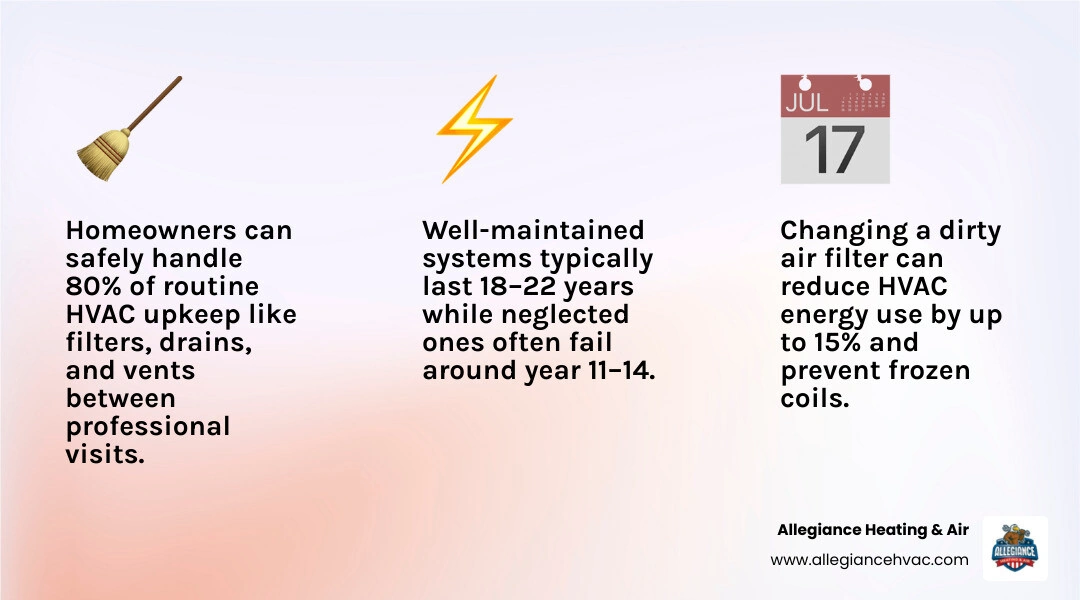
Most homeowners can handle about 80% of routine HVAC upkeep themselves. The remaining 20% — refrigerant checks, electrical testing, heat exchanger inspection, and combustion analysis — should always go to a licensed technician.
A neglected system can use up to 20% more energy just to reach the same temperature. Simple steps like changing a filter can cut energy use by up to 15% on their own. The payoff for staying consistent is real: well-maintained systems routinely last 18–22 years, while neglected ones often fail around year 11–14.
Why a DIY HVAC Maintenance Checklist Between Service Visits is Essential for Greenville Homeowners
Living in Southern Indiana, we experience the full spectrum of seasonal weather swings. From the humid, heavy summer heat in New Albany and Jeffersonville to the biting winter winds in Floyds Knobs and Georgetown, our heating and cooling systems work incredibly hard. Because our systems run almost constantly, keeping up with a basic homeowner checklist is your first line of defense against comfort disruptions.
When you regularly tackle simple, hands-on tasks, you directly lower your monthly energy bills. Routine maintenance and minor upgrades can cut your heating and cooling bills by 20% to 50%. On the flip side, a neglected system can use up to 20% more energy just to achieve the same temperature, putting unnecessary wear and tear on your expensive machinery.
Consistency also helps you maximize your equipment's lifespan. By staying on top of small tasks between our visits, you prevent minor issues from snowballing into catastrophic mechanical failures. To understand more about how professional oversight pairs with your personal efforts, you can read about How a Maintenance Plan Extends Equipment Life and ask yourself, Is an HVAC Maintenance Plan Worth It?
Finding the right balance between DIY care and scheduled professional tune-ups is the secret to How to Extend Your HVAC Lifespan and Prolonging Your ACs Lifespan.
Knowing When to Call a Professional Technician
While a diy hvac maintenance checklist between service visits keeps your system running smoothly, you must know where your homeowner duties end and where professional expertise is required. Pushing past safe boundaries can result in expensive system damage or serious personal safety hazards.
Keep an eye out for these critical warning signs that indicate it is time to call a professional technician:
- Short Cycling: If your air conditioner or furnace turns on and off rapidly in short bursts, it is working under extreme stress. This can be caused by faulty thermostats, electrical issues, or low refrigerant levels.
- Unusual Noises: Squealing, grinding, rattling, or thumping sounds mean mechanical components are wearing out, loose, or failing.
- Ice Formation: Frozen coils or frost on the copper refrigerant lines indicate airflow blockages or a leak in the closed refrigerant loop.
- A Yellow Burner Flame: On gas furnaces, the burner flame should always be a crisp, steady blue. A yellow, flickering flame suggests incomplete combustion, which can produce dangerous, odorless carbon monoxide.
- Frequent Breaker Trips: If your HVAC unit keeps tripping the circuit breaker, there is an electrical fault or overload that requires immediate professional evaluation.
If you observe any of these symptoms, do not attempt to fix them yourself. It is time to review the Top Signs HVAC System Needs Service and learn to spot the Key Signs of HVAC Issues. To keep your system safe and valid under manufacturer warranty terms, make sure you understand How Often Should You Service Your HVAC System.
Essential Air Filter and Indoor Tasks for Your Home
The indoor components of your heating and cooling system serve as the "lungs" of your home. They continuously pull in, heat or cool, filter, and redistribute air throughout your living spaces. When indoor tasks are neglected, indoor air quality suffers, dust accumulates rapidly, and airflow becomes restricted.
An essential starting point is vent cleaning. Take a few minutes every month to dust and vacuum your supply registers and return grilles. Ensuring these pathways are clear of dust, pet hair, and obstructed furniture allows your system to breathe freely. Airflow problems can reduce your system's efficiency by up to 15 percent, making this quick visual sweep incredibly impactful.
How to Use Your DIY HVAC Maintenance Checklist Between Service Visits for Filter Replacement
If there is one task that stands above all others on your diy hvac maintenance checklist between service visits, it is replacing your air filter. Replacing a dirty filter is a simple, two-minute task that can reduce your system's energy use by up to 15%.
When filters are neglected, they become packed with dust, pet dander, pollen, and hair. This buildup chokes your system's airflow, forcing the blower motor to work twice as hard to push air through the home. This extra strain can cause the motor to overheat and fail prematurely.
To keep your system running efficiently, it helps to understand the difference between filter types and minimum efficiency reporting value (MERV) ratings. For most residential systems, MERV 8 to 11 is the "sweet spot" — providing excellent filtration of common allergens without restricting airflow. MERV 13+ filters offer superior filtration but can actually damage standard residential systems by restricting airflow too much if the system wasn't designed to handle them.
To make sure you never miss a swap, review our guides on Replacing Your Air Filter and learn the physical Signs Your Air Filter Needs Replaced.
| Filter Type | MERV Rating | Recommended Replacement Frequency | Best Suited For |
|---|---|---|---|
| Basic Fiberglass | MERV 1–4 | Every 30 days | Single occupants, no pets, basic dust protection |
| Pleated Paper/Polyester | MERV 8–11 | Every 60–90 days | Average homes, pets, mild allergies (The Sweet Spot) |
| High-Efficiency Pleated | MERV 12–13 | Every 30–60 days (1-inch) / 9–12 months (4-inch media) | Severe allergies, multiple pets, asthma sufferers |
Indoor Maintenance: Vents, Drains, and Thermostats
Your indoor checklist goes beyond filters. To keep your home resilient against Greenville's humid summer days, pay close attention to your condensate drain system.
An air conditioner can pull several gallons of water out of your indoor air every single day. This moisture collects in a drain pan and flows out of your home through a plastic condensate drain line. Over time, algae, mold, and slime can build up inside this line, causing a clog. When the line backs up, water overflows, potentially causing thousands of dollars in water damage to your ceilings, walls, and floors.
To prevent this, find your condensate drain cleanout (usually a small T-shaped pipe near your indoor unit) and pour a cup of diluted white vinegar down the line every three months. This simple step kills organic growth and keeps the line flowing clear.
Additionally, don't overlook your thermostat. Check that it responds quickly when you change settings, and replace the batteries once a year (daylight saving time is a great reminder).
Finally, do a quick visual sweep of any accessible ductwork in your basement, attic, or crawlspace. Up to 30% of conditioned air escapes through unsealed ducts. If you find loose joints or visible gaps, seal them using specialized mastic sealant or heavy-duty aluminum foil tape. Never use standard, plastic-backed duct tape — despite its name, it degrades quickly under temperature changes and will fail within a few years.
Outdoor Unit Care and Seasonal Transitions
Your outdoor condenser unit is responsible for releasing the heat collected from inside your home during the summer. Because it sits completely exposed to the elements, it bears the brunt of southern Indiana’s weather swings. From spring pollen storms to autumn leaf drops, nature is constantly trying to clog your condenser.
Understanding How Weather Affects Your HVAC Unit and How Humidity and Temperature Swings Affect Your HVAC will help you protect this vital piece of machinery.
Outdoor Condenser Care in Your DIY HVAC Maintenance Checklist Between Service Visits
To keep your outdoor unit running at peak performance, it must have plenty of breathing room. When air cannot circulate freely through the condenser coils, heat gets trapped, forcing the compressor to run hotter and consume more electricity.
Follow these steps to safely clean and maintain your outdoor unit:
- Turn Off the Power: For safety, always shut off the electrical power to the outdoor unit at the nearby metal disconnect box before performing any maintenance.
- Clear the Perimeter: Maintain at least 2 feet of clear space around the entire unit. Trim back bushes, weeds, tall grass, and overhanging branches.
- Remove Loose Debris: Clear away leaves, twigs, and grass clippings that have accumulated around the base of the metal cabinet.
- Rinse the Coils: Using a standard garden hose with a gentle spray nozzle, rinse the condenser coils. Spray from the inside out or at a downward angle to wash away dirt, pollen, and dust trapped in the metal fins. Never use a pressure washer, as the high pressure will easily bend and ruin the delicate aluminum fins.
- Straighten Bent Fins: If you spot areas where the metal fins are bent or crushed, you can use a specialized fin comb or gently run a butter knife through the slots to straighten them out and restore optimal airflow.
Preparing Your System for Greenville Weather Swings
Timing your maintenance with the seasons is the best way to avoid system failures on the hottest or coldest days of the year. 42% of homeowners have experienced HVAC issues during extreme weather events, which is why proactive seasonal preparation is so important.
In early spring (March or April), focus on preparing your system for the upcoming cooling load. Use our Spring HVAC Maintenance Checklist and HVAC Spring Checklist to guide you. Taking these steps early ensures you are Preparing Your HVAC for the Transition to Cooling before technicians get busy with summer emergency calls.
In early fall (September or October), shift your focus to your heating system. Run a quick heating test before the first freezing night to ensure your furnace ignites smoothly and check your carbon monoxide detectors. Working through your checklist for Furnace Maintenance Before Winter Hits ensures your family stays safe and warm all winter long.
Frequently Asked Questions About Home HVAC Care
Can I clean my own indoor AC evaporator coils?
No, cleaning the indoor evaporator coil is a task that should always be left to a licensed professional. Unlike the outdoor condenser coil, the indoor evaporator coil is highly delicate, difficult to access, and carries a high risk of damage.
Evaporator coils are packed tightly inside your indoor air handler or furnace cabinet. Attempting to clean them yourself can easily bend the fragile aluminum fins, puncture the copper lines containing pressurized refrigerant, or spread mold and bacteria into your home’s ductwork. Licensed technicians have the specialized self-rinsing chemical cleaners, brushes, and training to clean these coils safely without risking system damage or chemical contamination.
Should I cover my outdoor AC unit during the winter?
Generally, we do not recommend covering your outdoor air conditioner completely for the winter. While it might seem like a good way to protect the unit from snow and ice, full covers actually do more harm than good.
A full plastic or vinyl cover traps moisture inside the cabinet, creating a highly corrosive environment that can rust electrical connections and metal parts. Furthermore, a warm, completely enclosed space serves as an open invitation for mice and other rodents to build nests, chew through critical wiring, and damage internal components. If you want to protect your unit from falling icicles or heavy debris, use a breathable mesh top-cover only, leaving the sides completely open to the air.
How does a dirty air filter damage my heating and cooling system?
A dirty air filter acts like a wall in your ductwork, severely restricting airflow. When air cannot flow freely, your entire system has to work much harder to circulate air, which places extreme strain on the blower motor and increases your energy bills.
In the summer, restricted airflow causes the temperature around the indoor evaporator coil to drop rapidly. Without enough warm air passing over the coil to balance it, the moisture on the coil will freeze solid, turning your unit into a block of ice and potentially liquid-locking and destroying the compressor. In the winter, a clogged filter restricts airflow over the furnace’s heat exchanger, causing it to overheat and crack — a major safety hazard that can leak carbon monoxide into your home.
Conclusion
Taking home comfort under our wing is what we do best at Allegiance Heating & Air, LLC. As a family-owned business serving Greenville, IN and surrounding southern Indiana and Louisville-area communities since 2005, we believe that an educated homeowner is our best partner in maintaining a comfortable, energy-efficient home.
By utilizing this diy hvac maintenance checklist between service visits, you can handle the daily upkeep that keeps your system healthy, efficient, and running smoothly. However, DIY care is designed to complement — not replace — professional maintenance.
To ensure your system gets the deep cleaning, safety checks, and mechanical calibration it needs to go the distance, find out What Does an HVAC Maintenance Plan Include. Ready to experience hassle-free comfort? Protect your investment and secure peace of mind by joining the Allegiance Maintenance Plan today!
Contact Us Or Schedule Expert Service
Other Blogs
ready to transform your home?
Discover our exceptional home services tailored to meet your needs and enhance your living space.
WHAT OUR CLIENTS HAVE TO SAY ABOUT US

We had a complete HVAC system and a hot water heater installed. The guys were professional, well mannered, and completed the work in a timely manner. Would definitely use them again.
I was nervous at first because my AC broke in the middle of 80 degree weather which is strange for April, but Allegiance Heating and Air was incredibly prompt and professional. The technician arrived within an hour, explained the problem clearly, and completed the repair. The technician , Mr. Garrett Moon was a very nice and courteous young man. He found the problem and fixed it within a timely manner. I highly recommend them for any heating or cooling needs. I’ll definitely give them a call again should I ever have another issue, but hopefully not. Knock on wood 😁. Give them a call… you won’t be disappointed!
From the moment I called to schedule a service, the team was quick to respond and arrived right on time. The technician was professional, friendly, and clearly knowledgeable about my heating system. He explained the repair options in plain language and completed the job efficiently. I appreciated the reliable service and the fact that the work was done the same day. I would definitely recommend Allegiance Heating and Air for any residential HVAC needs.
5/5 stars – I was very impressed with the efficient, affordable and timely service from Allegiance Heating and Air. The technician arrived on time, and performed the service quickly, no repairs needed at this time. Communication was clear and the whole experience felt hassle‑free. I would definitely recommend them for any residential HVAC needs.
Knowledgeable, experienced individual.
Explains Allegiance Heating and Air was incredibly reliable, professional and affordable. They arrived right on time, kept the work area clean and finished the furnace repair quickly. The technician explained everything clearly and the price was a great value. If happiness had a location on Google Maps, it would be here.
Gilbert had to go above and beyond because York is no longer making the part for my furnace. But he was able to find a way to construct a housing bracket for my furnace. Ingenuity, determination and integrity is what finally got my furnace fixed. Gilbert is truly a one of a kind technician.
Thank you for always going the extra mile. Gilbert is always respectful and helpful with any concerns.
"Great service, most knowledgeable and capable HVAC business in Kentuckiana!! Pete Flemming and Bryan the owner, are HVAC encyclopedias. They have the highest integrity of any HVAC business I have ever used. Allegiance has put numerous units in for me over the last 17 years. I will continue to use and trust them."
"Fast response from Allegiance when our heat was out on New Year’s day! Service technician was friendly and efficient. He took the time to explain the problem, tell us about the temporary fix and the plan for permanent repair. We were impressed!"
"Love Allegiance! Their technicians, in particular Benjamin, explain everything. Fast and thorough. A/C was out on a Sunday. Called Allegiance and within a few hours Benjamin arrived. Such a comfort as he was the one who last serviced our units. He quickly replaced part and cooling is restored!"
"My heat pump went out and I had to call after hours. The technician (Garrett) was outstanding and thorough. He got my system up and working until Monday and gave me several options of units. Also took the time to explain the issue to my Home warranty company. I highly recommend this company."
"Right on time :) respectful, fast, and polite. Even gave my fur babies some attention."
"Had Garrett out today to fix our AC. Fantastic tech. He showed up exactly when he said he would and kept us informed of what he was checking and what he found. Highly recommend!"
"Lucas with Allegiance showed up on time as promised, was professional and extremely patient and responsive with all my questions. He took care of the issue, and I feel he was trustworthy! He had us back to cool and comfortable on one of the hottest days of the year."
"Lucas did a great job! Very professional and expedient. Explained the process very well and represented Allegiance as a truly professional and reputable company."
"Arrived on time and work diligently to fix issue. These guy are great. Worked quickly to resolve my issues."
"Lucas was great - he spent a lot of time trying to figure out what was going on and explained everything he was doing. I trust Allegiance and wouldn’t want anyone else working on/in my house!!"

RELATED ARTICLES

The August Breakdown: Why Ignoring Minor AC Grinding Noises Leads to Complete Compressor Failure
The 15-Year-Old AC Dilemma: Why Patching Freon Leaks in July is a Losing Financial Battle
