


Why HVAC Maintenance Tips Every Homeowner Should Know Can Save You Time, Money, and Comfort
The hvac maintenance tips every homeowner should know come down to a handful of simple, consistent habits that protect one of your home's most expensive systems. Here's a quick summary:
- Replace air filters every 30–90 days
- Keep the outdoor unit clear with at least 2 feet of space on all sides
- Schedule professional tune-ups twice a year — spring and fall
- Flush the condensate drain every few months to prevent clogs and water damage
- Clean vents and registers regularly to maintain healthy airflow
- Check your thermostat settings each season and replace batteries annually
- Inspect accessible ductwork for gaps, leaks, or disconnected sections
- Listen for warning signs like unusual noises, burning smells, or short cycling
- Test smoke and CO detectors before heating season each year
- Know when to call a pro — refrigerant, electrical, and combustion work require a licensed technician
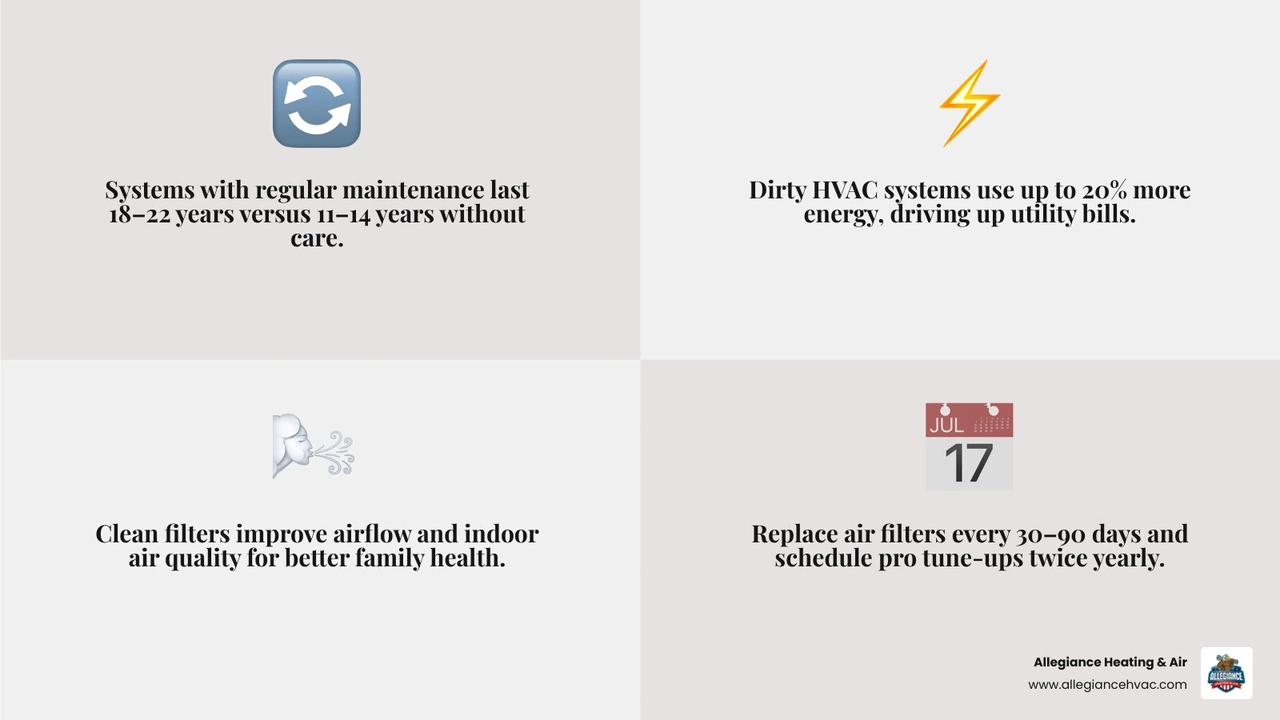
Most homeowners don't think about their HVAC system until something goes wrong — and by then, the repair bill is already climbing. The truth is, a little consistent care goes a long way. Systems that receive documented annual maintenance last an average of 18–22 years. Without it, that number drops to 11–14 years. A dirty or neglected system can also use up to 20% more energy just to keep up, and a clogged filter is the most common culprit.
For homeowners in Greenville, IN, where summers get humid and winters get cold, keeping your heating and cooling system in top shape isn't optional — it's essential for year-round comfort and lower utility bills.
Essential DIY HVAC Maintenance Tips Every Homeowner Should Know
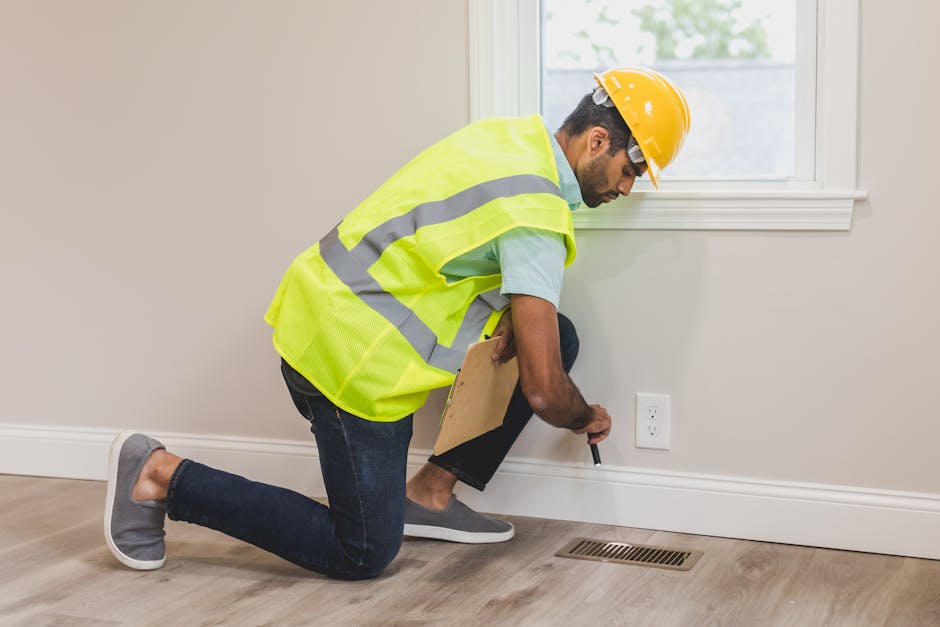
Taking care of your heating and cooling system doesn't always require a toolbox full of specialized equipment. In fact, some of the most impactful hvac maintenance tips every homeowner should know are tasks you can handle yourself in just a few minutes. By staying proactive, you aren't just preventing breakdowns; you're optimizing airflow and ensuring your family breathes cleaner air.
One of the biggest benefits of DIY care is system longevity. When your HVAC components don't have to fight against dust and debris, they experience less wear and tear. As we move through May 2026, modern standards emphasize that proactive homeowner involvement is the first line of defense against the premature system failure that often plagues neglected units.
Prioritize Air Filter Replacements
If there is one thing you remember from this list, let it be this: your air filter is the "lungs" of your home. A clogged filter is the primary culprit behind restricted airflow, which can reduce your system's efficiency by up to 15 percent. When air can't pass through easily, your blower motor has to work twice as hard, leading to higher energy bills and potential motor burnout.
We recommend checking your filter monthly. While many filters are rated for 90 days, homes in the Louisville and southern Indiana area often need more frequent changes. If you have pets shedding dander or family members with allergies, a 30-day interval is much safer. For more details on choosing the right fit, check out our guide on Replacing Your Air Filter.
When shopping for filters, pay attention to the MERV (Minimum Efficiency Reporting Value) rating. For most residential systems in our area, a MERV 8 to 11 is the "sweet spot." It traps dust and pollen without putting too much strain on the system. High-MERV filters (13+) can sometimes be too restrictive for older air handlers, so it's always best to consult our Essential Air Conditioner Maintenance tips before upgrading to a hospital-grade filter.
Maintain Outdoor Unit Clearance
Your outdoor condenser unit needs to "breathe" to release the heat it pulls from inside your home. Over time, grass, weeds, and fallen leaves can crowd the unit, acting like a thick blanket that traps heat inside. This airflow restriction forces the compressor to run longer and hotter, which is a recipe for a mid-summer breakdown.
Every homeowner should maintain at least a 2-foot radius of clear space around the outdoor unit. This means trimming back bushes, removing decorative fencing that is too close, and ensuring no grass clippings are blown into the delicate condenser coils during yard work. If the coils look dirty, you can gently rinse them with a garden hose (never use a pressure washer, as it will bend the fragile fins). For a deeper dive into outdoor care, see our Air Conditioner Maintenance Guide.
Seasonal HVAC Maintenance Tips Every Homeowner Should Know
In our corner of Indiana, we experience the full spectrum of the seasons. From the muggy heat of July to the biting frosts of January, your HVAC system never really gets a long vacation. That’s why bi-annual scheduling is the industry gold standard. Think of it like a doctor’s check-up; catching a small refrigerant leak in April is much better than waking up to an 85-degree house in July. You can find our full list of seasonal tasks in our Spring HVAC Maintenance Checklist.
Spring and Summer Cooling Prep
Before the first heatwave hits Greenville, your air conditioner needs some attention. Professional maintenance during this time focuses heavily on the evaporator coils and condensate drains. A clogged drain line is a common summer headache; when algae or debris builds up, the water backed up can cause significant damage to your floors or ceiling.
We also verify refrigerant levels during these visits. Too much or too little refrigerant makes the system less efficient and can eventually kill the compressor—the most expensive part of your AC. Proper cooling prep also includes humidity control. In southern Indiana, the AC’s job is as much about removing moisture as it is about lowering the temperature. To keep your home feeling crisp and dry, follow our Essential Air Conditioner Maintenance protocols.
Fall and Winter Heating Readiness
When the leaves start to turn, it’s time to pivot to heating. This is perhaps the most critical maintenance window for safety. For homes with gas furnaces, we meticulously inspect the heat exchanger for any cracks. A cracked heat exchanger can leak carbon monoxide—an odorless, colorless, and potentially lethal gas—into your living space.
Beyond safety, we check gas connections, ignition systems, and burners to ensure you aren't wasting fuel. A burner that isn't firing correctly is essentially burning your money. For residents in New Albany and surrounding areas, our Furnace Maintenance New Albany IN Guide provides localized advice for keeping the chill at bay. You can also find general pointers in our Furnace Maintenance Tips article.
Maximizing Efficiency and System Lifespan
The difference between a well-maintained system and a neglected one is staggering when you look at the numbers. Not only does regular care keep your monthly bills lower, but it also protects your long-term investment.
| Feature | Maintained System | Unmaintained System |
|---|---|---|
| Average Lifespan | 18–22 Years | 11–14 Years |
| Energy Efficiency | Optimal (100%) | Up to 20% loss |
| Repair Frequency | Rare / Minor | Frequent / Major |
| Air Quality | High (Filtered) | Low (Dusty/Musty) |
By following these hvac maintenance tips every homeowner should know, you are essentially giving your system a 5-to-10-year life extension. For more strategies on getting the most out of your equipment, read How to Extend Your HVAC Lifespan.
Professional HVAC Maintenance Tips Every Homeowner Should Know
While there is plenty you can do on your own, certain technical tasks require a professional touch. During a standard Allegiance Heating & Air tune-up, our technicians perform deep-level diagnostics that go beyond the surface. This includes:
- Tightening Electrical Connections: Loose wires can cause "pitting" or even electrical fires.
- Lubricating Moving Parts: Friction is the enemy of efficiency. We ensure motors and bearings move smoothly to reduce electricity use.
- Voltage and Current Testing: We measure the "vitals" of your motors to catch failing components before they quit.
- Component Calibration: We ensure your system's controls and sensors are communicating accurately.
Investing in a pro visit twice a year is the best way to catch 90% of the issues that cause emergency breakdowns. Learn more about how these visits pay for themselves in our post on How a Maintenance Plan Extends Equipment Life.
Optimize Thermostat Habits
Your thermostat is the brain of your HVAC system. If you're still using an old manual slider, you might be throwing money away. Upgrading to a smart or programmable thermostat can save you significantly—often paying for itself in just a year or two through energy savings.
For maximum efficiency, we recommend a summer baseline of 78 degrees when you're home and higher when you're away. In the winter, 68 degrees is the ideal balance of comfort and cost-savings. Setting your thermostat back 10–15 degrees for eight hours a day can save you about 1% on your bill for every degree. If you're wondering if the switch is right for you, check out Is an HVAC Maintenance Plan Worth It.
Recognizing Red Flags and Warning Signs
Even with the best maintenance, parts eventually wear out. The key is to catch the "warning shots" before they turn into a total system failure. If you notice any of the following, it’s time to call in the experts:
- Unusual Noises: Banging, screeching, or rattling sounds often indicate a loose belt, failing motor, or debris in the blower.
- Strange Odors: A "dirty sock" smell can mean mold in the coils, while a burning metallic smell could indicate electrical overheating.
- Short Cycling: If your unit turns on and off every few minutes without reaching the set temperature, it’s under extreme stress.
- Spiking Bills: If your energy usage jumps suddenly without a change in weather, your system is likely struggling with a hidden mechanical issue.
Knowing when a repair is no longer the best option is also part of being a savvy homeowner. If your system is over 15 years old and requiring frequent fixes, you might want to read Signs Your HVAC Needs Replacing Not Just Fixing.
Frequently Asked Questions about HVAC Maintenance
How often should I change my air filters in 2026?
In 2026, the standard remains every 30 to 90 days. However, with the increase in high-efficiency systems, you should check your filter every single month. If you live in a high-pollen area like Greenville or have multiple pets, a monthly change is the best way to prevent your system from suffocating.
What are the signs that my HVAC system needs professional repair?
Look for "The Big Four": weak airflow, inconsistent temperatures between rooms, strange noises (grinding or squealing), and any moisture or leaks pooling around your indoor air handler. If your carbon monoxide detector goes off, exit the home immediately and call for emergency service.
Can regular maintenance really lower my monthly energy bills?
Absolutely. Statistics show that unmaintained systems can use up to 20% more energy. By keeping coils clean and filters fresh, you ensure the system runs for shorter cycles to achieve the same comfort level, which reflects directly on your utility bill.
Conclusion
At Allegiance Heating & Air, we’ve been "Taking Home Comfort Under Our Wing" since 2005. As a family-owned business serving Greenville, IN, and the surrounding communities from New Albany to Louisville, we know exactly what our local climate demands of your heating and cooling equipment.
We believe in honest, transparent service and professional technicians who treat your home like their own. Don't wait for a breakdown to realize the value of your HVAC system. By following these hvac maintenance tips every homeowner should know, you're investing in your family's comfort and your home's future.
Ready to take the stress out of home maintenance? Protect your home comfort with a professional maintenance plan today and let our family take care of yours.
Contact Us Or Schedule Expert Service
Other Blogs
ready to transform your home?
Discover our exceptional home services tailored to meet your needs and enhance your living space.
WHAT OUR CLIENTS HAVE TO SAY ABOUT US

We had a complete HVAC system and a hot water heater installed. The guys were professional, well mannered, and completed the work in a timely manner. Would definitely use them again.
I was nervous at first because my AC broke in the middle of 80 degree weather which is strange for April, but Allegiance Heating and Air was incredibly prompt and professional. The technician arrived within an hour, explained the problem clearly, and completed the repair. The technician , Mr. Garrett Moon was a very nice and courteous young man. He found the problem and fixed it within a timely manner. I highly recommend them for any heating or cooling needs. I’ll definitely give them a call again should I ever have another issue, but hopefully not. Knock on wood 😁. Give them a call… you won’t be disappointed!
From the moment I called to schedule a service, the team was quick to respond and arrived right on time. The technician was professional, friendly, and clearly knowledgeable about my heating system. He explained the repair options in plain language and completed the job efficiently. I appreciated the reliable service and the fact that the work was done the same day. I would definitely recommend Allegiance Heating and Air for any residential HVAC needs.
5/5 stars – I was very impressed with the efficient, affordable and timely service from Allegiance Heating and Air. The technician arrived on time, and performed the service quickly, no repairs needed at this time. Communication was clear and the whole experience felt hassle‑free. I would definitely recommend them for any residential HVAC needs.
Knowledgeable, experienced individual.
Explains Allegiance Heating and Air was incredibly reliable, professional and affordable. They arrived right on time, kept the work area clean and finished the furnace repair quickly. The technician explained everything clearly and the price was a great value. If happiness had a location on Google Maps, it would be here.
Gilbert had to go above and beyond because York is no longer making the part for my furnace. But he was able to find a way to construct a housing bracket for my furnace. Ingenuity, determination and integrity is what finally got my furnace fixed. Gilbert is truly a one of a kind technician.
Thank you for always going the extra mile. Gilbert is always respectful and helpful with any concerns.
"Great service, most knowledgeable and capable HVAC business in Kentuckiana!! Pete Flemming and Bryan the owner, are HVAC encyclopedias. They have the highest integrity of any HVAC business I have ever used. Allegiance has put numerous units in for me over the last 17 years. I will continue to use and trust them."
"Fast response from Allegiance when our heat was out on New Year’s day! Service technician was friendly and efficient. He took the time to explain the problem, tell us about the temporary fix and the plan for permanent repair. We were impressed!"
"Love Allegiance! Their technicians, in particular Benjamin, explain everything. Fast and thorough. A/C was out on a Sunday. Called Allegiance and within a few hours Benjamin arrived. Such a comfort as he was the one who last serviced our units. He quickly replaced part and cooling is restored!"
"My heat pump went out and I had to call after hours. The technician (Garrett) was outstanding and thorough. He got my system up and working until Monday and gave me several options of units. Also took the time to explain the issue to my Home warranty company. I highly recommend this company."
"Right on time :) respectful, fast, and polite. Even gave my fur babies some attention."
"Had Garrett out today to fix our AC. Fantastic tech. He showed up exactly when he said he would and kept us informed of what he was checking and what he found. Highly recommend!"
"Lucas with Allegiance showed up on time as promised, was professional and extremely patient and responsive with all my questions. He took care of the issue, and I feel he was trustworthy! He had us back to cool and comfortable on one of the hottest days of the year."
"Lucas did a great job! Very professional and expedient. Explained the process very well and represented Allegiance as a truly professional and reputable company."
"Arrived on time and work diligently to fix issue. These guy are great. Worked quickly to resolve my issues."
"Lucas was great - he spent a lot of time trying to figure out what was going on and explained everything he was doing. I trust Allegiance and wouldn’t want anyone else working on/in my house!!"

RELATED ARTICLES

Why Regular Maintenance for Your AC in Jeffersonville Matters
Ultimate Guide to Heat Pump Benefits and How They Work
