


Why Heating System Replacement is Essential for Greenville Homeowners
Heating system replacement becomes necessary when your current system can no longer efficiently or reliably heat your home. Most furnaces last 15-20 years, but several key indicators signal when it's time for an upgrade:
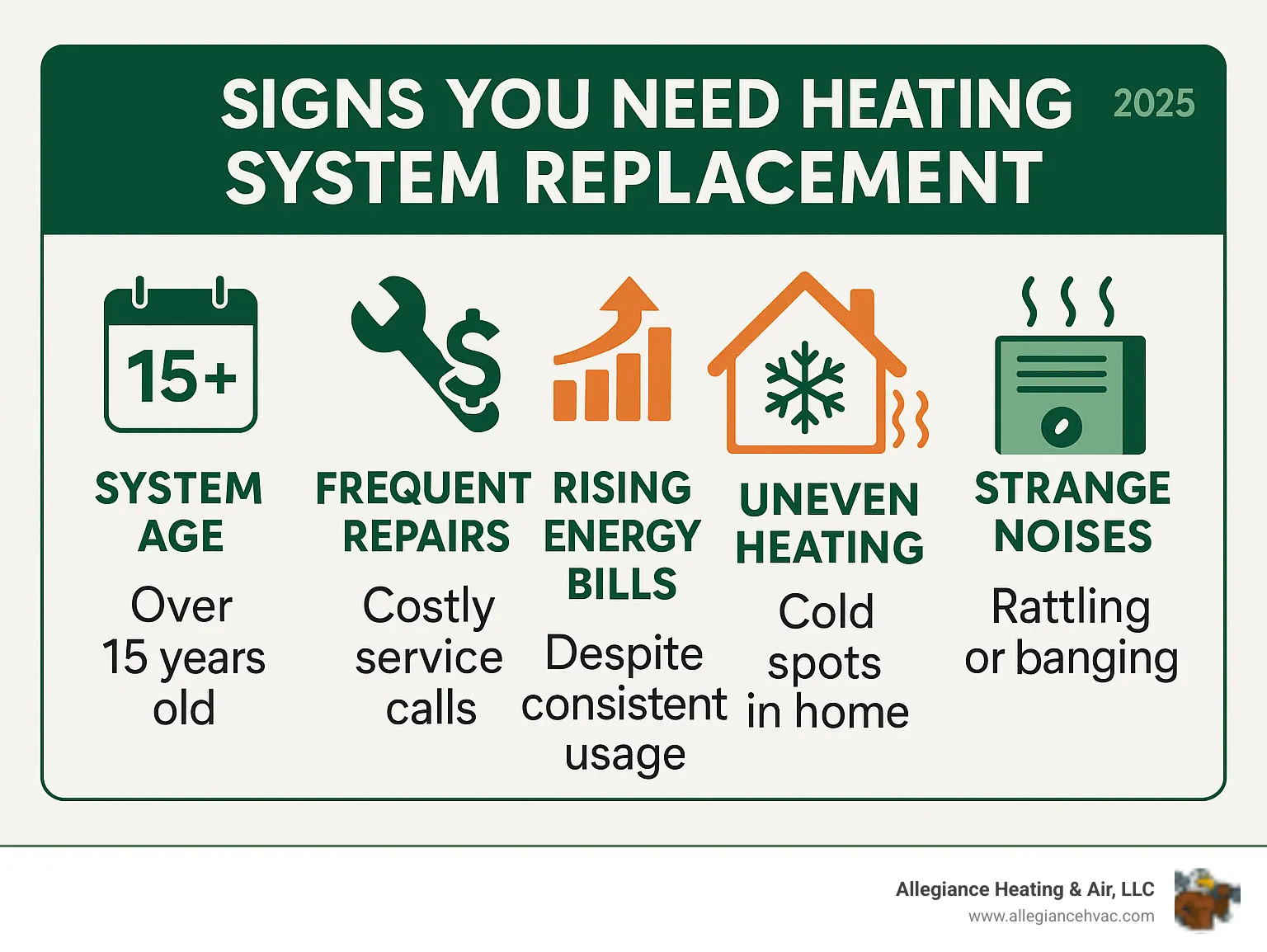
Signs You Need Heating System Replacement:
• Age: System is 15+ years old
• Rising Energy Bills: Despite consistent usage
• Frequent Repairs: Multiple expensive repair calls
• Uneven Heating: Cold spots throughout your home
• Strange Noises: Rattling, buzzing, or banging sounds
• Visible Damage: Rust, corrosion, or cracks on the unit
• Poor Air Quality: Excessive dust or unusual odors
Your heating system is the heart of your home's comfort, especially during Greenville's cold winter months. When it starts failing, you're not just facing discomfort - you're looking at rising energy costs, unreliable performance, and potentially costly emergency repairs.
The good news? Proactive replacement offers significant advantages over waiting for a complete breakdown. Modern heating systems are far more energy-efficient than older models, with some homeowners saving hundreds or even thousands of dollars annually on utility bills. Plus, you'll enjoy consistent temperatures, improved air quality, and the peace of mind that comes with reliable equipment.
This guide walks you through everything you need to know about heating system replacement - from recognizing the warning signs to understanding your options and making the most cost-effective choice for your home.
Is It Time for a Change? 7 Key Signs Your Heating System Needs Replacing
Nobody wants to think about their heating system until something goes wrong. But your furnace has its own way of telling you when it's ready to retire - you just need to know what to look for.
Your furnace's age is often the first clue. Most heating systems have a lifespan of 15-20 years. If yours is celebrating its sweet sixteen or beyond, it's time to start planning for the future. Even if it's still running, an aging system works harder and costs more to operate.
Have you noticed your energy bills climbing even though you haven't changed how you use your heat? This is your furnace's way of saying it's getting tired. Older systems lose efficiency over time, burning more fuel to produce the same warmth. When heating accounts for such a big chunk of your energy costs, an inefficient furnace really hits your wallet hard.
Frequent repairs are another red flag. If you're calling for service multiple times a season, or if repair bills are getting expensive, your system is telling you something important. Think of it this way - would you keep pouring money into an old car that breaks down every month?
Uneven heating throughout your home is frustrating and uncomfortable. When some rooms feel like the Arctic while others are toasty warm, your system isn't doing its job properly anymore. You deserve consistent comfort in every corner of your home.
Listen to what your furnace is saying with strange noises. Rattling, buzzing, or banging sounds aren't normal background music for your home. These noises usually mean parts are wearing out or something isn't working right inside the unit.
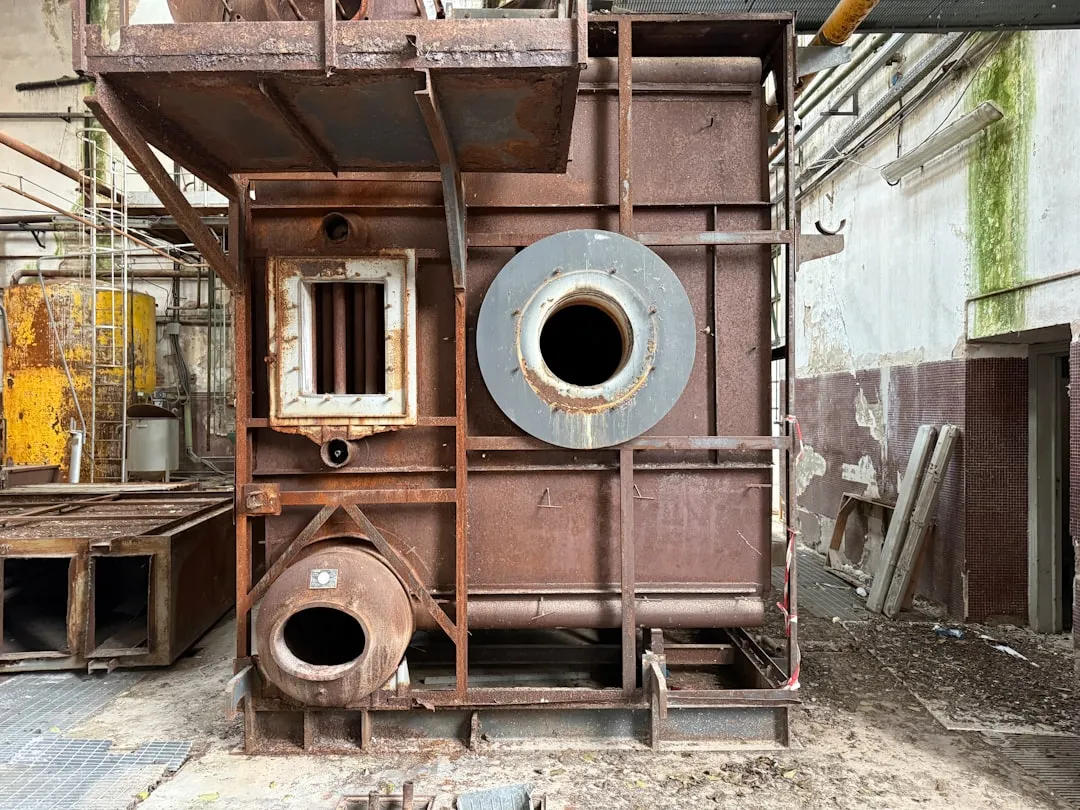
Take a look at your furnace itself. Visible rust or corrosion on the outside often means there are bigger problems on the inside. Cracks in the heat exchanger are especially serious because they can let dangerous carbon monoxide into your home's air.
Finally, pay attention to your indoor air quality. If you're noticing more dust, strange smells, or family members feeling under the weather during heating season, your old system might be the culprit.
When you spot these warning signs, it's time to consider heating system replacement. A new, efficient system will give you better comfort, lower energy bills, and peace of mind knowing your family is safe and warm.
For more insights on timing your replacement decision, check out our guide on neglecting furnace maintenance and how it affects your system's lifespan.
Exploring Your Options: A Comparison of Modern Heating Systems
When you're ready for a heating system replacement, you'll find that today's options go far beyond just getting a newer version of your old furnace. Modern heating technology offers several excellent choices, each with unique advantages that might be perfect for your home and lifestyle.
Let's walk through the three most popular options we install for families in the Greenville area and help you understand what makes each one special.
Gas Furnaces: The Reliable Workhorse
Natural gas furnaces remain the most popular choice for good reason. They're like that dependable friend who's always there when you need them. These systems deliver quick, powerful heat that can warm your home fast on those bitter winter nights. If you already have a gas line to your home, a gas furnace typically offers lower operating costs compared to electric options.
The main considerations? You'll need proper venting since gas furnaces produce combustion byproducts, and they can sometimes make your indoor air feel a bit dry during winter months. But for most families, these are minor trade-offs for reliable, efficient heating.
Electric Furnaces: Simple and Safe
Electric furnaces are the straightforward choice - no gas lines, no combustion, no complex venting requirements. They're particularly appealing if natural gas isn't available in your area or if you prefer the peace of mind that comes with electric heating.
These systems operate quietly and safely, making them a great fit for families with young children or anyone concerned about indoor air quality. The installation is often simpler and less expensive upfront. The main consideration is that your monthly heating bills might be higher, especially if electricity rates are steep in your area. They also take a bit longer to heat your home compared to gas systems.
Heat Pumps: The Efficiency Champions
Think of heat pumps as the overachievers of the heating world. Instead of creating heat by burning fuel or using electric resistance, they cleverly move heat from outside to inside your home. Yes, even when it's freezing outside, there's still heat energy to be captured!
What makes heat pumps truly special is their dual function - they heat your home in winter and cool it in summer, replacing both your furnace and air conditioner. They're incredibly energy efficient, which means lower utility bills and a smaller environmental footprint. Many homeowners are surprised to learn they can qualify for federal tax credits and rebates when they choose heat pump technology.
The investment is typically higher upfront, and in extremely cold temperatures, some older heat pump models might need a little backup heat. However, today's cold-climate heat pumps perform remarkably well even in harsh winter conditions.
Heating System TypeProsConsBest ForGas FurnaceQuick heating, lower operating costs, reliable performanceRequires gas line, produces combustion byproducts, can dry indoor airHomes with existing gas lines, families wanting dependable heatElectric FurnaceSafe operation, quiet, easy installation, no gas line neededHigher operating costs, slower heatingAreas without gas service, safety-conscious familiesHeat PumpExtremely efficient, heats and cools, eco-friendly, rebates availableHigher upfront cost, may need backup in extreme coldEnergy-conscious homeowners, those wanting year-round comfort
Finding Your Perfect Match
Every home and family is different, and what works wonderfully for your neighbor might not be the ideal choice for you. That's where our experience comes in. We've been helping Greenville families since 2005, and we love matching homeowners with the heating system replacement that truly fits their needs, budget, and comfort preferences.
At Allegiance Heating & Air, LLC, we install and service all these options because we believe in giving you choices, not pushing you toward one particular system. Whether you're drawn to the reliability of gas, the simplicity of electric, or the efficiency of heat pumps, we'll make sure you get expert installation and ongoing support.
Ready to explore which option might be right for your home? Learn more about our comprehensive furnace replacement services and let's start the conversation about your comfort.
Understanding the Costs of a Heating System Replacement
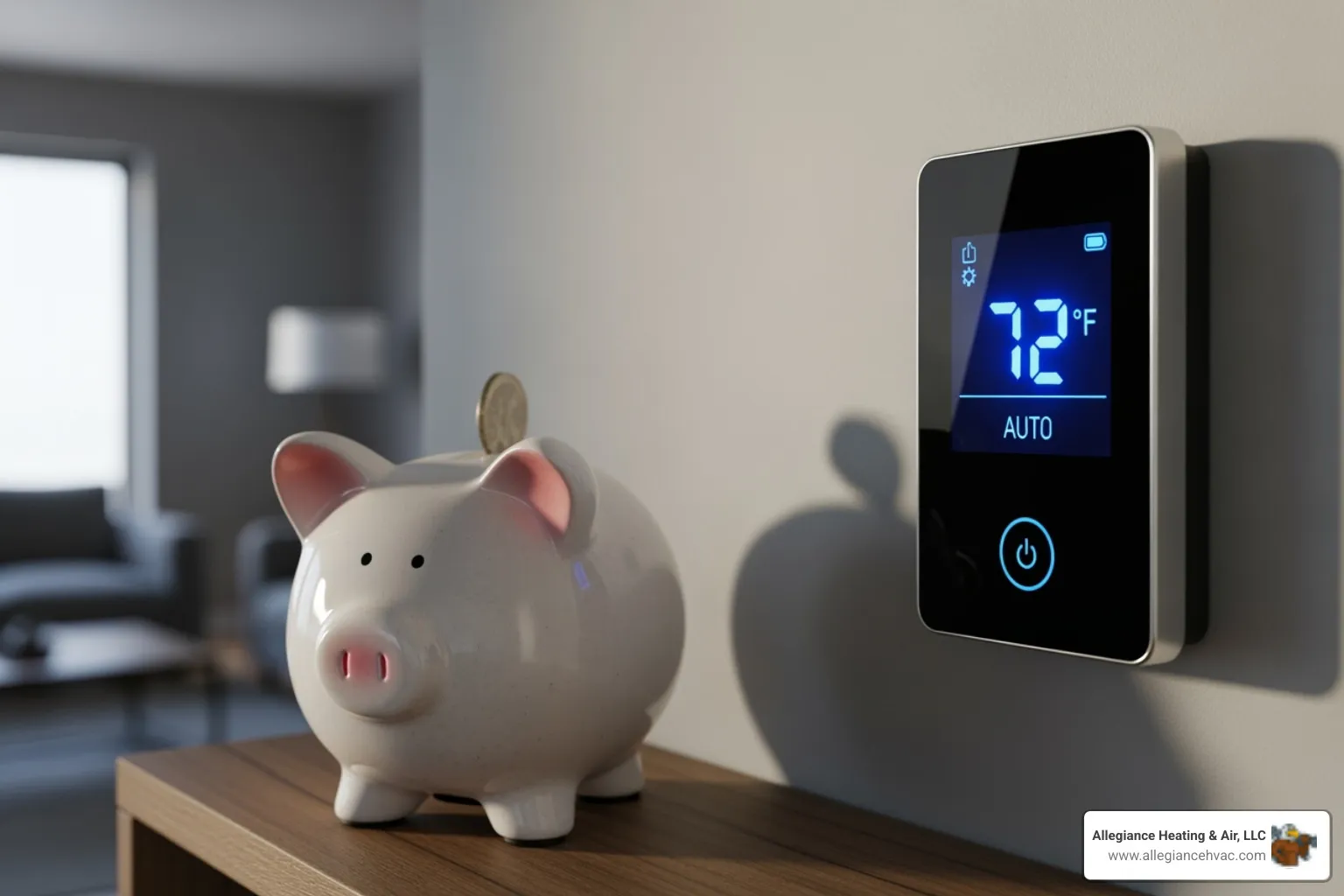
Let's talk about the elephant in the room – the cost. We know that considering a heating system replacement feels like a big financial decision, and honestly, it is. But here's the thing: it's also an investment that keeps paying you back through lower energy bills, fewer repair calls, and that wonderful feeling of consistent warmth throughout your home.
According to HomeAdvisor cost data, homeowners typically spend around $4,771 for a complete furnace replacement. This includes everything – the new equipment, professional installation, and hauling away your old unit so you don't have to figure out what to do with that hulking piece of metal.
Of course, every home is different, and your actual investment might fall anywhere in a range that can vary significantly based on your specific needs. Think of it like buying a car – the final price depends on the model you choose, the features you need, and any special requirements your situation calls for.
Installation and labor costs make up a significant portion of your total investment, and for good reason. Proper installation isn't just about connecting a few pipes and wires. It involves ensuring your new system is perfectly sized for your home, properly vented for safety, and calibrated for optimal efficiency. Plus, there are old unit disposal fees to consider – because let's face it, you can't exactly put your old furnace out with the regular trash!
Key Factors Influencing Your Heating System Replacement Cost
Several important factors determine what you'll ultimately invest in your new heating system. Fuel type plays a major role – whether you're going with gas, electric, or a heat pump affects both the equipment cost and installation complexity.
Your home size and layout directly impact the heating capacity your new system needs. A cozy ranch home requires different equipment than a sprawling two-story house with vaulted ceilings. If your home has unique architectural features or multiple zones, the installation might require additional considerations.
Local climate matters more than you might think. Here in Indiana, we deal with some pretty cold winters, which means your system needs to be robust enough to handle those frigid February nights when the temperature drops well below freezing.
The AFUE efficiency rating you choose is like picking between regular and premium gas for your car – higher efficiency costs more upfront but saves money over time. A more efficient system uses less fuel to produce the same amount of heat, which translates to lower monthly bills for years to come.
Finally, ductwork modifications can add to your investment if your existing ducts are old, leaky, or incompatible with your new system. While this might feel like an unexpected expense, proper ductwork is essential for your new system to perform at its best.
Can a Home Warranty Help Cover Replacement?
This is one of the most common questions we hear, and the answer is: it depends, but potentially yes! Many home warranty coverage plans do include heating systems, which can provide real financial relief when your furnace decides to call it quits.
Here's how warranties typically work: they're designed to cover breakdowns from normal wear and tear, but the devil is in the details. Some warranties cover full replacement costs, while others have repair vs. replacement limits that cap how much they'll pay out.
The key is understanding exactly what your specific warranty covers. Pay close attention to those wear and tear clauses – most policies cover normal aging issues but might exclude problems from poor maintenance or pre-existing conditions. Some warranties are more generous than others when it comes to typically excluded conditions.
We always stress the importance of reading the contract thoroughly. Look for what's specifically excluded, understand any dollar limits, and know whether you're covered for a full replacement or just repairs up to a certain amount. It's not the most exciting bedtime reading, but it could save you thousands when you need it most.
Even with warranty coverage, regular professional maintenance is your best bet for extending your system's life and catching small issues before they become big, expensive problems.
The Payoff: Long-Term Benefits of a Modern System

Think of a heating system replacement as planting a tree in your backyard. It requires an upfront investment, but the benefits keep growing year after year. The moment your new system fires up for the first time, you're already on the path to enjoying returns that extend far beyond just staying warm.
Improved energy efficiency is where the magic really happens. Modern heating systems are like comparing a smartphone to an old flip phone – they're just in a completely different league. Today's units convert far more of their fuel or electricity into actual heat for your home, which means less waste and more comfort. It's honestly impressive how much technology has advanced in just the past decade.
This efficiency translates directly into lower utility bills that you'll notice month after month. According to the U.S. Energy Information Administration, heating and cooling account for about 51% of your home's energy use. When you upgrade to a high-efficiency system, many homeowners see savings of hundreds or even thousands of dollars annually. That's real money back in your pocket.
But it's not just about the money – it's about improved home comfort too. Remember those chilly mornings when certain rooms felt like the Arctic while others were toasty? A properly installed modern system eliminates those frustrating temperature differences. Advanced features like variable-speed blowers distribute air more evenly, creating that "just right" feeling throughout your entire home. In fact, studies show that 81% of homeowners reported better comfort after upgrading their heating systems.
Your home's increased property value is another wonderful bonus. When potential buyers see a modern, energy-efficient heating system, they see lower future utility bills and fewer headaches. It's like having a "move-in ready" sticker that actually means something substantial.
And here's something we're particularly proud of – the environmental benefits. Choosing an energy-efficient system, especially a heat pump, significantly reduces your household's carbon footprint. You're not just saving money; you're helping create a healthier planet for your family and community.
How to Choose the Most Cost-Effective Heating System Replacement
Making your heating system replacement as cost-effective as possible isn't rocket science, but it does require thinking beyond the initial price tag. Calculating long-term savings means looking at the bigger picture. A more efficient system might cost more upfront, but those monthly energy savings add up to significant money over the system's 15-20 year lifespan.
Sizing the system correctly is absolutely critical – and it's where many homeowners get tripped up. An oversized system is like having a race car for grocery shopping – it wastes energy by cycling on and off too frequently. An undersized system struggles like a compact car trying to tow a boat, never quite getting the job done efficiently. Our technicians perform detailed load calculations to find that "Goldilocks zone" where your system is just right for your home.
Don't overlook federal tax credits and rebates – they're basically free money for making smart energy choices. Under the Inflation Reduction Act of 2022, many ENERGY STAR®-qualified units, particularly heat pumps, qualify for substantial federal tax credits. State and utility rebates can stack on top of these savings, sometimes covering a significant portion of your investment. We help you steer these opportunities so you don't miss out on a single dollar. You can start exploring eligible units on the ENERGY STAR® website.
The quality of installation matters just as much as the equipment itself. Even the best heating system won't perform properly if it's not installed correctly. That's why our expert HVAC installation services focus on getting every detail right the first time, ensuring your investment delivers maximum comfort and efficiency for years to come.
Frequently Asked Questions about Heating Replacements
We get it - a heating system replacement is a major decision that comes with plenty of questions. After nearly two decades of helping Greenville families stay warm and comfortable, we've heard just about every concern imaginable. Let's tackle the big ones that keep homeowners up at night.
How long does a typical furnace last?
Here's the thing about furnace lifespans - they're a bit like asking how long a car will last. It depends on how well you take care of it, how often you use it, and what type you have.
Gas furnaces typically give you a solid 15 to 20 years of reliable service. Electric furnaces are the marathon runners of the heating world, often lasting 20 to 30 years because they have fewer moving parts and don't deal with the combustion process. Oil furnaces usually fall somewhere in between, around 15 to 25 years.
But here's what we always tell our customers: just because your furnace can limp along for 25 or 30 years doesn't mean it should. Think of it like driving a 1995 sedan - sure, it might still get you from point A to point B, but it's probably guzzling gas and leaving you stranded at the worst possible moments. The same goes for an aging furnace that's working overtime to heat your home while your energy bills climb higher each month.
Should I replace my furnace and air conditioner at the same time?
This question makes perfect sense, especially when you're looking at the total investment. While it might feel like a bigger financial bite upfront, replacing both units together is often the smartest move you can make.
Your heating and cooling systems are designed to work as matched partners. When manufacturers engineer these systems, they carefully balance the indoor and outdoor components to work in perfect harmony. It's like a dance - when both partners know the steps, everything flows beautifully.
Here's what happens when you mix old with new: that shiny new furnace might be ready to tango, but your 15-year-old air conditioner is still doing the electric slide. The result? Neither system performs at its peak efficiency, and you don't get the energy savings you paid for.
Beyond performance, there are practical benefits too. Installation costs are typically lower when we do both units at once - we're already there, the ductwork is accessible, and we can complete everything in one efficient visit. You'll also get a unified warranty covering your entire system, which makes life much simpler if you ever need service.
Plus, let's be honest - if your furnace is ready for retirement, your air conditioner probably isn't far behind. Replacing both now means you won't be scrambling for emergency AC replacement during the first heat wave of summer.
What is the best time of year to replace a heating system?
If you have the luxury of planning ahead (and we really hope you do), late spring through early summer is absolutely the sweet spot for heating system replacement.
Think about it from a practical standpoint. During these months, we're not racing against a polar vortex or trying to squeeze your installation between emergency calls from families whose heat just went out. You have time to research, compare options, and make thoughtful decisions instead of desperate ones.
Scheduling is a breeze during off-season months. You can choose installation dates that work perfectly with your family's schedule, rather than taking whatever emergency slot we can offer. Many homeowners also find that contractors have more flexibility with pricing and may offer special promotions during slower periods.
The peace of mind factor is huge too. When October rolls around and your neighbors are crossing their fingers that their old furnace makes it through another winter, you'll be sitting pretty with your brand-new, efficient system ready to handle whatever Mother Nature throws at you.
Of course, we understand that heating systems don't always cooperate with our ideal timelines. When your furnace decides to quit in January, we're absolutely here for you with emergency replacement services. But if you're reading this during a comfortable season and thinking "hmm, my system is getting up there in age," now is the perfect time to start planning.
Your Next Steps to a Warmer, More Efficient Home
We've covered a lot of ground together, haven't we? From recognizing those telltale signs that your old system is ready to retire, to exploring the exciting world of modern heating options, to understanding the investment involved. The message is clear: a heating system replacement isn't just about fixing a problem – it's about embracing improved comfort, substantial energy savings, increased home value, and doing your part for the environment.
Think about it. No more worrying about whether your furnace will make it through another winter. No more cringing when you open your energy bill. No more dealing with those frustrating cold spots that make certain rooms feel like the North Pole. Instead, you'll enjoy consistent warmth throughout your home, lower monthly bills, and the peace of mind that comes with a reliable, modern system.
At Allegiance Heating & Air, LLC, we've been helping families across Greenville, Louisville, and the wider Kentuckiana region stay comfortable since 2005. As a family-owned business, we understand that your home is more than just a building – it's where your family creates memories, where you find comfort after a long day, and where you should always feel at ease.
We believe in making the complex simple. That's why our highly vetted technicians take the time to explain your options, answer your questions (even the ones you think might be silly), and help you make the best decision for your unique situation. We're not just here to sell you equipment; we're here to be your trusted partners in home comfort.
The beauty of being proactive is that you get to choose. You can research thoroughly, explore all your options, and schedule your installation when it's convenient for you – not when you're desperate in the middle of a January freeze.
Ready to take that next step toward a warmer, more efficient home? Our team is standing by to guide you through every stage of the process, from that initial assessment where we really get to know your home's needs, all the way through professional installation and beyond.
Schedule your heating system consultation in the Louisville area today and let's start this journey together. Your future self – and your family – will thank you for making this smart investment in comfort and efficiency.
Contact Us Or Schedule Expert Service
Other Blogs
ready to transform your home?
Discover our exceptional home services tailored to meet your needs and enhance your living space.
WHAT OUR CLIENTS HAVE TO SAY ABOUT US

We had a complete HVAC system and a hot water heater installed. The guys were professional, well mannered, and completed the work in a timely manner. Would definitely use them again.
I was nervous at first because my AC broke in the middle of 80 degree weather which is strange for April, but Allegiance Heating and Air was incredibly prompt and professional. The technician arrived within an hour, explained the problem clearly, and completed the repair. The technician , Mr. Garrett Moon was a very nice and courteous young man. He found the problem and fixed it within a timely manner. I highly recommend them for any heating or cooling needs. I’ll definitely give them a call again should I ever have another issue, but hopefully not. Knock on wood 😁. Give them a call… you won’t be disappointed!
From the moment I called to schedule a service, the team was quick to respond and arrived right on time. The technician was professional, friendly, and clearly knowledgeable about my heating system. He explained the repair options in plain language and completed the job efficiently. I appreciated the reliable service and the fact that the work was done the same day. I would definitely recommend Allegiance Heating and Air for any residential HVAC needs.
5/5 stars – I was very impressed with the efficient, affordable and timely service from Allegiance Heating and Air. The technician arrived on time, and performed the service quickly, no repairs needed at this time. Communication was clear and the whole experience felt hassle‑free. I would definitely recommend them for any residential HVAC needs.
Knowledgeable, experienced individual.
Explains Allegiance Heating and Air was incredibly reliable, professional and affordable. They arrived right on time, kept the work area clean and finished the furnace repair quickly. The technician explained everything clearly and the price was a great value. If happiness had a location on Google Maps, it would be here.
Gilbert had to go above and beyond because York is no longer making the part for my furnace. But he was able to find a way to construct a housing bracket for my furnace. Ingenuity, determination and integrity is what finally got my furnace fixed. Gilbert is truly a one of a kind technician.
Thank you for always going the extra mile. Gilbert is always respectful and helpful with any concerns.
"Great service, most knowledgeable and capable HVAC business in Kentuckiana!! Pete Flemming and Bryan the owner, are HVAC encyclopedias. They have the highest integrity of any HVAC business I have ever used. Allegiance has put numerous units in for me over the last 17 years. I will continue to use and trust them."
"Fast response from Allegiance when our heat was out on New Year’s day! Service technician was friendly and efficient. He took the time to explain the problem, tell us about the temporary fix and the plan for permanent repair. We were impressed!"
"Love Allegiance! Their technicians, in particular Benjamin, explain everything. Fast and thorough. A/C was out on a Sunday. Called Allegiance and within a few hours Benjamin arrived. Such a comfort as he was the one who last serviced our units. He quickly replaced part and cooling is restored!"
"My heat pump went out and I had to call after hours. The technician (Garrett) was outstanding and thorough. He got my system up and working until Monday and gave me several options of units. Also took the time to explain the issue to my Home warranty company. I highly recommend this company."
"Right on time :) respectful, fast, and polite. Even gave my fur babies some attention."
"Had Garrett out today to fix our AC. Fantastic tech. He showed up exactly when he said he would and kept us informed of what he was checking and what he found. Highly recommend!"
"Lucas with Allegiance showed up on time as promised, was professional and extremely patient and responsive with all my questions. He took care of the issue, and I feel he was trustworthy! He had us back to cool and comfortable on one of the hottest days of the year."
"Lucas did a great job! Very professional and expedient. Explained the process very well and represented Allegiance as a truly professional and reputable company."
"Arrived on time and work diligently to fix issue. These guy are great. Worked quickly to resolve my issues."
"Lucas was great - he spent a lot of time trying to figure out what was going on and explained everything he was doing. I trust Allegiance and wouldn’t want anyone else working on/in my house!!"

RELATED ARTICLES
Comprehensive Guide to Air Conditioner Repair, Replacement, and Maintenance
How A Programmable Thermostat Can Benefit Your Home
