Why the Best Thermostat Settings for Summer Energy Savings Matter More Than You Think
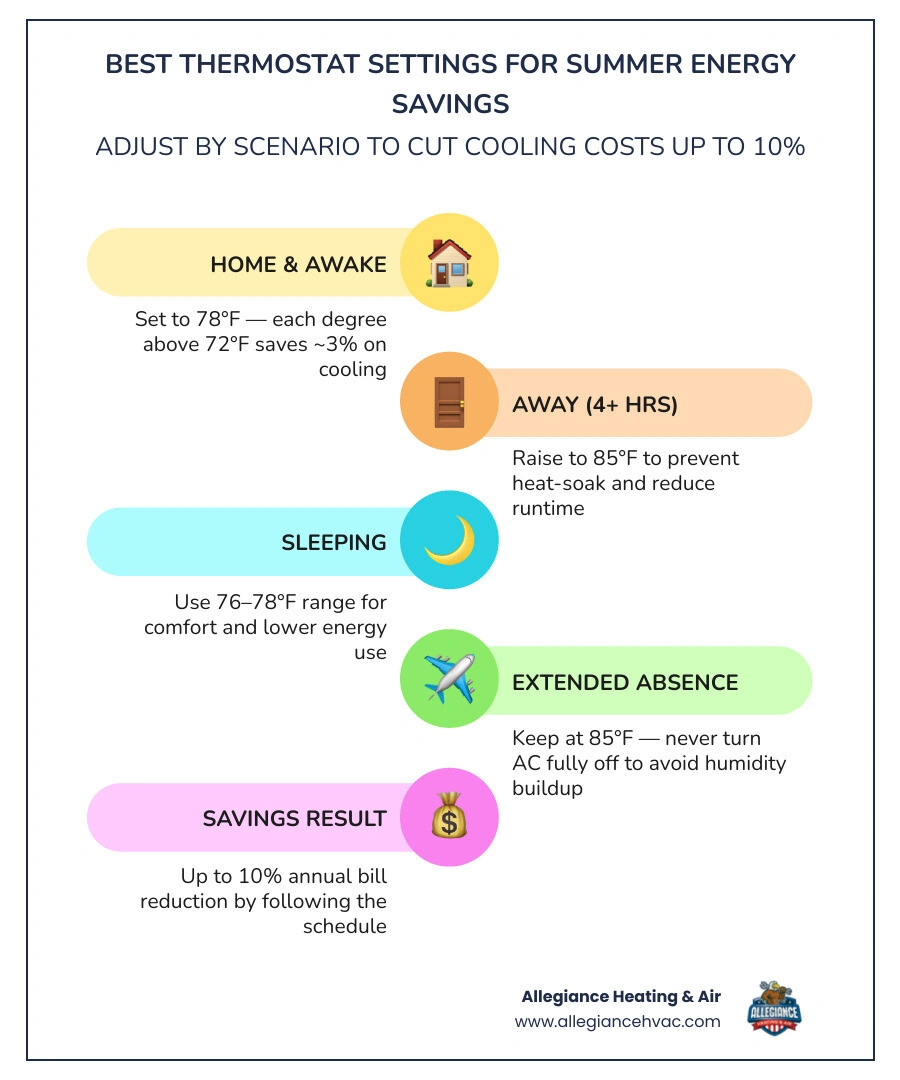
The best thermostat settings for summer energy savings can cut your cooling bill by up to 10% — without sacrificing comfort. Here's a quick reference to get you started:
Recommended Summer Thermostat Settings:
| Situation | Recommended Setting |
|---|---|
| Home and awake | 78°F |
| Away from home (4+ hours) | 85°F |
| Sleeping | 76-78°F |
| Vacation / extended absence | 85°F (never turn AC fully off) |
Most homeowners in Greenville, IN set their thermostat wherever feels comfortable and don't think much about it — until the summer electric bill arrives. Heating and cooling account for nearly half of a home's total energy use, and air conditioning alone can make up a significant chunk of that during Indiana's hot, humid summers. The good news? A few simple adjustments to your thermostat schedule can make a real difference on your monthly bill. According to the U.S. Department of Energy, each degree you raise your thermostat above 72°F saves up to 3% on cooling costs. That adds up fast.
This guide from Allegiance Heating & Air walks you through exactly what settings to use, when to use them, and what else you can do to stay cool for less.
The Best Thermostat Settings for Summer Energy Savings When You Are Home and Away
Finding the sweet spot between physical comfort and financial relief can feel like a major balancing act during an Indiana summer. However, adjusting your cooling habits does not mean you have to sweat through the season. By understanding how outdoor heat interacts with your indoor climate, you can make smarter decisions about your daily settings.
To set your cooling system up for success before the heat peaks, it helps to make sure your equipment is fully prepared. Taking steps like Preparing Your HVAC for the Transition to Cooling ensures your system is clean, efficient, and ready to handle these adjustments.
When we look at summer energy management, consistency is key. Below is a breakdown of how different thermostat settings impact your home throughout a typical summer day:
| Daily Scenario | Recommended Temperature | Impact on Energy Bill | System Benefits |
|---|---|---|---|
| At Home & Active | 78°F | Baseline summer cost | Keeps compressor cycles steady and prevents overworking the system. |
| Away (4+ Hours) | 85°F (or +7-10°F) | Saves up to 10% annually | Dramatically reduces compressor runtime and slows down heat entry. |
| Sleeping | 76°F - 78°F | Moderate savings | Complements natural nighttime temperature drops to lower cooling demand. |
| Extended Vacation | 85°F | Maximum cooling savings | Prevents mold and moisture buildup while minimizing energy waste. |
These savings are rooted in the laws of thermodynamics. Heat naturally flows from warmer spaces to cooler spaces. The colder you keep the inside of your home, the faster outdoor heat will seep through your walls, windows, and doors. By keeping your indoor temperature slightly higher, you slow down this heat transfer. This means your air conditioner does not have to run as long or as often to maintain your target temperature, keeping your compressor runtime reasonable and your bills manageable.
Why 78°F is the Best Thermostat Settings for Summer Energy Savings
The U.S. Department of Energy recommends setting your air conditioner to 78°F when you are at home and active. While 78°F might sound warm if you are used to keeping your home at 71°F or 72°F, it is the ideal baseline for balancing comfort and efficiency.
To understand why this works so well, remember the "3% per degree" rule: for every single degree you raise your thermostat above 72°F, you can save up to 3% on your cooling costs. Moving your thermostat from 72°F to 78°F can slash your monthly cooling costs by up to 18%.
Over time, these minor adjustments yield massive returns. To see the long-term financial benefits of running an optimized system, check out our guide on How Much Does a High Efficiency HVAC Save Over Time.
Additionally, keeping your thermostat at a moderate 78°F reduces the physical workload on your air conditioner. When the outdoor temperature in southern Indiana climbs into the 90s, an AC set to 68°F has to run almost continuously to maintain that 20-plus-degree difference. This constant cycling accelerates wear and tear on vital components like the compressor and fan motor.
Operating your system closer to local seasonal standards protects your investment. You can learn more about how system design and regional guidelines keep your home efficient by reading about Energy Efficiency Standards for Your HVAC Why Is This Important.
Adjusting Your Thermostat When Away: The 7-10°F Setback Rule
One of the most common cooling mistakes homeowners make is keeping their air conditioner at the exact same temperature all day long, even when the house is completely empty. If you are heading out for work, school, or weekend errands for four or more hours, you should raise your thermostat by 7°F to 10°F.
This is known as the setback rule. Adjusting your thermostat from 78°F to 85°F when you are away can save you up to 10% a year on your total heating and cooling costs.
A common myth is that raising the temperature while you are gone is counterproductive because your AC will have to "work harder" to cool the house back down when you return. In reality, air conditioners run at the same speed and efficiency level regardless of the indoor temperature. It does not run "harder" to cool a warm house; it simply runs a single, continuous cycle until the target temperature is reached.
By keeping your home warmer while you are away, you prevent heat-soak—where your furniture, walls, and floors absorb heat all day. This actually reduces the total amount of energy your system needs to restore comfort when you get home.
Nighttime and Sleeping Settings for Summer Comfort
Getting a good night's sleep is essential, and our bodies naturally prefer cooler environments to fall asleep. The World Health Organization suggests keeping sleeping spaces below 75.2°F for optimal health, though many people find a range between 76°F and 78°F to be a great compromise for summer energy savings.
Because the outdoor temperature drops naturally after sunset, your air conditioner does not have to work nearly as hard at night as it does during the blazing afternoon. This makes it easier to maintain a comfortable sleeping climate without causing your electric bill to skyrocket.
To maximize your comfort at night without lowering your thermostat to expensive levels, try these strategies:
- Use bedside or ceiling fans: Moving air across your skin creates a cooling sensation that makes the room feel up to 4 degrees cooler than it actually is.
- Implement zoning strategies: If you have a multi-zone system or a ductless mini-split, you can focus your cooling efforts strictly on occupied bedrooms while letting the rest of the house stay warmer.
- Keep bedroom doors open: This promotes healthy airflow and prevents air pressure imbalances that can make individual rooms feel stuffy and hot.
Maximizing Efficiency with Smart and Programmable Thermostats
Manually adjusting your thermostat several times a day is difficult to remember. That is where modern technology comes in. Using a programmable or smart thermostat is one of the easiest ways to enforce a consistent energy-saving schedule.
If you are curious about how these devices pay for themselves, read our article on How a Programmable Thermostat Can Benefit Your Home. These tools allow you to set your setbacks and sleep schedules once, allowing the technology to manage your comfort automatically.
How Smart Thermostats Automate the Best Thermostat Settings for Summer Energy Savings
Smart thermostats take energy management a step further by utilizing advanced automation features.
By upgrading to a smart model, you gain access to features that eliminate human error. To learn more about how a professional upgrade can improve your daily routine, read about the Top Benefits Thermostat Installation.
Some of the most valuable smart features for summer savings include:
- Geofencing: This technology connects to your smartphone's GPS. When you leave a pre-set boundary (like driving away for work), the thermostat automatically shifts into "Away Mode" to save energy. When you cross back into the boundary on your way home, it starts cooling the house back down so it is comfortable when you walk through the door.
- Learning Algorithms: Some smart thermostats monitor your daily habits and temperature preferences. Within a week or two, they build a customized schedule based on when you wake up, leave, and go to bed.
- Remote Control & Wi-Fi Connectivity: If your plans change and you decide to stay out late, you can easily adjust your home's temperature from your phone, preventing your AC from running unnecessarily.
- Energy Reports: Most smart models provide detailed monthly breakdowns of your energy usage, helping you spot patterns and identify more opportunities to save.
Proper Thermostat Placement to Avoid Ghost Readings
A thermostat can only do its job properly if it can accurately read the temperature of your living space. If your thermostat is installed in a poor location, it may experience "ghost readings"—interpreting the room as much hotter or colder than it actually is. This causes your air conditioner to turn on and off at the wrong times, wasting energy and causing uneven temperatures.
To ensure accurate operation, make sure your thermostat is placed:
- On an interior wall: Exterior walls are subject to outdoor temperature fluctuations, which can skew sensor readings.
- Away from direct sunlight: Sunlight shining directly on your thermostat will trick it into thinking your home is hot, causing your AC to run constantly.
- Away from drafts: Keep the thermostat away from drafty windows, exterior doors, and active supply registers.
- Far from heat sources: Avoid placing your thermostat near kitchens, lamps, televisions, or other heat-producing appliances.
Managing Indiana Humidity and Airflow for Perceived Cooling
In southern Indiana, temperature is only half the battle. High humidity levels can make a 78°F home feel sticky, warm, and highly uncomfortable.
Because moisture plays such a massive role in how we feel, learning how to manage your indoor climate is essential. For local advice on keeping your home dry, check out our guide on Preparing Your AC for a Humid Indiana Summer.
The Impact of High Humidity on Indoor Comfort
High humidity prevents our bodies from cooling down naturally. When the air is saturated with moisture, sweat cannot evaporate off our skin efficiently, leaving us feeling hot and clammy. This is why managing humidity is just as important as managing the temperature on your thermostat.
To maintain a healthy, comfortable, and mold-free home, you should aim to keep your indoor relative humidity between 40% and 50% (and always below 60%).
One of the most critical rules of summer AC operation is to keep your thermostat's fan setting on "AUTO," not "ON."
When the fan is set to "ON," the blower runs continuously, even when the outdoor compressor is resting. During a cooling cycle, moisture condenses on your indoor AC coils. If the fan keeps running after the cooling cycle ends, it will blow that collected moisture right back into your home's air before it has a chance to drain away. This spikes your indoor humidity levels and forces your AC to work twice as hard to dehumidify your home during its next cycle.
If your home struggles with persistent humidity, a variable-speed air conditioning system is an excellent solution. Unlike standard single-stage systems that turn completely on or off, variable-speed systems run longer, gentler cycles at lower speeds. This allows them to continuously extract moisture from the air, keeping your home incredibly comfortable even at higher temperature settings.
Using Ceiling Fans and the Wind Chill Effect
Ceiling fans are your best friend when it comes to tolerating higher thermostat settings. While a ceiling fan does not actually lower the temperature of a room, it creates a powerful "wind chill" effect. As the air moves across your skin, it speeds up the evaporation of moisture, making you feel up to 4 degrees cooler than the actual room temperature.
This allows you to comfortably set your thermostat to 78°F while enjoying the perceived comfort of 74°F.
To get the most out of your fans, keep these best practices in mind:
- Spin counterclockwise in summer: Ensure your fan blades are rotating counterclockwise. This pushes a refreshing breeze straight down into the room.
- Turn them off when you leave: Fans cool people, not rooms. Running a ceiling fan in an empty room is a waste of electricity.
- Keep blades clean: Dusty fan blades slow down rotation and can spread allergens throughout your living space.
Complementary Habits to Reduce Your AC Workload
While thermostat discipline is highly effective, it is even more powerful when paired with smart daily habits. Reducing the amount of heat that enters your home in the first place takes a massive burden off your cooling system.
If your current system is outdated and struggling to keep up with the summer heat, it might be time to look into modern options. Upgrading to a modern, high-efficiency system through an Energy Efficient AC Installation can lower your monthly operating costs for years to come.
Window Treatments and Solar Heat Gain Prevention
Direct sunlight pouring through your windows is one of the primary drivers of indoor heat gain. This greenhouse effect can raise your indoor temperatures by several degrees, forcing your air conditioner to run constantly to keep up.
By managing your window treatments strategically, you can block out a significant amount of this solar heat:
- Close the blinds: Keep blinds, shades, or curtains closed on all south- and west-facing windows during the hottest parts of the day (typically between 11 AM and 4 PM).
- Invest in blackout curtains: High-quality blackout curtains can reduce solar heat gain by up to 33%, keeping your living spaces naturally cooler.
- Utilize natural shading: Landscaping, trees, and large shrubs planted on the south and west sides of your home can provide natural shade, reducing the temperature of the air immediately surrounding your home.
Smart Appliance Habits and Home Sealing
Your appliances can act like mini-radiators inside your home. Running heat-generating appliances during the hottest hours of the day forces your air conditioner to work overtime to remove that self-inflicted heat.
To keep your home naturally cooler:
- Avoid the oven: Use an outdoor grill, toaster oven, microwave, or air fryer instead of your conventional oven during hot summer afternoons.
- Run the dryer at night: Clothes dryers vent hot air outside, but they also generate significant heat indoors. Run your dryer and dishwasher after 8 PM when outdoor temperatures are cooler.
- Seal air leaks: Inspect the weatherstripping around your doors and the caulk around your windows. Sealing small drafts prevents hot, humid air from leaking into your home.
- Check your attic insulation: Proper attic insulation acts as a barrier, preventing the intense heat trapped in your attic from radiating down into your living areas.
Frequently Asked Questions About Summer Thermostat Settings
Should I turn my AC completely off when I leave for work?
Generally, no. Turning your air conditioner completely off during a hot Indiana summer day is usually counterproductive. Without air conditioning, your home's indoor humidity will skyrocket, creating a prime breeding ground for mold and mildew.
Additionally, your walls, flooring, and furniture will absorb this moisture and heat. When you return home and turn the system back on, your AC will have to run continuously for hours at peak capacity to extract all that latent heat and moisture, straining your equipment. It is much better to use the setback rule and raise the thermostat to 85°F while you are gone.
Does lowering the thermostat to a very cold temperature cool the house faster?
No, this is a very common misconception. Standard air conditioning systems operate at a single speed. Whether you set your thermostat to 72°F or 55°F, the system blows the exact same temperature of cool air.
Setting the thermostat to an extremely low temperature will not cool your home any faster; it simply means the system will run longer, overshoot your actual comfort zone, waste a significant amount of energy, and place unnecessary strain on your compressor.
What are the best thermostat settings for households with pets or infants?
When it comes to vulnerable family members, safety and health must always come before energy savings.
- For infants: Pediatric experts recommend keeping rooms between 68°F and 72°F to prevent overheating and support safe sleep.
- For pets: Most healthy dogs and cats are perfectly comfortable with a thermostat setting between 75°F and 78°F. However, if you have elderly pets, short-nosed breeds (like bulldogs or pugs), or animals with respiratory issues, you should keep your home slightly cooler to prevent heat stress.
Conclusion
Finding the best thermostat settings for summer energy savings is all about finding a balance that works for your household's schedule and comfort preferences. By utilizing the 78°F baseline, implementing smart setbacks when you are away, and managing indoor humidity, you can enjoy a comfortable home without dreading your monthly utility bills.
At Allegiance Heating & Air, LLC, we have been "Taking Home Comfort Under Our Wing" since 2005. As a family-owned and operated business, we are proud to serve our neighbors in Greenville, IN, as well as surrounding southern Indiana and Louisville-area communities, including Floyds Knobs, New Albany, Clarksville, Georgetown, and beyond. Whether you need a smart thermostat installed, a seasonal AC tune-up, or a high-efficiency system upgrade, our licensed and experienced technicians are here to provide honest, transparent, and reliable service.
Ready to optimize your home's comfort and efficiency this summer? Schedule your professional air conditioning services today or contact our friendly team to learn how we can help you stay cool for less!
Contact Us Or Schedule Expert Service
Other Blogs
ready to transform your home?
Discover our exceptional home services tailored to meet your needs and enhance your living space.
WHAT OUR CLIENTS HAVE TO SAY ABOUT US

We had a complete HVAC system and a hot water heater installed. The guys were professional, well mannered, and completed the work in a timely manner. Would definitely use them again.
I was nervous at first because my AC broke in the middle of 80 degree weather which is strange for April, but Allegiance Heating and Air was incredibly prompt and professional. The technician arrived within an hour, explained the problem clearly, and completed the repair. The technician , Mr. Garrett Moon was a very nice and courteous young man. He found the problem and fixed it within a timely manner. I highly recommend them for any heating or cooling needs. I’ll definitely give them a call again should I ever have another issue, but hopefully not. Knock on wood 😁. Give them a call… you won’t be disappointed!
From the moment I called to schedule a service, the team was quick to respond and arrived right on time. The technician was professional, friendly, and clearly knowledgeable about my heating system. He explained the repair options in plain language and completed the job efficiently. I appreciated the reliable service and the fact that the work was done the same day. I would definitely recommend Allegiance Heating and Air for any residential HVAC needs.
5/5 stars – I was very impressed with the efficient, affordable and timely service from Allegiance Heating and Air. The technician arrived on time, and performed the service quickly, no repairs needed at this time. Communication was clear and the whole experience felt hassle‑free. I would definitely recommend them for any residential HVAC needs.
Knowledgeable, experienced individual.
Explains Allegiance Heating and Air was incredibly reliable, professional and affordable. They arrived right on time, kept the work area clean and finished the furnace repair quickly. The technician explained everything clearly and the price was a great value. If happiness had a location on Google Maps, it would be here.
Gilbert had to go above and beyond because York is no longer making the part for my furnace. But he was able to find a way to construct a housing bracket for my furnace. Ingenuity, determination and integrity is what finally got my furnace fixed. Gilbert is truly a one of a kind technician.
Thank you for always going the extra mile. Gilbert is always respectful and helpful with any concerns.
"Great service, most knowledgeable and capable HVAC business in Kentuckiana!! Pete Flemming and Bryan the owner, are HVAC encyclopedias. They have the highest integrity of any HVAC business I have ever used. Allegiance has put numerous units in for me over the last 17 years. I will continue to use and trust them."
"Fast response from Allegiance when our heat was out on New Year’s day! Service technician was friendly and efficient. He took the time to explain the problem, tell us about the temporary fix and the plan for permanent repair. We were impressed!"
"Love Allegiance! Their technicians, in particular Benjamin, explain everything. Fast and thorough. A/C was out on a Sunday. Called Allegiance and within a few hours Benjamin arrived. Such a comfort as he was the one who last serviced our units. He quickly replaced part and cooling is restored!"
"My heat pump went out and I had to call after hours. The technician (Garrett) was outstanding and thorough. He got my system up and working until Monday and gave me several options of units. Also took the time to explain the issue to my Home warranty company. I highly recommend this company."
"Right on time :) respectful, fast, and polite. Even gave my fur babies some attention."
"Had Garrett out today to fix our AC. Fantastic tech. He showed up exactly when he said he would and kept us informed of what he was checking and what he found. Highly recommend!"
"Lucas with Allegiance showed up on time as promised, was professional and extremely patient and responsive with all my questions. He took care of the issue, and I feel he was trustworthy! He had us back to cool and comfortable on one of the hottest days of the year."
"Lucas did a great job! Very professional and expedient. Explained the process very well and represented Allegiance as a truly professional and reputable company."
"Arrived on time and work diligently to fix issue. These guy are great. Worked quickly to resolve my issues."
"Lucas was great - he spent a lot of time trying to figure out what was going on and explained everything he was doing. I trust Allegiance and wouldn’t want anyone else working on/in my house!!"

RELATED ARTICLES

Who’s Hot? The Best Furnace Installers in Greenville, IN

What are the top-rated, family-owned HVAC businesses near me in Clarksville, Indiana?