Why Knowing How to Extend the Life of Your Heating and Cooling System Saves You Money in Greenville, IN
Knowing how to extend the life of your heating and cooling system can be the difference between replacing your HVAC equipment years too early or getting every last mile out of it. For homeowners in Greenville, IN — where winters bite and summers push your system hard — that difference adds up fast.
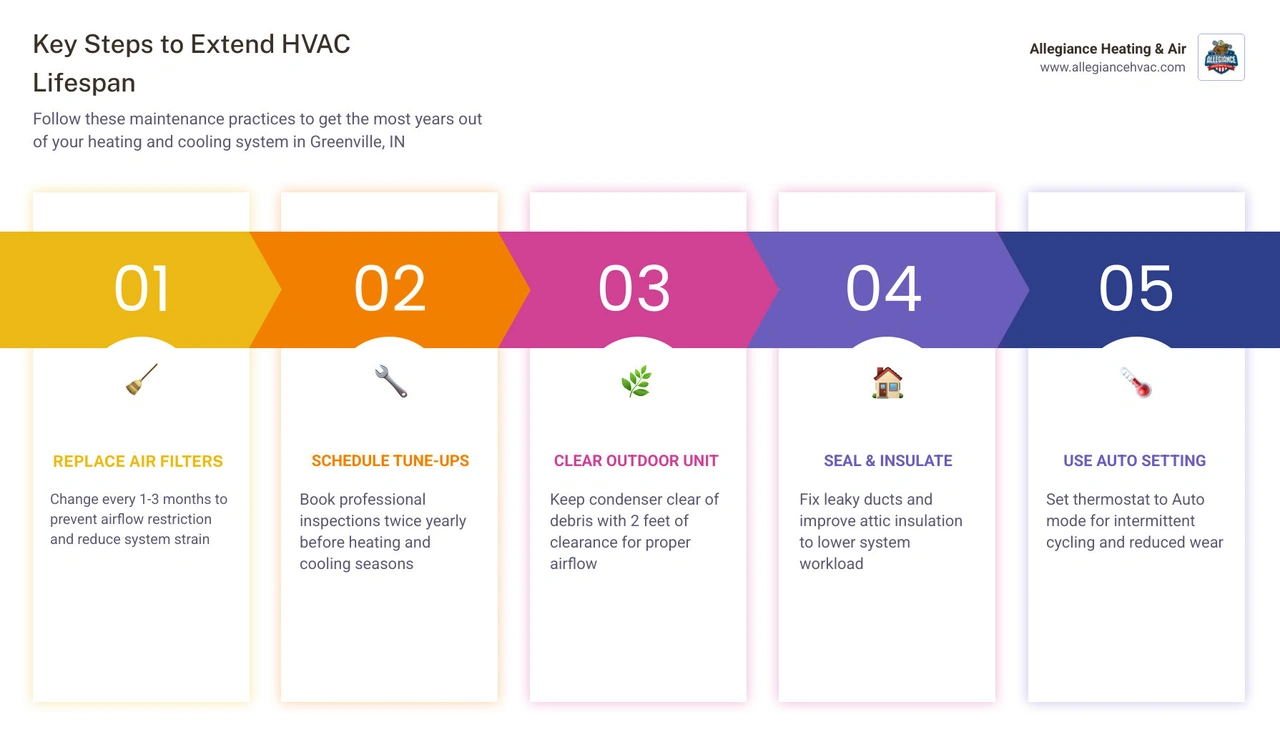
Here are the most important steps to extend your HVAC system's lifespan:
- Replace air filters every 1–3 months to prevent airflow restriction and system strain
- Schedule professional tune-ups twice a year — once in spring before cooling season, once in fall before heating season
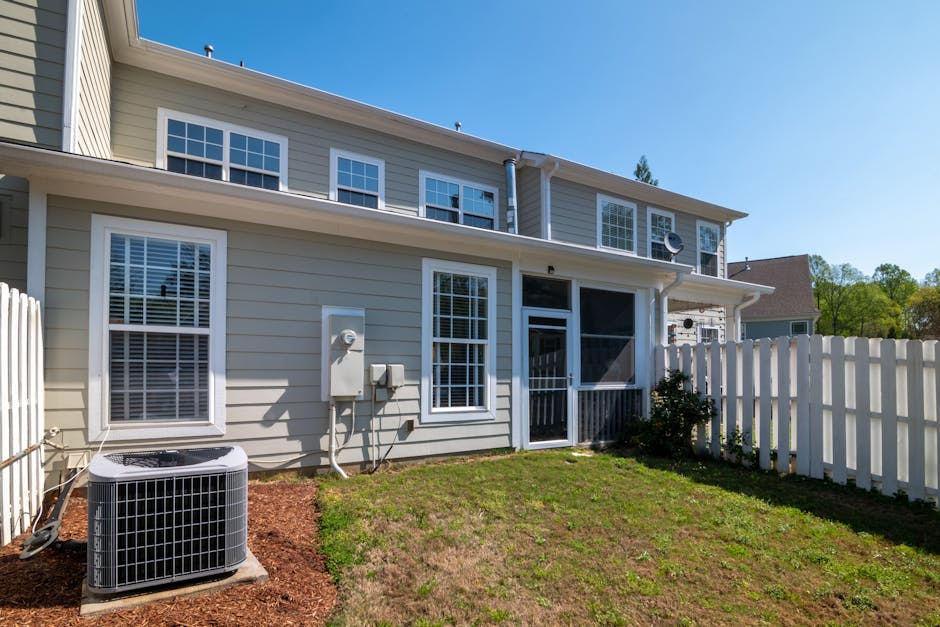
- Keep the outdoor condenser unit clear of debris, leaves, and vegetation with at least 2 feet of clearance
- Seal leaky ducts and improve home insulation to reduce how hard the system has to work
- Use the "Auto" thermostat setting instead of "On" to let the system run intermittently and rest between cycles
- Address small problems early before they grow into expensive repairs or full system failure
Most HVAC systems last between 15 and 25 years — but neglected systems often fail years sooner. According to the U.S. Department of Energy, regular maintenance can reduce energy consumption by 15–25% and add 5 or more years to equipment life. The good news is that most of what keeps a system running longer is simple, consistent care — not major overhauls.
How Long Do Heating and Cooling Systems Last on Average?
Before diving into how to preserve your system, it helps to understand what kind of baseline you are working with. Different types of heating and cooling systems have varying operational lifespans. While some heavy-duty systems can run smoothly for decades, others have a shorter natural life cycle.
When you ask How Long Does an HVAC System Last, the answer depends heavily on the specific technology keeping your home comfortable:
| HVAC System Type | Average Lifespan (Years) | Lifespan with Regular Maintenance |
|---|---|---|
| Central Air Conditioners | 12 – 17 Years | 15 – 20+ Years |
| Gas Furnaces | 15 – 20 Years | 20 – 25+ Years |
| Air-Source Heat Pumps | 10 – 15 Years | 15 – 18 Years |
| Geothermal Heat Pumps | 20 – 25 Years (Ground loops last 50+) | 25 – 30+ Years |
| Boilers (Hydronic) | 15 – 25 Years | 25 – 30+ Years |
| Ductless Mini-Splits | 15 – 20 Years | 20+ Years |
Key Factors That Influence These Timelines
Several critical environmental and physical elements dictate where your system will fall on this spectrum:
- Climate and Run Time: Here in Southern Indiana, we experience the full force of all four seasons. Our humid, hot summers in Floyds Knobs and Georgetown require air conditioners to run for hours on end, while our freezing winters in Sellersburg and Borden put heavy strain on gas furnaces and heat pumps. This high "duty cycle" naturally accelerates wear and tear compared to more moderate coastal climates.
- Installation Quality: The first 90 days of an HVAC system's life are critical. If a system is improperly sized (too large or too small) or poorly installed, it will suffer from frequent "short-cycling" (turning on and off rapidly). This places immense stress on the compressor and heat exchanger, cutting years off its lifespan from day one.
- Maintenance Consistency: This is the single biggest factor within your control. Systems receiving twice-yearly professional service deliver an average of 40% longer operational life than neglected systems.
How to Extend the Life of Your Heating and Cooling System: Key Maintenance Tasks

Maximizing your system’s lifespan does not require a degree in mechanical engineering. By establishing a consistent preventive maintenance routine, you can keep your system running smoothly and catch minor issues before they spiral into catastrophic failures.
To help you protect your investment, we have compiled the ultimate playbook on How to Extend Your HVAC Lifespan.
Outdoor Condenser Maintenance: Give Your AC Room to Breathe
Your outdoor condenser unit is responsible for releasing the heat captured from inside your home. If it is choked by debris, it cannot reject heat efficiently, forcing the compressor to work twice as hard and run hotter, which leads to premature electrical or mechanical failure.
- Clear the Perimeter: Maintain at least 2 feet (24 inches) of open space around your outdoor unit. Trim back shrubs, wild weeds, and low-hanging branches.
- Remove Seasonal Debris: Regularly check the unit for fallen leaves, twigs, grass clippings, and cottonwood fuzz.
- Rinse the Coils: Once or twice a year, gently spray the outdoor coils with a garden hose to wash away accumulated dirt and pollen. Never use a pressure washer, as the high-pressure stream will bend the delicate aluminum fins.
- Straighten Bent Fins: If you notice bent coil fins, use a specialized fin comb to gently straighten them and restore optimal airflow.
The Role of Air Filters in How to Extend the Life of Your Heating and Cooling System
If there is a single "silent killer" of heating and cooling systems, it is a dirty air filter. Many homeowners view the air filter solely as a tool for cleaning indoor air, but its primary job is actually to protect the sensitive internal components of your HVAC system from dust and debris.
When a filter becomes clogged with dust, pet dander, and hair, it acts like a wall. Your blower motor has to work significantly harder to pull air through this barrier. This airflow restriction causes several severe issues:
- Overheating and Freezing: In the winter, restricted airflow can cause a furnace's heat exchanger to overheat and crack. In the summer, it prevents warm air from reaching the evaporator coil, causing the refrigerant lines to freeze up and potentially damaging the compressor (the most expensive part of your AC).
- Increased Energy Bills: Replacing a dirty air filter can reduce your air conditioner's energy consumption by 5% to 15% instantly.
- Accelerated Wear: A system struggling against a blocked filter runs longer cycles, putting extra miles on every belt, motor, and bearing.
Choosing the Right Filter and Replacement Schedule
To keep your system happy, you need to understand Minimum Efficiency Reporting Value (MERV) ratings:
- MERV 1–4 (Fiberglass): Extremely basic. They protect the system from large dust particles but do very little for indoor air quality. They must be replaced every 30 days.
- MERV 8–11 (Pleated): The sweet spot for most residential homes in Greenville and New Albany. They capture pollen, mold spores, and pet dander without overly restricting airflow. Replace these every 60 to 90 days.
- MERV 12–16 (High-Efficiency): Excellent for severe allergy sufferers, but they are thick and can restrict airflow if your system's ductwork isn't designed to handle them. Check these monthly and replace them at least every 90 days.
Pro Tip: If you have pets, live in a dusty area, or have family members with allergies, check your filter every 30 days and replace it as soon as it looks grey or dusty.
Smart Thermostat Settings: How to Extend the Life of Your Heating and Cooling System
How you interact with your thermostat plays a massive role in system longevity. Drastic, manual temperature adjustments and constant setting changes force your system to run inefficiently.
The "Auto" vs. "On" Fan Setting
Your thermostat's fan setting has two main options: "On" and "Auto."
- The "On" Setting: This keeps your blower fan running continuously, 24/7, even when the system is not actively heating or cooling. While this can help distribute air evenly, it places continuous wear on the fan motor and can actually increase indoor humidity during the summer by blowing moisture off the wet evaporator coil back into your home.
- The "Auto" Setting: This allows the fan to run intermittently, operating only when the system is actively heating or cooling. Using the "Auto" setting reduces electricity consumption, lets the fan motor rest, and extends the overall life of the blower assembly.
Leverage Smart and Programmable Thermostats
Upgrading to an ENERGY STAR certified smart thermostat is an easy way to reduce system cycling by 10% to 20%. Rather than crank the AC down to 65°F when you return home to a hot house — which does not cool the house any faster but does keep the system running at maximum capacity for too long — a smart thermostat can gradually adjust the temperature.
For example, setting your thermostat to 68°F in the winter and 72°F–75°F in the summer when you are home, and letting it drift 5 to 8 degrees when you are away or asleep, dramatically reduces the daily run time of your equipment.
Reducing System Workload Through Home Efficiency
Your heating and cooling system does not operate in a vacuum. It reacts to the environment around it. If your home is drafty, poorly insulated, or has leaky ductwork, your HVAC system has to run constantly to maintain your target temperature. By improving your home's thermal envelope, you directly reduce the system's daily workload.
If you are curious about What Happens If You Skip HVAC Maintenance and ignore home efficiency, the answer is simple: your system will run itself into the ground years ahead of schedule.
1. Seal and Insulate Your Ductwork
According to the Department of Energy, the average home loses 20% to 30% of its conditioned air through leaks, holes, and poorly connected ducts. This means a quarter of the air you pay to heat or cool escapes into your attic, crawlspace, or walls before it ever reaches your living room.
- The Solution: Inspect accessible ductwork in your basement or attic. Seal joints and gaps using mastic sealant or heavy-duty foil tape (never use standard cloth duct tape, which degrades quickly under heat).
2. Upgrade Your Attic Insulation
Heat naturally rises in the winter, and attic spaces bake under the summer sun. If your attic insulation is insufficient, your heating system will struggle to keep up in January, and your AC will run non-stop in July. Adding insulation to bring your attic up to recommended R-values (typically R-38 to R-60 for Southern Indiana) keeps conditioned air where it belongs.
3. Combat Air Leaks Around Windows and Doors
Drafty windows and doors allow outdoor air to seep inside, causing your thermostat to trigger extra heating or cooling cycles. Apply fresh caulk around window frames and replace worn weatherstripping on exterior doors to keep your indoor climate stable.
Frequently Asked Questions About HVAC Longevity
How often should I schedule professional HVAC maintenance?
You should have your system professionally serviced twice per year: once in the spring for your air conditioning system and once in the fall for your heating system.
During a professional tune-up, a licensed technician performs tasks that go far beyond basic DIY cleaning. This includes checking refrigerant levels (a 10% undercharge can cut efficiency by 20%), inspecting electrical connections, cleaning the indoor evaporator coil, clearing the condensate drain line, and conducting a combustion analysis on gas furnaces to ensure there are no dangerous carbon monoxide leaks.
To learn more about what these visits entail, check out our comprehensive guide on How Often Should You Service Your HVAC System.
What are the warning signs that my HVAC system is failing?
While we want to get the maximum lifespan out of our equipment, it is important to recognize when a system is nearing the end of its reliable run. Catching these warning signs early can prevent an emergency breakdown in the dead of winter or peak of summer:
- Unusual Noises: Squealing, grinding, banging, or rattling noises often indicate loose belts, failing motor bearings, or a compressor on its last legs.
- Spiking Energy Bills: If your utility bills are rising month-over-month but your usage habits haven't changed, your system is losing its operational efficiency.
- Frequent and Repetitive Repairs: If you find yourself calling for service multiple times a season to fix different failing components, the system is telling you it is worn out.
- Inconsistent Temperatures: Rooms that are freezing cold while others are boiling hot indicate that the system can no longer distribute air effectively.
- System Age: If your air conditioner is over 15 years old or your furnace is approaching 20, keep a close eye on its performance.
When does it make financial sense to repair versus replace an aging system?
Deciding whether to sink more money into a repair or invest in a brand-new system is a common dilemma. To make an objective financial decision, many HVAC professionals recommend using The 5,000 Rule:
Multiply the age of your system (in years) by the estimated cost of the repair. If the result is greater than $5,000, it is generally more cost-effective to replace the system.
For example:
- A 14-year-old AC needs a $400 repair. ($400 x 14 = $5,600). Because this exceeds $5,000, investing in a new, high-efficiency system is likely the smarter financial move.
- An 8-year-old furnace needs a $300 repair. ($300 x 8 = $2,400). In this case, repairing the unit makes perfect sense.
Other Factors to Consider
- Refrigerant Type: If your air conditioner was installed before 2010, it likely uses R-22 refrigerant. Because R-22 has been phased out due to environmental regulations, recharging a leaking R-22 system is incredibly expensive. Modern systems use eco-friendly refrigerants (with the industry transitioning to R-454B starting in 2026), making them much cheaper and safer to service.
- Efficiency Improvements: Upgrading an old, inefficient 10 SEER unit to a modern variable-speed system can slash your monthly cooling bills by up to 30%, helping the new system pay for itself over time.
For a complete breakdown of maintenance tasks and planning for the future, read our Annual HVAC Maintenance Complete Guide.
Conclusion
At the end of the day, extending the life of your heating and cooling system isn't about luck — it's about consistency. By replacing your air filters on time, keeping your outdoor unit clear, utilizing smart thermostat settings, and partnering with a trusted professional for seasonal check-ups, you can keep your home perfectly comfortable while keeping your hard-earned money in your wallet.
At Allegiance Heating & Air, we have been "Taking Home Comfort Under Our Wing" since 2005. As a family-owned, licensed, and insured business in Greenville, IN, we are dedicated to providing honest, transparent, and professional HVAC service to our neighbors throughout Southern Indiana.
Whether you need a quick seasonal tune-up, a minor repair, or a complete system upgrade, our experienced technicians are here to ensure your family enjoys reliable, year-round comfort. Discover how our customized care options can protect your system by learning How a Maintenance Plan Extends Equipment Life.
Ready to give your heating and cooling system the care it deserves? Schedule professional HVAC service with Allegiance Heating & Air today!
Contact Us Or Schedule Expert Service
Other Blogs
ready to transform your home?
Discover our exceptional home services tailored to meet your needs and enhance your living space.
WHAT OUR CLIENTS HAVE TO SAY ABOUT US

We had a complete HVAC system and a hot water heater installed. The guys were professional, well mannered, and completed the work in a timely manner. Would definitely use them again.
I was nervous at first because my AC broke in the middle of 80 degree weather which is strange for April, but Allegiance Heating and Air was incredibly prompt and professional. The technician arrived within an hour, explained the problem clearly, and completed the repair. The technician , Mr. Garrett Moon was a very nice and courteous young man. He found the problem and fixed it within a timely manner. I highly recommend them for any heating or cooling needs. I’ll definitely give them a call again should I ever have another issue, but hopefully not. Knock on wood 😁. Give them a call… you won’t be disappointed!
From the moment I called to schedule a service, the team was quick to respond and arrived right on time. The technician was professional, friendly, and clearly knowledgeable about my heating system. He explained the repair options in plain language and completed the job efficiently. I appreciated the reliable service and the fact that the work was done the same day. I would definitely recommend Allegiance Heating and Air for any residential HVAC needs.
5/5 stars – I was very impressed with the efficient, affordable and timely service from Allegiance Heating and Air. The technician arrived on time, and performed the service quickly, no repairs needed at this time. Communication was clear and the whole experience felt hassle‑free. I would definitely recommend them for any residential HVAC needs.
Knowledgeable, experienced individual.
Explains Allegiance Heating and Air was incredibly reliable, professional and affordable. They arrived right on time, kept the work area clean and finished the furnace repair quickly. The technician explained everything clearly and the price was a great value. If happiness had a location on Google Maps, it would be here.
Gilbert had to go above and beyond because York is no longer making the part for my furnace. But he was able to find a way to construct a housing bracket for my furnace. Ingenuity, determination and integrity is what finally got my furnace fixed. Gilbert is truly a one of a kind technician.
Thank you for always going the extra mile. Gilbert is always respectful and helpful with any concerns.
"Great service, most knowledgeable and capable HVAC business in Kentuckiana!! Pete Flemming and Bryan the owner, are HVAC encyclopedias. They have the highest integrity of any HVAC business I have ever used. Allegiance has put numerous units in for me over the last 17 years. I will continue to use and trust them."
"Fast response from Allegiance when our heat was out on New Year’s day! Service technician was friendly and efficient. He took the time to explain the problem, tell us about the temporary fix and the plan for permanent repair. We were impressed!"
"Love Allegiance! Their technicians, in particular Benjamin, explain everything. Fast and thorough. A/C was out on a Sunday. Called Allegiance and within a few hours Benjamin arrived. Such a comfort as he was the one who last serviced our units. He quickly replaced part and cooling is restored!"
"My heat pump went out and I had to call after hours. The technician (Garrett) was outstanding and thorough. He got my system up and working until Monday and gave me several options of units. Also took the time to explain the issue to my Home warranty company. I highly recommend this company."
"Right on time :) respectful, fast, and polite. Even gave my fur babies some attention."
"Had Garrett out today to fix our AC. Fantastic tech. He showed up exactly when he said he would and kept us informed of what he was checking and what he found. Highly recommend!"
"Lucas with Allegiance showed up on time as promised, was professional and extremely patient and responsive with all my questions. He took care of the issue, and I feel he was trustworthy! He had us back to cool and comfortable on one of the hottest days of the year."
"Lucas did a great job! Very professional and expedient. Explained the process very well and represented Allegiance as a truly professional and reputable company."
"Arrived on time and work diligently to fix issue. These guy are great. Worked quickly to resolve my issues."
"Lucas was great - he spent a lot of time trying to figure out what was going on and explained everything he was doing. I trust Allegiance and wouldn’t want anyone else working on/in my house!!"

RELATED ARTICLES

Common Ductless AC Issues in Sellersburg and How Our Experts Can Help

Signs It's Time for Furnace Maintenance Before Winter Hits