Is Annual HVAC Maintenance Worth It? Here's the Honest Answer
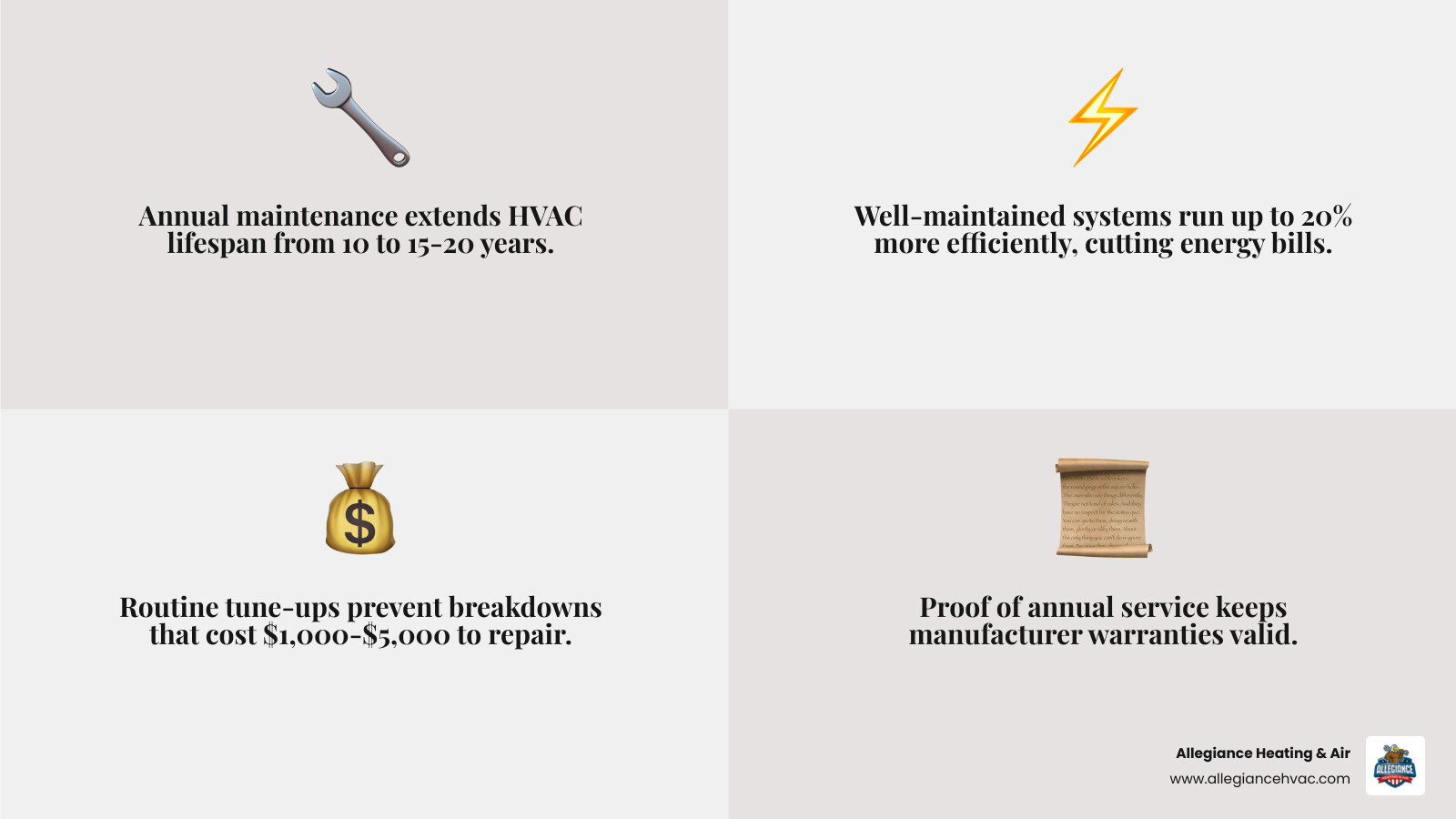
Annual HVAC maintenance is worth it for most homeowners — it helps your system run more efficiently, lowers your energy bills, prevents costly breakdowns, and keeps your manufacturer's warranty valid. Whether you're in Greenville, IN dealing with frigid winters or humid summers, skipping regular service puts your comfort and your equipment at risk.
Here's a quick breakdown of when it makes sense:
• Yes, it's worth it if you want to avoid surprise repair bills, extend your system's life, and maintain warranty coverage
• Yes, it's worth it if your system is more than 3–5 years old or runs year-round
• It may be optional if you're a skilled DIYer who can safely handle technical checks — but most homeowners aren't
• It's likely not necessary if you're planning to replace the entire system within the next year
The core idea is simple: a well-maintained HVAC system can last 15–20 years, while a neglected one may give out in as few as 10. Skipping annual service is a bit like skipping oil changes on your car — things seem fine until they suddenly aren't, and by then the repair costs are far higher than prevention would have been.
One real-world example that comes up often: a small refrigerant leak goes unnoticed for months, eventually causing the compressor to fail. A routine maintenance visit would have caught it early, saving thousands of dollars. That's the kind of risk regular tune-ups are designed to eliminate.
Understanding Professional HVAC Maintenance and What’s Included
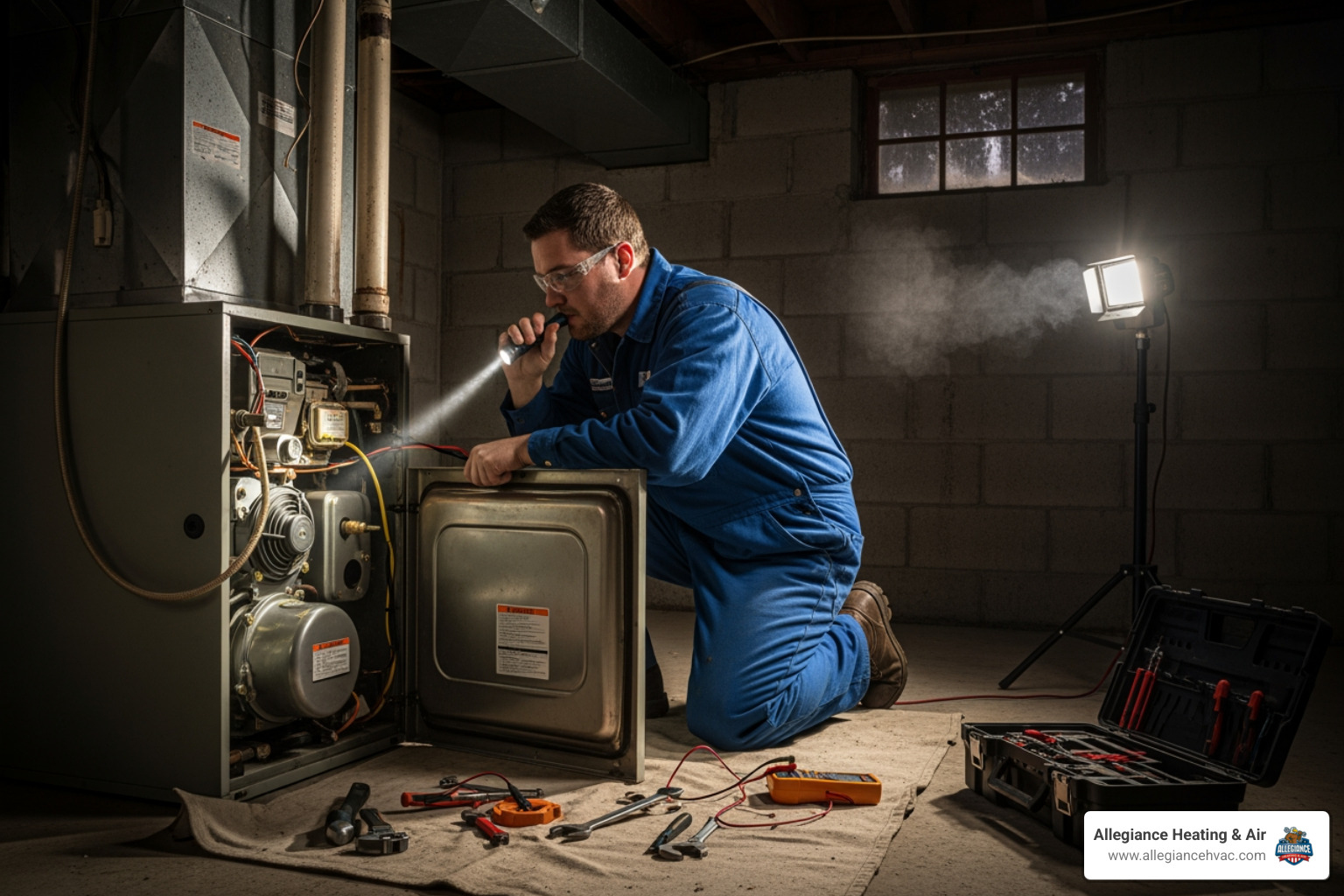
When we talk about professional maintenance, we aren't just talking about a quick "look-over." A true professional tune-up is a comprehensive, 20+ point inspection designed to scrub away the wear and tear of the previous season. Think of it as a deep clean and a physical exam for your home’s most expensive appliance.
A typical service visit from a qualified technician includes several critical steps:
• System Inspection and Component Cleaning: We look for signs of wear on belts, pulleys, and motors. Dust and debris are the enemies of efficiency, so cleaning the blower assembly and coils is a top priority. For those with specialized systems, Regular Maintenance For Ductless Mini Split units is just as vital to keep those smaller filters and coils clear.
• Electrical Connections: We tighten all electrical connections and measure voltage and current on motors. Faulty wiring is not only an efficiency killer but a significant fire hazard.
• Thermostat Calibration: We ensure your thermostat is communicating correctly with the unit. If it’s off by even a few degrees, your system may cycle too frequently, wasting energy.
• Safety Checks: This is perhaps the most important part. We inspect the heat exchanger for cracks—which can leak deadly carbon monoxide—and test all safety limit switches. Following Furnace Maintenance Tips like these ensures your family stays safe during the cold Indiana winters.
• Fluid and Airflow Management: We clear condensate drain lines to prevent water damage and mold growth. We also check refrigerant levels; too little refrigerant makes the system work overtime, while too much can damage the compressor.
Why annual hvac maintenance is it worth it for your home's efficiency
Energy efficiency isn't just a buzzword; it’s a direct reflection of how much money is staying in your pocket each month. According to the U.S. Department of Energy, heating and cooling account for about half of a typical home’s energy use. When a system is neglected, it loses roughly 5% of its efficiency every single year.
By ensuring your system is optimized, you can reduce energy consumption by 5% to 15%. This is achieved through airflow optimization—making sure the "lungs" of your home can breathe easily. Using Ways To Make Sure Your Hvac System Is Ready For Summer helps ensure that when the humidity hits Floyds Knobs or New Albany, your AC isn't chugging along at half-speed.
• Lifespan — Maintained System: 15–20 Years — Neglected System: 8–10 Years
• Efficiency Loss — Maintained System: Minimal (0-1% per year) — Neglected System: 5% per year (compounding)
• Breakdown Risk — Maintained System: 95% lower — Neglected System: High, especially in peak season
• Air Quality — Maintained System: High (filtered and clean) — Neglected System: Poor (dust and allergen buildup)
• Monthly Bills — Maintained System: Stable and optimized — Neglected System: 10–25% higher over time
Beyond the financial savings, there is the environmental impact. An efficient system uses less electricity and burns less fuel, reducing your home's overall carbon footprint. Plus, catching a refrigerant leak early prevents toxic chemicals from escaping into the atmosphere.
Is annual hvac maintenance is it worth it for warranty protection?
This is the "hidden" reason why maintenance is mandatory. Most major manufacturers, such as Trane, Carrier, and Lennox, offer 10-year parts warranties. However, there is almost always a fine print clause: the warranty is only valid if the system receives regular professional maintenance.
If your compressor fails in year seven and you cannot provide proof of annual service, the manufacturer can—and often will—deny your claim. This could turn a covered repair into a multi-thousand-dollar out-of-pocket expense. Knowing How To Extend Your Hvac Lifespan includes keeping a meticulous folder of your service receipts to ensure you stay compliant with these requirements.
Evaluating the Value of HVAC Service Agreements
Many homeowners ask us if they should just pay for one-time tune-ups or sign up for a formal service agreement. While a one-time visit is better than nothing, a maintenance plan acts like a "financial safety net" for your home.
Understanding The Benefits Our Maintenance Plan Provides helps clarify why these programs are so popular in communities like Clarksville and Jeffersonville. When you’re on a plan, you typically receive:
1. Priority Scheduling: When the temperature hits 100 degrees in Sellersburg, HVAC companies get flooded with calls. Plan members jump to the front of the line.
2. Repair Discounts: Most plans offer a 10% to 15% discount on parts and labor if something does break.
3. Waiver of Service Fees: Some premium plans waive the "trip charge" or diagnostic fee entirely.
4. Peace of Mind: You don't have to remember to call us; we keep track of your schedule and remind you when it's time for your spring or fall visit.
Deciding if annual hvac maintenance is it worth it for older systems
If your system is 12 years or older, you might feel like you're "throwing good money after bad" by maintaining it. In reality, the opposite is true. Older systems are on "borrowed time," and regular checks are the only way to prevent a catastrophic failure during a blizzard or a heatwave.
Using an Hvac Spring Checklist for an older unit allows us to identify weak capacitors or fraying wires before they take down the entire motor. For older units, maintenance isn't just about efficiency; it's about reliability and planning. It gives you the chance to save up for a replacement on your own terms, rather than being forced into an emergency purchase when the system dies on Christmas Eve.
Professional Service vs. Homeowner Maintenance Tasks
We often hear from "handy" homeowners in Sellersburg or Georgetown who want to do it all themselves. While we admire the DIY spirit, there is a big difference between basic upkeep and professional servicing.
What you SHOULD do yourself:
• Change Air Filters: This should be done every 1–3 months. A clogged filter is the #1 cause of system failure.
• Debris Removal: Keep the area around your outdoor condenser clear. Trim shrubs back at least two feet and clear away fallen leaves or grass clippings.
• Keep Vents Clear: Ensure that furniture or curtains aren't blocking your return or supply vents.
What you should leave to the PROS:
• Refrigerant Handling: Refrigerant is toxic and requires specialized EPA certification to handle.
• Electrical Testing: Measuring "microfarads" on a capacitor or checking high-voltage connections can be dangerous without the right tools and training.
• Internal Cleaning: Cleaning the evaporator coil (the indoor part) often requires disassembling part of the plenum, which can lead to air leaks if not resealed perfectly.
• Gas Manifold Pressure: Adjusting the gas pressure on your furnace requires a manometer and precise knowledge to prevent fire or carbon monoxide risks.
Key Indicators Your System Needs Immediate Attention
Sometimes, your system won't wait for its scheduled appointment to tell you something is wrong. If you notice any of the following, you should skip the "annual" wait and call for service immediately:
• Strange Noises: Squealing, banging, or grinding sounds often indicate a failing belt or motor bearing.
• Uneven Temperatures: If the upstairs is a sauna while the downstairs is an icebox, you likely have airflow or ducting issues.
• Frequent Cycling: If the unit turns on and off every few minutes, it is "short-cycling," which puts immense strain on the compressor.
• Unpleasant Odors: Musty smells can indicate mold in the ducts, while "burning" smells could point to electrical issues.
• Weak Airflow: This is often a sign of a dying blower motor or a severely clogged coil.
Keeping an eye out for these Top Signs Hvac System Needs Service and other Key Signs Of Hvac Issues can be the difference between a simple fix and a total system replacement.
Frequently Asked Questions About HVAC Maintenance
How often should I schedule professional HVAC service?
For most homes in the Louisville and Southern Indiana area, we recommend service twice a year. Once in the spring to prep the AC for the summer heat, and once in the fall to ensure the furnace is safe for the winter. If you have a heat pump that runs year-round, these two visits are even more critical.
What is the best time of year for a system tune-up?
The "shoulder seasons"—Spring (March through May) and Fall (September through November)—are ideal. Scheduling during these times ensures your system is ready before the extreme weather hits, and it’s usually easier to find a convenient appointment slot before the busy season begins.
Can I skip maintenance if my system is brand new?
We strongly advise against it. As mentioned earlier, your manufacturer’s warranty usually requires professional maintenance from year one. Additionally, even a new system can suffer from "infant mortality" issues—small factory defects or installation shifts that are easily caught during the first annual check-up.
Conclusion
At Allegiance Heating & Air, we’ve been "Taking Home Comfort Under Our Wing" since 2005. As a family-owned business based in Greenville, IN, we understand exactly what our neighbors in Floyds Knobs, Clarksville, and New Albany need to stay comfortable through every season.
So, annual hvac maintenance is it worth it? The data, the manufacturers, and the thousands of homeowners we serve all say yes. It is an investment in your home’s safety, your family’s health, and your long-term financial stability. By catching small issues before they become disasters, you ensure that your HVAC system remains a reliable source of comfort for years to come.
Ready to protect your investment? Explore our comprehensive Maintenance Plan today and let our trusted, professional technicians give you the peace of mind you deserve.
Contact Us Or Schedule Expert Service
Other Blogs
ready to transform your home?
Discover our exceptional home services tailored to meet your needs and enhance your living space.
WHAT OUR CLIENTS HAVE TO SAY ABOUT US

We had a complete HVAC system and a hot water heater installed. The guys were professional, well mannered, and completed the work in a timely manner. Would definitely use them again.
I was nervous at first because my AC broke in the middle of 80 degree weather which is strange for April, but Allegiance Heating and Air was incredibly prompt and professional. The technician arrived within an hour, explained the problem clearly, and completed the repair. The technician , Mr. Garrett Moon was a very nice and courteous young man. He found the problem and fixed it within a timely manner. I highly recommend them for any heating or cooling needs. I’ll definitely give them a call again should I ever have another issue, but hopefully not. Knock on wood 😁. Give them a call… you won’t be disappointed!
From the moment I called to schedule a service, the team was quick to respond and arrived right on time. The technician was professional, friendly, and clearly knowledgeable about my heating system. He explained the repair options in plain language and completed the job efficiently. I appreciated the reliable service and the fact that the work was done the same day. I would definitely recommend Allegiance Heating and Air for any residential HVAC needs.
5/5 stars – I was very impressed with the efficient, affordable and timely service from Allegiance Heating and Air. The technician arrived on time, and performed the service quickly, no repairs needed at this time. Communication was clear and the whole experience felt hassle‑free. I would definitely recommend them for any residential HVAC needs.
Knowledgeable, experienced individual.
Explains Allegiance Heating and Air was incredibly reliable, professional and affordable. They arrived right on time, kept the work area clean and finished the furnace repair quickly. The technician explained everything clearly and the price was a great value. If happiness had a location on Google Maps, it would be here.
Gilbert had to go above and beyond because York is no longer making the part for my furnace. But he was able to find a way to construct a housing bracket for my furnace. Ingenuity, determination and integrity is what finally got my furnace fixed. Gilbert is truly a one of a kind technician.
Thank you for always going the extra mile. Gilbert is always respectful and helpful with any concerns.
"Great service, most knowledgeable and capable HVAC business in Kentuckiana!! Pete Flemming and Bryan the owner, are HVAC encyclopedias. They have the highest integrity of any HVAC business I have ever used. Allegiance has put numerous units in for me over the last 17 years. I will continue to use and trust them."
"Fast response from Allegiance when our heat was out on New Year’s day! Service technician was friendly and efficient. He took the time to explain the problem, tell us about the temporary fix and the plan for permanent repair. We were impressed!"
"Love Allegiance! Their technicians, in particular Benjamin, explain everything. Fast and thorough. A/C was out on a Sunday. Called Allegiance and within a few hours Benjamin arrived. Such a comfort as he was the one who last serviced our units. He quickly replaced part and cooling is restored!"
"My heat pump went out and I had to call after hours. The technician (Garrett) was outstanding and thorough. He got my system up and working until Monday and gave me several options of units. Also took the time to explain the issue to my Home warranty company. I highly recommend this company."
"Right on time :) respectful, fast, and polite. Even gave my fur babies some attention."
"Had Garrett out today to fix our AC. Fantastic tech. He showed up exactly when he said he would and kept us informed of what he was checking and what he found. Highly recommend!"
"Lucas with Allegiance showed up on time as promised, was professional and extremely patient and responsive with all my questions. He took care of the issue, and I feel he was trustworthy! He had us back to cool and comfortable on one of the hottest days of the year."
"Lucas did a great job! Very professional and expedient. Explained the process very well and represented Allegiance as a truly professional and reputable company."
"Arrived on time and work diligently to fix issue. These guy are great. Worked quickly to resolve my issues."
"Lucas was great - he spent a lot of time trying to figure out what was going on and explained everything he was doing. I trust Allegiance and wouldn’t want anyone else working on/in my house!!"

RELATED ARTICLES
Same-Day Furnace Maintenance: Your Lifeline in Floyds Knobs, IN

Comprehensive Geothermal HVAC Services in Clarksville, IN