



Do You Need Both AC and a Furnace, or Just a Heat Pump? Here's What Greenville Homeowners Should Know
Do you need both ac and a furnace or just a heat pump is one of the most common questions homeowners ask when it's time to replace aging HVAC equipment. The short answer depends on where you live and what systems you already have — but here's a quick breakdown:
Quick Answer:
• Mild to moderate climate (Zones 1-4) — Best Setup: Heat pump only (replaces both AC and furnace)
• Cold climate like Indiana (Zones 5-6) — Best Setup: Heat pump + gas furnace (dual-fuel/hybrid)
• All-electric home, no gas line — Best Setup: Heat pump + electric air handler
• Existing furnace under 10 years old — Best Setup: Add a heat pump to existing furnace
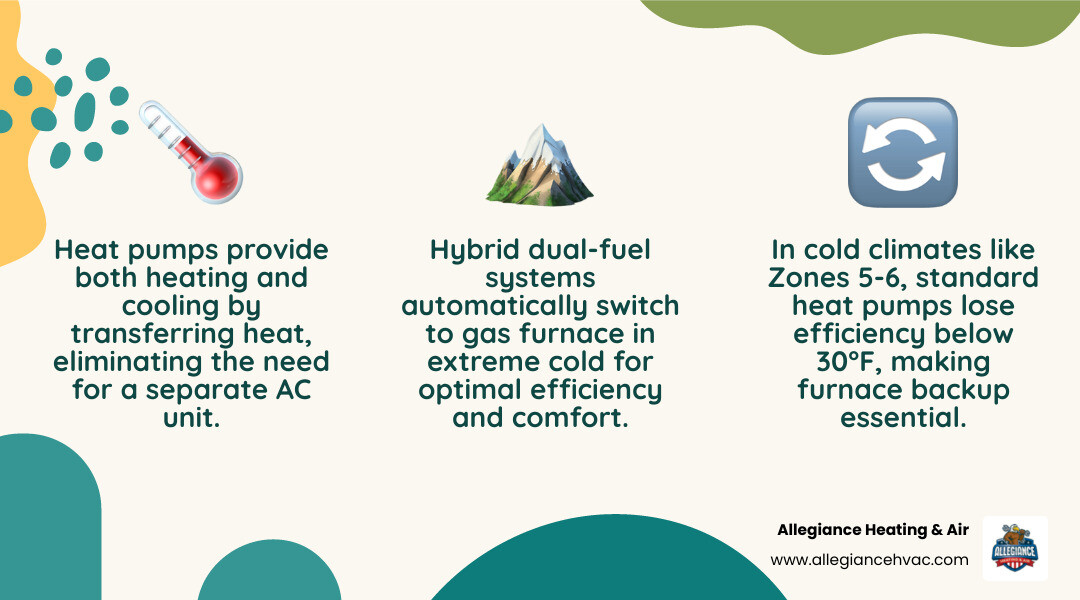
A heat pump is not just a heating device — it both heats and cools your home by moving heat in or out depending on the season. So no, you do not need a separate air conditioner if you have a heat pump. However, in colder climates like Greenville, IN, a heat pump alone may not be enough during the harshest winter nights, which is where a backup furnace or a dual-fuel system becomes valuable.
Here in Indiana, winters can push well past the efficiency threshold of a standard heat pump. Modern cold-climate models can operate down to -22°F, but they lose efficiency as temperatures drop. That's why many local homeowners benefit most from a hybrid setup — letting the heat pump handle most of the year efficiently, while the furnace steps in when it gets brutally cold.
Understanding your options clearly can save you money, improve comfort, and help you avoid replacing equipment you don't need.
How Heat Pumps and AC/Furnace Systems Differ
When we talk about home comfort, it helps to understand that heat pumps, air conditioners, and furnaces all have very different "personalities." A traditional setup usually involves two separate machines: a furnace that creates heat and an air conditioner that removes it. A heat pump, however, is a bit of a multitasker.
• Primary Function — Heat Pump: Heats and Cools — Air Conditioner + Furnace: Separate units for each
• Energy Source — Heat Pump: Electricity — Air Conditioner + Furnace: Electricity (AC) + Gas/Oil/Electric (Furnace)
• Method — Heat Pump: Transfers heat — Air Conditioner + Furnace: Removes heat (AC) / Creates heat (Furnace)
• Efficiency — Heat Pump: Up to 300% efficient — Air Conditioner + Furnace: 80% to 98.5% (Furnace)
• Best Climate — Heat Pump: Moderate to Mixed — Air Conditioner + Furnace: Extreme Cold or Extreme Heat
At its core, a heat pump is an air conditioner that can run in reverse. During the summer, it works exactly like a standard AC unit, pulling heat from inside your home and dumping it outside. In the winter, it flips a reversing valve and pulls heat from the outdoor air to bring it inside. Even when it feels cold out, there is still heat energy present that a heat pump service can tap into.
Fundamental operation
The biggest difference lies in how they use energy. A furnace creates heat through a combustion process—burning natural gas, propane, or oil—or by using high-resistance electric coils. This process is effective but can be energy-intensive.
In contrast, a heat pump uses electricity to move heat rather than generate it. This makes it incredibly efficient; in fact, heat pumps can be up to three times more energy-efficient than furnaces because they aren't "making" anything from scratch. However, they still rely on an indoor unit, like an air handler or a furnace blower, to distribute that air through your home. If you are looking for traditional air conditioning services, you are looking at a system designed strictly for cooling, which must be paired with a heat source.
Deciding if you need both ac and a furnace or just a heat pump in Indiana
Living in places like Greenville, Floyds Knobs, or New Albany means we experience the full spectrum of Midwestern weather. We get the humid, sticky July afternoons and the bone-chilling January mornings where the thermometer barely moves. This local climate is the primary factor in answering: do you need both ac and a furnace or just a heat pump?
The climate factor: do you need both ac and a furnace or just a heat pump?
In more southern states, a heat pump is often all you need. But in Indiana, we fall into a "mixed" climate zone. While a standard heat pump is excellent for those 40-degree autumn days, its efficiency starts to "derate" or drop as temperatures fall below freezing.
If you choose "just a heat pump," you must ensure it is a cold-climate model. Some advanced units can maintain their heating capacity down to -5°F or even -22°F. However, if the temperature stays below zero for weeks, a heat pump has to work much harder, which can lead to higher electric bills if it relies on "emergency" electric heat strips. This is why many of our neighbors in Clarksville and Jeffersonville opt for our HVAC services to install a backup system. Pairing your unit with heating services ensures that even during a polar vortex, your home remains a sanctuary.
Regional efficiency standards
Efficiency isn't just a buzzword; it’s a standard we follow closely. You’ll see ratings like SEER2 (for cooling) and HSPF2 (for heating). A higher number means the system provides more comfort for every dollar of electricity it uses. In our region, choosing a system that meets modern energy efficiency standards for your HVAC is crucial for long-term savings, especially as utility rates fluctuate.
The Hybrid Reality: Integrating a Heat Pump with a Furnace
For many Indiana homeowners, the "Hybrid" or "Dual-Fuel" system is the ultimate winner. This setup combines an electric heat pump with a natural gas or propane furnace.
Benefits of a Hybrid System:
• Automatic Switchover: A smart thermostat decides which unit is cheaper to run based on the outdoor temperature.
• Reliable Backup: If it gets too cold for the heat pump, the gas furnace kicks in with that "toasty" heat we all love.
• Energy Hedging: You aren't locked into just one fuel source. If gas prices spike, you use the heat pump more; if electricity costs rise, you rely on the furnace.
• Emission Reduction: Using the heat pump for 80-90% of the season can reduce your home's carbon footprint significantly.
If you’ve ever wondered how does a heat pump work in a hybrid setup, think of it like a hybrid car. It uses the most efficient source for the current "driving conditions." Sometimes furnace replacement is necessary anyway, making it the perfect time to add a heat pump into the mix.
When to choose a dual-fuel setup
If you already have a gas line in your home in Louisville or Sellersburg, a dual-fuel system is often a "no-brainer." It provides peace of mind. You get the high-efficiency cooling of a modern heat pump in the summer and the powerful, fast-acting heat of a furnace in the winter. When you choose the best heat pump for a hybrid setup, you are essentially optimizing your home for every possible weather scenario.
Integration with existing ductwork
One of the best parts about these systems is that they typically use your existing ductwork. The heat pump's evaporator coil sits right on top of your furnace, tucked away in the basement or utility closet. Whether you are following a HVAC installation guide for Louisville or New Albany, the physical footprint remains largely the same as a traditional AC and furnace.
Indoor Comfort: Heating Quality and Dehumidification
Beyond the numbers on your bill, there is the "feel" of the air. This is a subtle but important part of the do you need both ac and a furnace or just a heat pump debate.
Heating discharge temperatures
Gas furnaces are known for delivering "hot" air. The air coming out of your vents with a furnace is typically between 140°F and 150°F. It feels warm the moment it hits your skin. A heat pump, however, delivers "warm" air, usually around 90°F to 100°F. While this is plenty to keep your house at 72°F, some people find the airflow feels "cool" because it is lower than our body temperature.
As a trusted heat and AC company, we often explain that heat pumps provide a more consistent, steady warmth, whereas furnaces provide shorter, hotter bursts of heat.
Summer moisture control
In the summer, both systems perform excellently at dehumidification. However, if you have specific rooms that are always too hot or too cold, you might want to look into what is a ductless mini-split system. These are essentially small heat pumps that don't need ducts, making them perfect for finished basements or sunrooms.
If your current unit is struggling to keep the humidity down during an Indiana July, it might be time to replace your old AC with a high-efficiency heat pump that features a variable-speed compressor for superior moisture removal.
Maintenance and Lifespan of Modern HVAC Systems
No matter which system you choose, it's an investment you want to protect. The lifespan of your equipment depends heavily on how well it’s cared for.
Expected service life
On average, a gas furnace can last 15 to 20 years because it only runs for about half the year. Central air conditioners and heat pumps typically last about 15 years. Because a heat pump works year-round (both heating and cooling), it may experience slightly more wear and tear than a dedicated AC unit. Check out our guide to furnace maintenance and replacement to see how you can extend the life of your heating components.
Seasonal tune-ups
We cannot stress enough the importance of preventative maintenance. For a heat pump, we recommend a "spring" checkup for the cooling side and a "fall" checkup for the heating side. Following an air conditioner maintenance guide can prevent small issues—like a dirty coil or a clogged drain line—from turning into expensive repairs. You can find a full list of what we offer on our services page.
Conclusion
At Allegiance Heating & Air, we’ve been "Taking Home Comfort Under Our Wing" since 2005. As a family-owned business based in Greenville, IN, we know exactly what our neighbors in Borden, Georgetown, and New Albany need to stay comfortable. We aren't just here to sell you a box; we’re here to ensure your family has a reliable, efficient system for years to come.
Common inquiry: do you need both ac and a furnace or just a heat pump?
The answer is that while a heat pump can replace both, the most resilient setup for our Indiana winters is often a hybrid approach. Consolidating into a single heat pump system is a great way to simplify your home if you have a high-performance cold-climate model, but for many, keeping a furnace as a backup provides that extra layer of security. Our HVAC services are designed to help you navigate these choices based on your home's specific needs.
Can a heat pump work in freezing temperatures?
Yes! Modern technology has come a long way. With inverter compressors and "flash injection" technology, today’s heat pumps are much more capable in the cold than the models from twenty years ago. However, having an auxiliary heat source—whether it’s electric heat strips or a gas furnace—is still a smart move in our region.
What are the benefits of a dual-fuel system?
A dual-fuel system offers the best of both worlds: the extreme efficiency of electricity for most of the year and the raw power of fossil fuels for the coldest nights. It’s a pragmatic, cost-effective, and environmentally friendly way to ensure your home is always the perfect temperature, no matter what the Indiana sky decides to do.
If you're ready to find the perfect fit for your home, give us a call. We serve a wide range of local communities, from Austin and Salem down to Louisville and Taylorsville. Let us help you take the guesswork out of your home comfort.
Contact Us Or Schedule Expert Service
Other Blogs
ready to transform your home?
Discover our exceptional home services tailored to meet your needs and enhance your living space.
WHAT OUR CLIENTS HAVE TO SAY ABOUT US

We had a complete HVAC system and a hot water heater installed. The guys were professional, well mannered, and completed the work in a timely manner. Would definitely use them again.
I was nervous at first because my AC broke in the middle of 80 degree weather which is strange for April, but Allegiance Heating and Air was incredibly prompt and professional. The technician arrived within an hour, explained the problem clearly, and completed the repair. The technician , Mr. Garrett Moon was a very nice and courteous young man. He found the problem and fixed it within a timely manner. I highly recommend them for any heating or cooling needs. I’ll definitely give them a call again should I ever have another issue, but hopefully not. Knock on wood 😁. Give them a call… you won’t be disappointed!
From the moment I called to schedule a service, the team was quick to respond and arrived right on time. The technician was professional, friendly, and clearly knowledgeable about my heating system. He explained the repair options in plain language and completed the job efficiently. I appreciated the reliable service and the fact that the work was done the same day. I would definitely recommend Allegiance Heating and Air for any residential HVAC needs.
5/5 stars – I was very impressed with the efficient, affordable and timely service from Allegiance Heating and Air. The technician arrived on time, and performed the service quickly, no repairs needed at this time. Communication was clear and the whole experience felt hassle‑free. I would definitely recommend them for any residential HVAC needs.
Knowledgeable, experienced individual.
Explains Allegiance Heating and Air was incredibly reliable, professional and affordable. They arrived right on time, kept the work area clean and finished the furnace repair quickly. The technician explained everything clearly and the price was a great value. If happiness had a location on Google Maps, it would be here.
Gilbert had to go above and beyond because York is no longer making the part for my furnace. But he was able to find a way to construct a housing bracket for my furnace. Ingenuity, determination and integrity is what finally got my furnace fixed. Gilbert is truly a one of a kind technician.
Thank you for always going the extra mile. Gilbert is always respectful and helpful with any concerns.
"Great service, most knowledgeable and capable HVAC business in Kentuckiana!! Pete Flemming and Bryan the owner, are HVAC encyclopedias. They have the highest integrity of any HVAC business I have ever used. Allegiance has put numerous units in for me over the last 17 years. I will continue to use and trust them."
"Fast response from Allegiance when our heat was out on New Year’s day! Service technician was friendly and efficient. He took the time to explain the problem, tell us about the temporary fix and the plan for permanent repair. We were impressed!"
"Love Allegiance! Their technicians, in particular Benjamin, explain everything. Fast and thorough. A/C was out on a Sunday. Called Allegiance and within a few hours Benjamin arrived. Such a comfort as he was the one who last serviced our units. He quickly replaced part and cooling is restored!"
"My heat pump went out and I had to call after hours. The technician (Garrett) was outstanding and thorough. He got my system up and working until Monday and gave me several options of units. Also took the time to explain the issue to my Home warranty company. I highly recommend this company."
"Right on time :) respectful, fast, and polite. Even gave my fur babies some attention."
"Had Garrett out today to fix our AC. Fantastic tech. He showed up exactly when he said he would and kept us informed of what he was checking and what he found. Highly recommend!"
"Lucas with Allegiance showed up on time as promised, was professional and extremely patient and responsive with all my questions. He took care of the issue, and I feel he was trustworthy! He had us back to cool and comfortable on one of the hottest days of the year."
"Lucas did a great job! Very professional and expedient. Explained the process very well and represented Allegiance as a truly professional and reputable company."
"Arrived on time and work diligently to fix issue. These guy are great. Worked quickly to resolve my issues."
"Lucas was great - he spent a lot of time trying to figure out what was going on and explained everything he was doing. I trust Allegiance and wouldn’t want anyone else working on/in my house!!"

RELATED ARTICLES
Smart Savings, Warm Home: Finding Deals on Bradford Furnace Maintenance
All About What NATE Certification Means for Your HVAC Service
