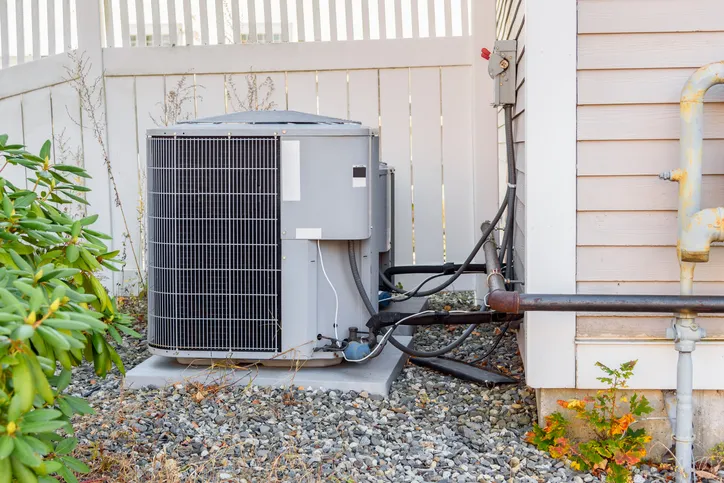
Why Low Refrigerant Signs in Your AC System Are Worth Taking Seriously
The low refrigerant signs in your AC system are easy to miss at first — a little less cool air here, a slightly higher electric bill there. But those small changes can quietly snowball into one of the most expensive repairs a homeowner faces: a failed compressor.
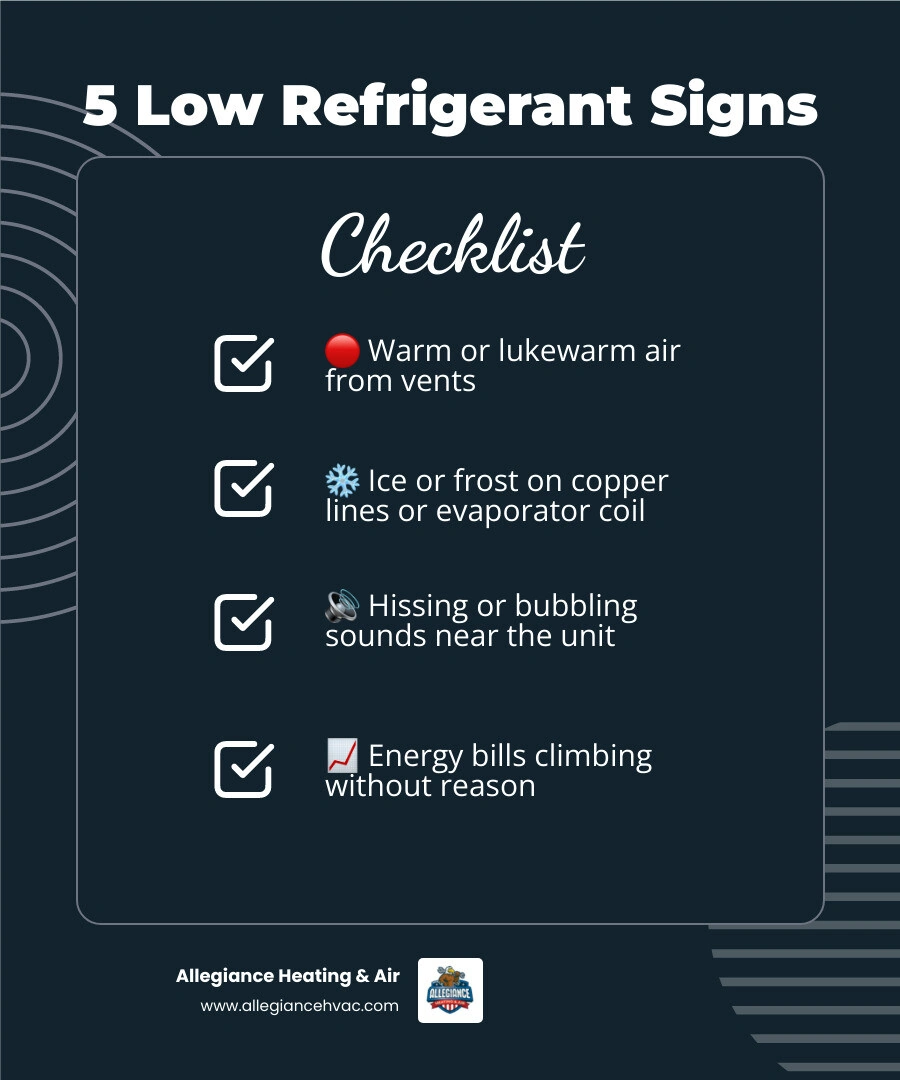
Here are the most common signs your AC may be low on refrigerant:
- Warm or lukewarm air blowing from your vents
- Ice or frost forming on the copper refrigerant lines or evaporator coil
- Hissing or bubbling sounds near your indoor or outdoor unit
- Energy bills climbing without an obvious reason
- High indoor humidity and uneven cooling throughout your home
If any of these sound familiar, your AC is likely working far harder than it should — and getting far less done. A properly charged system should deliver air roughly 18 to 22 degrees colder than the air it pulls in. When refrigerant levels drop, that temperature split shrinks, your system strains to compensate, and the whole cooling cycle starts breaking down.
The thing is, refrigerant doesn't just disappear. Your AC runs on a completely sealed, closed-loop system — meaning if the level is low, there's a leak somewhere. That leak won't fix itself, and the longer it goes unaddressed, the worse the damage gets.
This guide walks through each warning sign in plain language, explains what's happening inside your system, and helps you know when it's time to call a licensed HVAC technician in Greenville, IN.
Understanding the Closed-Loop Cooling Cycle
To truly understand why a drop in refrigerant causes such chaotic behavior in your air conditioner, we have to look at how the cooling cycle actually works. Many homeowners naturally assume that an air conditioner "consumes" refrigerant the same way a car burns through gasoline. In reality, your air conditioner does not use up refrigerant at all.
Instead, refrigerant acts like a train on a circular, closed-loop track. It continuously cycles back and forth between your indoor and outdoor units, changing states to absorb heat from inside your home and dump it outdoors.
This process relies heavily on thermodynamic phase changes—moving from a low-pressure gas to a high-pressure liquid and back again:
- Heat Absorption (Indoors): The cycle begins at the indoor evaporator coil. Cold, low-pressure liquid refrigerant flows through these copper coils. As warm indoor air is blown across the coil by your blower fan, the refrigerant absorbs the heat from the air. This rapid heat absorption causes the refrigerant to warm up and evaporate into a gas.
- Heat Rejection (Outdoors): Now carrying your home's heat, the gaseous refrigerant travels through copper lines to the outdoor condenser unit. Here, the compressor compresses the gas, raising its temperature and pressure. The outdoor fan blows air across the condenser coil, releasing the heat into the outdoor air. As it cools, the refrigerant condenses back into a liquid and heads back indoors to repeat the cycle.
Because this is a completely sealed system, the amount of refrigerant should remain exactly the same from day one to year ten. When the system loses even a small amount of this chemical blend, the delicate balance of pressure and temperature is ruined.
If your system cannot complete this cycle efficiently, you will quickly notice comfort issues. For a deeper look at this specific failure, you can read more about Why Your AC is Blowing Warm Air.
5 Critical Low Refrigerant Signs in Your AC System
When your air conditioner's sealed loop develops a leak, the drop in system pressure directly reduces its overall cooling capacity. Because these leaks are often microscopic, you won't usually see a pool of liquid on the ground; the highly pressurized chemical evaporates almost instantly upon escaping.
Instead, you have to rely on physical, auditory, and systemic clues. Recognizing these Air Conditioner Repair Signs early can mean the difference between a simple leak repair and a total system replacement.

1. Warm Air and Weak Airflow
When your system is running low on its heat-transfer medium, the most obvious symptom is a lack of actual cooling. You might stand directly under your supply vents and feel air moving, but it will feel lukewarm, neutral, or only slightly cool instead of crisp and cold.
This happens because there is not enough refrigerant in the evaporator coil to absorb the heat load of the air passing over it. To test this, HVAC technicians measure the "temperature split"—the difference in temperature between the air entering the return vent and the air blowing out of the supply vents.
- A healthy, properly charged system boasts a temperature split of 18 to 22 degrees Fahrenheit.
- An undercharged system might only manage a 5-to-10-degree difference, leaving your home sticky and warm even though the system runs around the clock.
Physical Low Refrigerant Signs in Your AC System and Ice Buildup
It sounds completely backward: how can a system that is failing to cool your home end up covered in actual ice during a hot summer afternoon?
This classic paradox is entirely due to pressure drops. Refrigerant relies on precise pressure levels to function. When a leak lowers the overall volume of refrigerant, the pressure inside the indoor evaporator coil plummets. In thermodynamics, a drop in pressure causes a corresponding drop in temperature.
As the pressure falls too low, the temperature of the copper evaporator coil drops well below freezing. When warm, humid household air blows across this sub-freezing coil, the moisture in the air instantly condenses and freezes solid on contact.
Over hours of operation, this frost builds up into a thick sheet of ice, completely insulating the coil and blocking airflow. If left running, this ice will travel along the copper lines all the way to your outdoor unit.
If you notice frost or ice forming on your indoor cabinet or outdoor copper lines, you should shut the system off immediately to let it melt and call a professional. For those living in Floyd County, we offer specialized assistance with Fixing a Refrigerant Leak in Lanesville, IN.
How to Spot Low Refrigerant Signs in Your AC System Through Sound
Sometimes, your ears will detect a refrigerant leak before your thermostat does. Because the refrigerant lines are highly pressurized, escaping gas or liquid makes distinct sounds as it squeezes through a tiny pinhole leak:
- A Hissing Sound: This typically indicates a gas-state leak. You are most likely to hear this faint, steady hiss near the indoor evaporator coil cabinet or near the joints of the outdoor condenser unit. It sounds similar to air slowly escaping from a bicycle tire.
- A Bubbling or Gurgling Noise: This points to a liquid-state leak or a severe pressure imbalance where air has entered the sealed system, causing the liquid refrigerant to bubble as it circulates through the copper lines.
If you hear either of these sounds while standing near your HVAC equipment, it is a clear indicator that the structural integrity of your pressurized lines has been compromised.
4. Spiking Energy Bills and Constant Running
Have your summer utility bills suddenly jumped compared to the same month last year, even though your family's daily habits haven't changed?
When an air conditioner is low on refrigerant, its cooling efficiency drops dramatically. In fact, units running on a low charge often operate at only 60 to 70 percent of their original efficiency.
Because the system cannot reach your thermostat's setpoint in a standard 15-to-20-minute cycle, it enters an extended cooling cycle. It will run continuously for hours, trying in vain to cool the home. This constant power draw rapidly increases your energy consumption, leading to high utility bills while leaving you with a warm, uncomfortable house.
5. High Indoor Humidity and Uneven Cooling
An air conditioner's secondary job is dehumidification. As warm air passes over a cold evaporator coil, moisture naturally condenses out of the air and drains away, keeping your indoor relative humidity within a comfortable 30% to 50% range.
When low refrigerant prevents the evaporator coil from maintaining the correct temperature, it loses its ability to extract moisture effectively. Your home will begin to feel sticky, muggy, and heavy.
Furthermore, you will notice highly uneven cooling. Because the weakened system cannot produce enough cold air to satisfy the entire duct network, rooms furthest from the indoor unit—especially upstairs bedrooms—will remain hot and stagnant, while rooms closer to the air handler might feel slightly cooler.
Why Ignoring Low Refrigerant Leads to System Damage
Many homeowners are tempted to ignore a slow leak and simply deal with a slightly warmer house to delay calling for service. However, running an undercharged air conditioner places immense mechanical strain on your equipment, frequently leading to catastrophic failures that require AC Problems That Require Expert Repair.

Compressor Overheating and Failure
The compressor is widely considered the "heart" of your air conditioning system. It is also the single most expensive component to replace.
Refrigerant does more than just cool your home; the cool gas returning from the indoor coil is actually what keeps the compressor motor cool during operation. When refrigerant levels are low, the compressor receives less cooling gas, causing it to experience extreme heat stress.
As it overworks to pump what little refrigerant remains, it will rapidly overheat, break down its internal lubricating oil, and eventually suffer complete electrical or mechanical burnout.
Liquid Slugging Risks
Another severe mechanical risk of low refrigerant is a phenomenon known as "liquid slugging." When the evaporator coil freezes over due to low pressure, it can no longer absorb heat from your indoor air.
As a result, the refrigerant does not evaporate into a gas as it should; instead, it remains a cold liquid and flows back down the return line directly into the compressor.
Because liquids cannot be compressed, this "liquid floodback" slams into the compressor's internal pistons, valves, and connecting rods, causing immediate and permanent physical destruction of the motor.
Frequently Asked Questions About AC Refrigerant
Navigating air conditioning issues can be confusing. Here are clear answers to the most common questions we hear from homeowners in Southern Indiana.
Can I add refrigerant to my AC myself?
No, you should never attempt to add refrigerant to your home's air conditioner yourself. There are several critical reasons for this:
- Legal Restrictions: Under EPA Section 608 regulations, it is illegal for anyone without professional certification to purchase, handle, or recover residential refrigerants.
- Safety Hazards: Refrigerant is stored under extreme pressure and can cause severe chemical burns, frostbite on bare skin, and respiratory issues if inhaled.
- Risk of Overfilling: Without specialized manifold gauges, temperature probes, and precise calculation scales, it is incredibly easy to overcharge a system. Too much refrigerant is just as destructive to a compressor as too little, as it builds up dangerous high-pressure levels.
Professional leak repair involves finding the leak, evacuating the remaining charge safely, sealing the breach, and recharging the system to exact manufacturer specifications.
What causes refrigerant levels to drop?
Since your AC is a sealed system, a drop in refrigerant is always caused by a physical leak. These leaks typically stem from a few common culprits:
- Formicary Corrosion: This chemical reaction occurs when copper tubing reacts with microscopic indoor air pollutants, such as formaldehyde found in common household cleaners, building materials, and cosmetics. This corrosion creates microscopic pinhole leaks in the evaporator coil.
- Vibration Wear: As your system runs, the natural vibration of the compressor and fans can cause copper lines to rub against the unit's metal frame or other components, eventually wearing a hole through the metal.
- Weakening Seals and Joints: Over time, rubber seals, brass fittings, and soldered joints can weaken and expand due to seasonal temperature shifts, allowing gas to slowly seep out.
- The 10 to 15 Year Vulnerability: As air conditioners age past the decade mark, they become significantly more prone to these issues due to cumulative wear and tear.
Is it safe to run my AC with low refrigerant?
No, it is not safe or advisable to continue running your air conditioner if you suspect it is low on refrigerant.
Doing so will lock your system into a cycle of continuous operation, accelerating wear on the fan motors and risking total compressor burnout. Furthermore, the ice buildup caused by low refrigerant can block airflow entirely, stress your electrical components, and cause water damage to your ceilings or floors when the ice eventually thaws and overflows your condensate pan.
If you suspect a leak, the best preventative measure is to shut the system down at the thermostat and call for professional service immediately.
Conclusion
Catching the low refrigerant signs in your AC system early is the key to protecting your budget and ensuring your family stays comfortable through the humid summer months. Whether you are dealing with lukewarm airflow, frozen copper lines, or a sudden spike in your monthly energy bills, ignoring these subtle warnings will only lead to more severe damage down the road.
At Allegiance Heating & Air, we have been "Taking Home Comfort Under Our Wing" since 2005. As a family-owned business serving Greenville, IN, and surrounding communities like Floyds Knobs, Georgetown, and New Albany, we pride ourselves on sending trusted, professional technicians to solve your HVAC problems honestly and transparently. We don't believe in temporary band-aids—we find the root cause of your leak, repair it properly, and restore your system's peak efficiency.
Don't let a small leak turn into an expensive compressor replacement. Schedule professional AC service today with our experienced team and keep your home cool all summer long.
Contact Us Or Schedule Expert Service
Other Blogs
ready to transform your home?
Discover our exceptional home services tailored to meet your needs and enhance your living space.
WHAT OUR CLIENTS HAVE TO SAY ABOUT US

We had a complete HVAC system and a hot water heater installed. The guys were professional, well mannered, and completed the work in a timely manner. Would definitely use them again.
I was nervous at first because my AC broke in the middle of 80 degree weather which is strange for April, but Allegiance Heating and Air was incredibly prompt and professional. The technician arrived within an hour, explained the problem clearly, and completed the repair. The technician , Mr. Garrett Moon was a very nice and courteous young man. He found the problem and fixed it within a timely manner. I highly recommend them for any heating or cooling needs. I’ll definitely give them a call again should I ever have another issue, but hopefully not. Knock on wood 😁. Give them a call… you won’t be disappointed!
From the moment I called to schedule a service, the team was quick to respond and arrived right on time. The technician was professional, friendly, and clearly knowledgeable about my heating system. He explained the repair options in plain language and completed the job efficiently. I appreciated the reliable service and the fact that the work was done the same day. I would definitely recommend Allegiance Heating and Air for any residential HVAC needs.
5/5 stars – I was very impressed with the efficient, affordable and timely service from Allegiance Heating and Air. The technician arrived on time, and performed the service quickly, no repairs needed at this time. Communication was clear and the whole experience felt hassle‑free. I would definitely recommend them for any residential HVAC needs.
Knowledgeable, experienced individual.
Explains Allegiance Heating and Air was incredibly reliable, professional and affordable. They arrived right on time, kept the work area clean and finished the furnace repair quickly. The technician explained everything clearly and the price was a great value. If happiness had a location on Google Maps, it would be here.
Gilbert had to go above and beyond because York is no longer making the part for my furnace. But he was able to find a way to construct a housing bracket for my furnace. Ingenuity, determination and integrity is what finally got my furnace fixed. Gilbert is truly a one of a kind technician.
Thank you for always going the extra mile. Gilbert is always respectful and helpful with any concerns.
"Great service, most knowledgeable and capable HVAC business in Kentuckiana!! Pete Flemming and Bryan the owner, are HVAC encyclopedias. They have the highest integrity of any HVAC business I have ever used. Allegiance has put numerous units in for me over the last 17 years. I will continue to use and trust them."
"Fast response from Allegiance when our heat was out on New Year’s day! Service technician was friendly and efficient. He took the time to explain the problem, tell us about the temporary fix and the plan for permanent repair. We were impressed!"
"Love Allegiance! Their technicians, in particular Benjamin, explain everything. Fast and thorough. A/C was out on a Sunday. Called Allegiance and within a few hours Benjamin arrived. Such a comfort as he was the one who last serviced our units. He quickly replaced part and cooling is restored!"
"My heat pump went out and I had to call after hours. The technician (Garrett) was outstanding and thorough. He got my system up and working until Monday and gave me several options of units. Also took the time to explain the issue to my Home warranty company. I highly recommend this company."
"Right on time :) respectful, fast, and polite. Even gave my fur babies some attention."
"Had Garrett out today to fix our AC. Fantastic tech. He showed up exactly when he said he would and kept us informed of what he was checking and what he found. Highly recommend!"
"Lucas with Allegiance showed up on time as promised, was professional and extremely patient and responsive with all my questions. He took care of the issue, and I feel he was trustworthy! He had us back to cool and comfortable on one of the hottest days of the year."
"Lucas did a great job! Very professional and expedient. Explained the process very well and represented Allegiance as a truly professional and reputable company."
"Arrived on time and work diligently to fix issue. These guy are great. Worked quickly to resolve my issues."
"Lucas was great - he spent a lot of time trying to figure out what was going on and explained everything he was doing. I trust Allegiance and wouldn’t want anyone else working on/in my house!!"

RELATED ARTICLES

Rapid Response: Your Guide to Emergency Furnace Services in Clarksville
Everything You Need to Know About Heat Pump Repair in Greenville IN