Why AC Making Strange Noises What They Mean Matters for Your Home Comfort
AC making strange noises what they mean is something every homeowner should understand — because those sounds are your system's way of flagging a problem before it becomes a costly breakdown.
Here is a quick reference so you know what you are dealing with right away:
• Banging — Most Likely Cause: Loose or broken part in compressor or blower — Urgency: High — shut off immediately
• Hissing — Most Likely Cause: Refrigerant leak or high compressor pressure — Urgency: High — shut off immediately
• Screeching / Squealing — Most Likely Cause: Worn motor bearings or high compressor pressure — Urgency: High — shut off immediately
• Buzzing — Most Likely Cause: Electrical issue, frozen coils, or faulty fan — Urgency: Medium-High — call a pro soon
• Clicking (repeated) — Most Likely Cause: Failing capacitor, relay, or thermostat — Urgency: Medium — schedule service
• Rattling — Most Likely Cause: Loose panels, debris, or hardware — Urgency: Low-Medium — inspect and tighten
• Whistling — Most Likely Cause: Clogged air filter or blocked return vent — Urgency: Low — check filter first
• Gurgling — Most Likely Cause: Clogged drain line or refrigerant air bubbles — Urgency: Medium — monitor and call if it persists
• Grinding — Most Likely Cause: Worn motor bearings — Urgency: High — shut off immediately
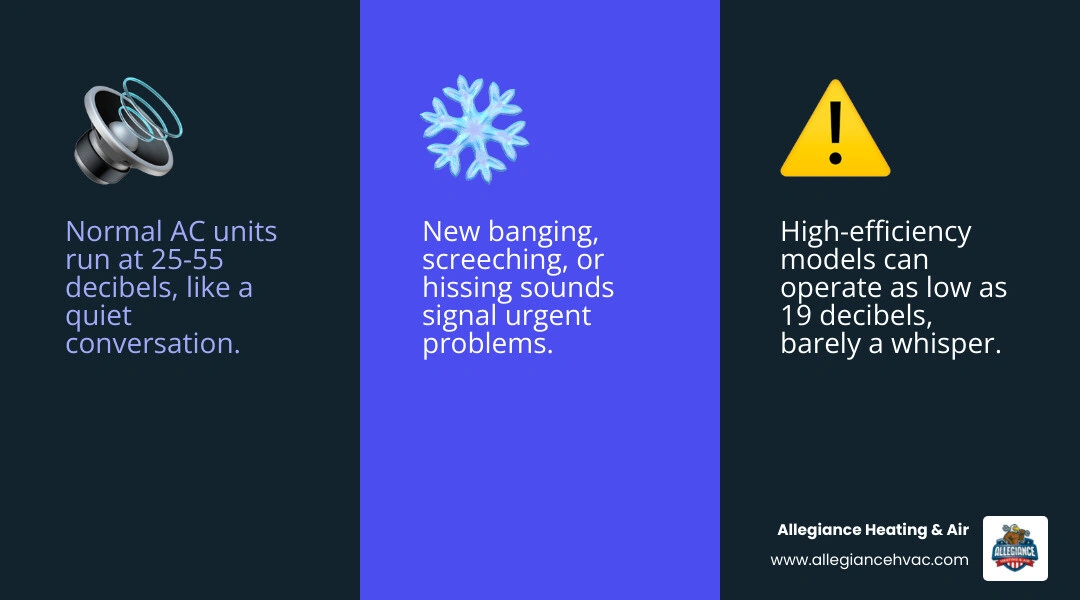
Most modern air conditioners run between 25 and 55 decibels — about as loud as a quiet conversation. High-efficiency units can run as low as 19 decibels, which is barely a whisper. So when your system starts making new or unusual sounds, that is a clear signal something is off.
Some noises — like a single soft click when the system starts or a brief hiss right after it shuts down — are completely normal. But sounds like banging, screeching, or persistent hissing while the system is running are never something to ignore. Catching them early is one of the best ways to protect your equipment and avoid an emergency repair on the hottest day of the year.
In this guide, we break down exactly what each sound means, what you can safely check yourself, and when it is time to call a licensed technician.
Identifying AC Making Strange Noises What They Mean for Your Home
When we talk about an ac making strange noises what they mean, we are essentially translating the "language" of your HVAC system. A healthy unit should produce a steady hum and the gentle "whoosh" of air moving through your vents. Anything outside of that—especially sounds that are sharp, metallic, or rhythmic—is usually a cry for help.
Is Your Ac Making Unusual Noises? It’s important to distinguish between the location of the sound. Is it coming from the "head" unit inside your home, or is the ruckus starting at the condenser unit sitting outside? Narrowing down the location is the first step in a successful diagnosis.
Why is my indoor ac making strange noises what they mean?
Your indoor unit is designed to be the quietest part of the system. In fact, some modern variable-speed units operate at barely 19 decibels. If your indoor unit is getting chatty, here is what it might be trying to say:
• Clicking: A single click when the cycle starts or ends is normal—that’s just the thermostat relay doing its job. However, repeated clicking is a sign of an electrical communication problem. It could mean a failing control board, a dying thermostat, or a capacitor that can’t quite kickstart the motor.
• Gurgling or Bubbling: This often sounds like someone finishing a soda through a straw. It usually points to one of two things: a clog in your condensate drain line or air bubbles in the refrigerant lines. If it's the drain line, you might notice Water Leaks From Your Ac Unit nearby.
• Whistling: This is often the "tea kettle effect." It happens when your blower fan is trying to pull air through a space that is too small or restricted. The most common culprit is a filthy air filter. When air is forced through a clogged filter or a closed vent, it creates that high-pitched whistle.
• Thwapping: If it sounds like a playing card in bicycle spokes, something is likely stuck in the blower blades. Small debris or even a loose piece of insulation can get caught in the "squirrel cage" fan, creating a tapping sound.
Decoding outdoor ac making strange noises what they mean
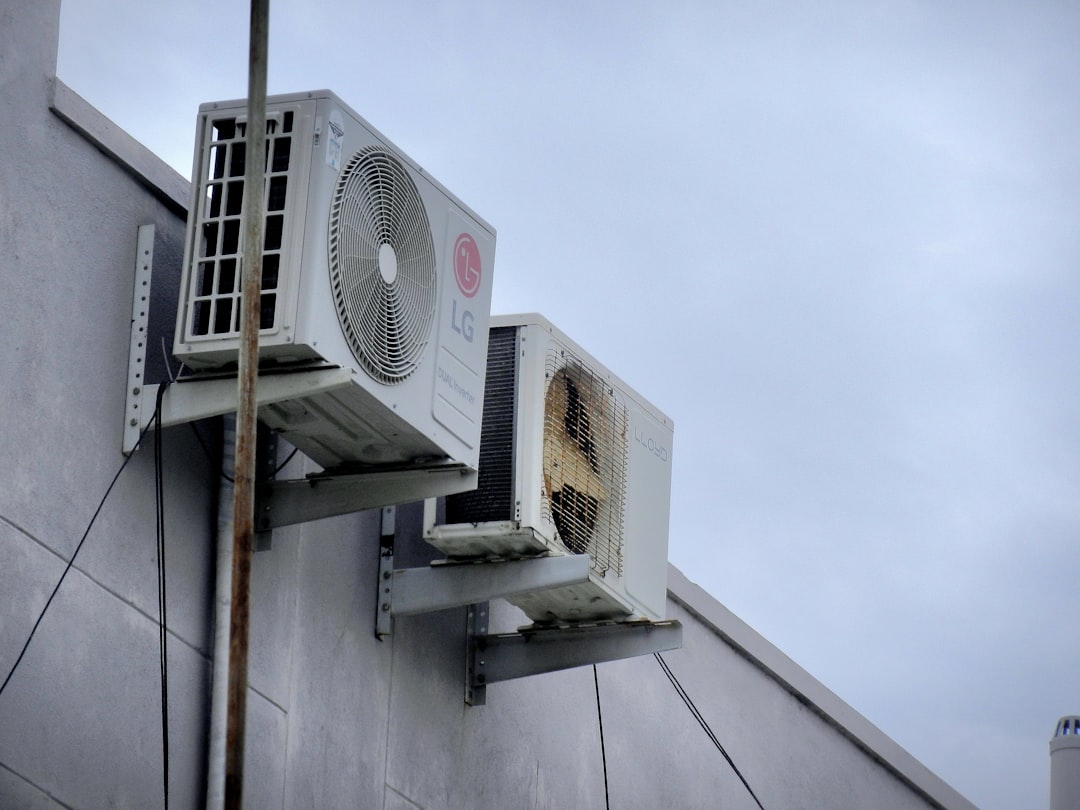
The outdoor unit (the condenser) houses the heart of your system: the compressor. Because it’s exposed to the elements in places like Floyds Knobs or Georgetown, it’s more prone to mechanical wear and debris.
• Clanking: This is a heavy, metallic sound. It often indicates that the blower fan or the compressor has a loose or unbalanced part. In some cases, it could mean the compressor itself has failed internally, with a piston pin or connecting rod coming loose.
• Grinding: This is almost always the sound of metal-on-metal. It usually means the bearings in your condenser fan motor have worn down and lost their lubrication. This is an urgent issue; if the motor seizes, it can lead to Ac Problems That Require Expert Repair.
• Humming or Buzzing: A loud buzz from the outdoor unit can signal an electrical issue, such as a failing contactor or a motor that is trying to start but can't. If you hear humming but the fan isn't spinning, turn the unit off immediately to prevent the motor from burning out.
• Banging: This is the most serious sound. It typically means a part has completely broken off inside the sealed compressor. Since compressors are sealed units, a banging compressor often requires a full replacement of the component.
Troubleshooting Common AC Noises Before Calling for Service in Greenville
Before you panic and assume you need a brand-new system, there are a few simple DIY steps you can take. We always recommend safety first, so if you are ever uncomfortable, give us a call at Allegiance Heating & Air.
1. Check the Air Filter: If you hear whistling or wheezing, pull out your filter. If you can’t see light through it, it’s time for a change. A dirty filter causes pressure imbalances that create strange noises and can even lead to frozen evaporator coils.
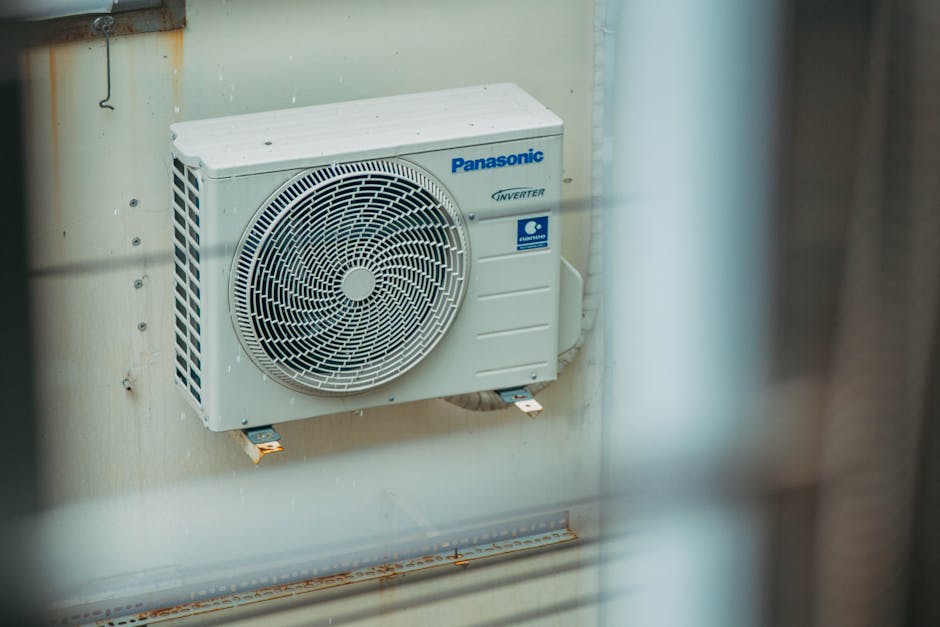
2. Clear Outdoor Debris: Turn off the power to your unit and check for twigs, leaves, or stones that may have fallen into the condenser. Even a small stick hitting the fan blades can sound like a jackhammer. Ensure you have at least two feet of clear space around the unit.
3. Tighten the Screws: Sometimes a "scary" rattling sound is just a loose cabinet panel. Grab a screwdriver and ensure all the exterior screws on your unit are snug. The vibration of the motor can loosen these over time, especially in older units.
4. Inspect the Vents: Make sure at least 80% of your home's vents are open and unblocked by furniture or rugs. Blocked vents cause air to "back up" in the ducts, leading to whistling or popping sounds as the metal ducts expand and contract.
For more detailed steps, check out our Guide To Air Conditioner Repair.
When to Shut Down Your System and Call for Emergency Repair
There are some sounds that you should never "wait and see" with. If you hear the following, turn your AC off at the thermostat and the breaker immediately. Continuing to run the system could lead to catastrophic damage or even safety hazards.
• Screaming or High-Pitched Hissing: If your outdoor unit sounds like a jet engine or a screaming teakettle, it could be a sign of dangerously high pressure within the compressor. Most modern systems have safety shut-offs for this, but if yours doesn't, it’s one of the most Common Ac Emergency Situations we encounter.
• Loud Banging: As mentioned, this is a sign of internal mechanical failure. If a loose part flies off inside the unit, it can destroy other expensive components in seconds.
• Electrical Buzzing with a Burning Smell: If the noise is accompanied by the scent of ozone or burning plastic, you have an electrical short. This is a fire risk and requires Signs You Need Emergency Ac Repair.
• Persistent Hissing: While a brief hiss after shutdown is normal (refrigerant equalizing), a constant hissing while running is a surefire sign of a refrigerant leak. Refrigerant is essential for cooling but can be a health hazard if it leaks into your living space.
Preventing Future Disruptions with Professional Maintenance
The best way to deal with a noisy AC is to prevent the noise from starting in the first place. Most strange sounds are the result of "domino effect" neglect. For example, a slightly dirty coil makes the motor work harder, which wears out the bearings, which eventually leads to a screeching failure.
During a professional maintenance visit, our technicians perform several "silencing" tasks:
• Motor Lubrication: We apply specialized non-detergent oil to fan motor bearings to prevent grinding and screeching.
• Coil Cleaning: Clean coils allow for smooth airflow, eliminating the "wheezing" sounds associated with restricted systems.
• Electrical Tightening: We check and tighten all electrical connections to prevent the buzzing sounds caused by loose wires or failing contactors.
• Component Monitoring: We check refrigerant levels and compressor health to catch high-pressure issues before they turn into "screaming" emergencies.
Whether you need an Ac Repair Pewee Valley Complete Guide or an Ac Repair La Grange Ultimate Guide, regular tune-ups are the key to a long-lived, quiet system.
Frequently Asked Questions about Noisy Air Conditioners
Is it safe to run my AC if it’s making a loud banging noise?
No, it is not safe. A banging noise usually means a metal component—like a fan blade or a part of the compressor—has come loose or broken. If you keep the system running, that loose part can act like shrapnel, causing irreparable damage to the rest of the unit. It is much better to shut it down and have a technician find the loose part than to risk needing a total system replacement.
Why does my air conditioner click repeatedly when it tries to turn on?
Repeated clicking is often a sign of an electrical struggle. Your thermostat is sending the signal to start, but a component—usually the capacitor or the contactor—is failing to respond. Think of the capacitor like a battery that gives the motor the "kick" it needs to start. If it's weak, you'll hear the clicking of the relay but the motor won't turn over. This requires a professional diagnosis to avoid further electrical damage.
Can a dirty air filter cause my AC to make whistling sounds?
Absolutely. Whistling is caused by airflow restriction. When your air filter is clogged with dust, pet hair, and debris, the blower fan has to work much harder to pull air through. This creates a high-pressure environment where air is forced through tiny gaps at high speeds, resulting in a whistle or a high-pitched "whine." Changing your filter every 1-3 months is the easiest way to keep your system quiet and efficient.
Conclusion
At Allegiance Heating & Air, we’ve been "Taking Home Comfort Under Our Wing" since 2005. We know that a noisy air conditioner is more than just an annoyance—it’s a source of stress. Whether you are in New Albany, Sellersburg, or right here in Greenville, our family-owned business is dedicated to providing honest, transparent service.
Don't ignore the warning signs. If you notice any of these Air Conditioner Repair Signs, it's time for an expert look. Our licensed and insured technicians have the experience to diagnose the root cause of your AC's "weirdest sounds" and restore the peace and quiet your home deserves.
For more information or to schedule a professional diagnosis, visit our page for more info about air conditioning services. We are here to ensure your comfort all year round!
Contact Us Or Schedule Expert Service
Other Blogs
ready to transform your home?
Discover our exceptional home services tailored to meet your needs and enhance your living space.
WHAT OUR CLIENTS HAVE TO SAY ABOUT US

We had a complete HVAC system and a hot water heater installed. The guys were professional, well mannered, and completed the work in a timely manner. Would definitely use them again.
I was nervous at first because my AC broke in the middle of 80 degree weather which is strange for April, but Allegiance Heating and Air was incredibly prompt and professional. The technician arrived within an hour, explained the problem clearly, and completed the repair. The technician , Mr. Garrett Moon was a very nice and courteous young man. He found the problem and fixed it within a timely manner. I highly recommend them for any heating or cooling needs. I’ll definitely give them a call again should I ever have another issue, but hopefully not. Knock on wood 😁. Give them a call… you won’t be disappointed!
From the moment I called to schedule a service, the team was quick to respond and arrived right on time. The technician was professional, friendly, and clearly knowledgeable about my heating system. He explained the repair options in plain language and completed the job efficiently. I appreciated the reliable service and the fact that the work was done the same day. I would definitely recommend Allegiance Heating and Air for any residential HVAC needs.
5/5 stars – I was very impressed with the efficient, affordable and timely service from Allegiance Heating and Air. The technician arrived on time, and performed the service quickly, no repairs needed at this time. Communication was clear and the whole experience felt hassle‑free. I would definitely recommend them for any residential HVAC needs.
Knowledgeable, experienced individual.
Explains Allegiance Heating and Air was incredibly reliable, professional and affordable. They arrived right on time, kept the work area clean and finished the furnace repair quickly. The technician explained everything clearly and the price was a great value. If happiness had a location on Google Maps, it would be here.
Gilbert had to go above and beyond because York is no longer making the part for my furnace. But he was able to find a way to construct a housing bracket for my furnace. Ingenuity, determination and integrity is what finally got my furnace fixed. Gilbert is truly a one of a kind technician.
Thank you for always going the extra mile. Gilbert is always respectful and helpful with any concerns.
"Great service, most knowledgeable and capable HVAC business in Kentuckiana!! Pete Flemming and Bryan the owner, are HVAC encyclopedias. They have the highest integrity of any HVAC business I have ever used. Allegiance has put numerous units in for me over the last 17 years. I will continue to use and trust them."
"Fast response from Allegiance when our heat was out on New Year’s day! Service technician was friendly and efficient. He took the time to explain the problem, tell us about the temporary fix and the plan for permanent repair. We were impressed!"
"Love Allegiance! Their technicians, in particular Benjamin, explain everything. Fast and thorough. A/C was out on a Sunday. Called Allegiance and within a few hours Benjamin arrived. Such a comfort as he was the one who last serviced our units. He quickly replaced part and cooling is restored!"
"My heat pump went out and I had to call after hours. The technician (Garrett) was outstanding and thorough. He got my system up and working until Monday and gave me several options of units. Also took the time to explain the issue to my Home warranty company. I highly recommend this company."
"Right on time :) respectful, fast, and polite. Even gave my fur babies some attention."
"Had Garrett out today to fix our AC. Fantastic tech. He showed up exactly when he said he would and kept us informed of what he was checking and what he found. Highly recommend!"
"Lucas with Allegiance showed up on time as promised, was professional and extremely patient and responsive with all my questions. He took care of the issue, and I feel he was trustworthy! He had us back to cool and comfortable on one of the hottest days of the year."
"Lucas did a great job! Very professional and expedient. Explained the process very well and represented Allegiance as a truly professional and reputable company."
"Arrived on time and work diligently to fix issue. These guy are great. Worked quickly to resolve my issues."
"Lucas was great - he spent a lot of time trying to figure out what was going on and explained everything he was doing. I trust Allegiance and wouldn’t want anyone else working on/in my house!!"

RELATED ARTICLES
Counting Your Cold Hard Cash with High Efficiency HVAC Savings

Who's the Hottest? Finding the Best Heat Pump Repair in Louisville, KY