The Silent Ceiling Stain: How Algae Growth in Condensate Lines Causes Late-Summer Leaks
That sudden brown water ring on your ceiling isn't a roof issue—it's likely your attic AC. See how months of summer humidity cause drain clogs and what to do next.

The Sudden Nightmare: Spotting a Ceiling Leak Below Your AC
Dealing with the silent ceiling stain: how algae growth in condensate lines causes late-summer leaks is a situation that strikes panic into any homeowner. You walk into your hallway or living room, look up, and see a spreading brown water ring on the drywall. When that stain appears directly beneath your attic, your first thought might be a failing roof. However, if you are deep into the sweltering August late-summer humidity, our team at Allegiance Heating & Air can tell you the culprit is almost always your air conditioning system.
To get this issue under control and protect your home from further water damage, connecting with professional air conditioning services is your most critical next step. We have seen minor drips quickly escalate into a catastrophic ceiling collapse when ignored.
While a ceiling leak feels like a sudden, out-of-the-blue emergency, the reality is much different. This specific type of water damage is usually the final result of months of invisible biological buildup happening inside your attic air handler. Your cooling system works relentlessly to keep your home comfortable, but that process generates a massive amount of water. When the pathways designed to carry that water away become compromised, gravity takes over, and your ceiling absorbs the overflow. Understanding exactly why this happens is the key to stopping the damage now and preventing it from happening again.
Why Attic Air Handlers Are Particularly Vulnerable
In our experience servicing local cooling systems, placing HVAC equipment in the attic is standard practice for thousands of Greenville IN homes with attic air handlers. It saves valuable floor space and allows for easier ductwork distribution. However, suspending a water-producing appliance directly above your living spaces carries inherent risks that require active management.
The intense, prolonged humidity of the Ohio River Valley maximizes the volume of moisture your system must extract daily. When you are preparing your AC for a humid Indiana summer, understanding how much water moves through that attic space is crucial.
The Daily Workload of Your AC
Your air conditioner does more than just pump cold air into your rooms; it actively dehumidifies your home. Here is how that daily workload breaks down:
1. Warm air enters the system: The blower fan pulls hot, sticky indoor air across the freezing cold evaporator coil.
2. Condensation forms: Just like water beads up on the outside of a cold glass of iced tea on a hot day, moisture from your indoor air condenses on the cold metal coil.
3. Water collects and drains: This condensation drips down into a primary drain pan and is channeled outside through a narrow PVC pipe called a condensate line.
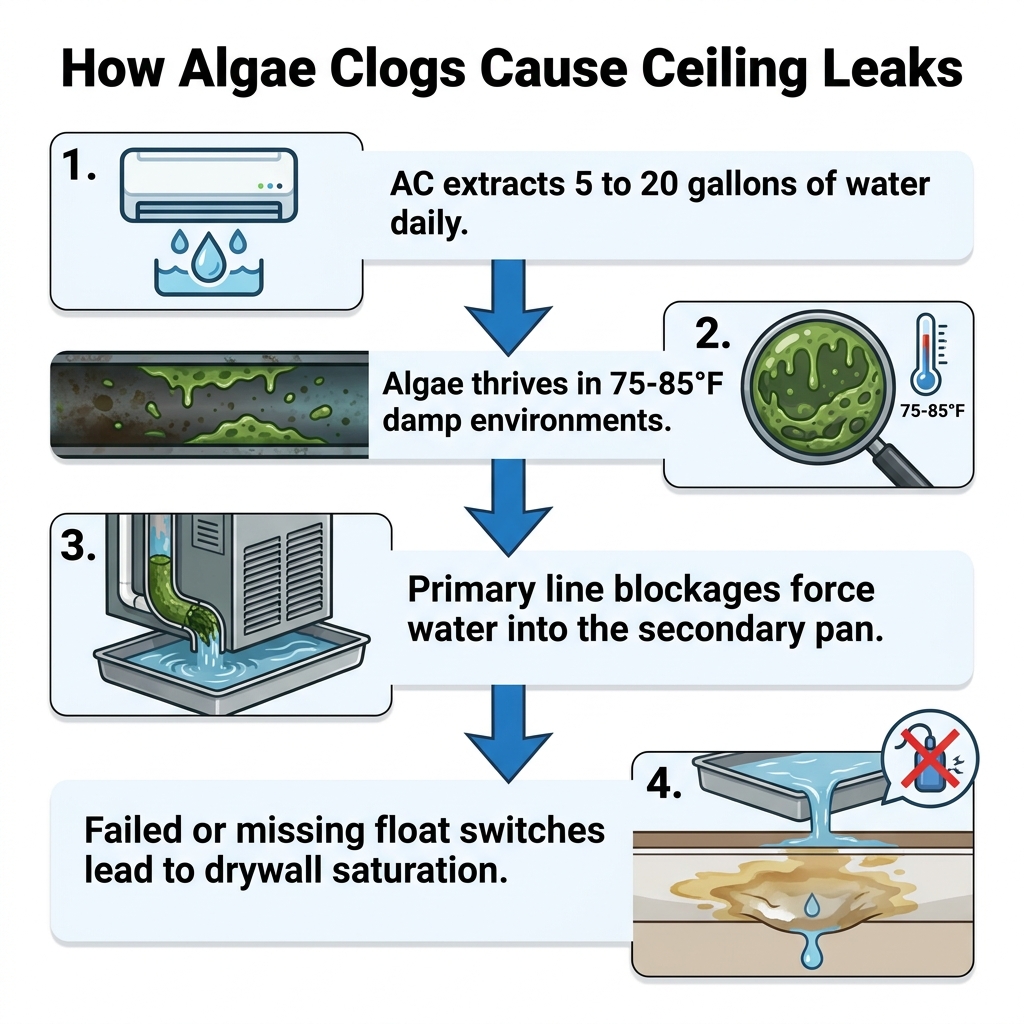
During peak cooling months, a standard central air conditioner can extract anywhere from 5 to 20 gallons of water per day. That is the equivalent of a large bathtub full of water moving through your attic every single week.
The Hidden Attic Environment
Because attics are subjected to extreme temperature fluctuations—often reaching 130 degrees or more during the day—the environment inside the insulated air handler becomes a unique microclimate. It is dark, completely enclosed, and constantly damp from the dripping condensation. This hidden space creates the absolute perfect breeding ground for biological growth, setting the stage for late-summer blockages.
The Invisible Threat: How Algae Blooms Choke Condensate Lines
When our technicians get dispatched to investigate a ceiling leak, the root cause is rarely a broken pipe or a cracked fitting. Instead, it is a biological issue. Algae, mold, and mildew thrive in dark, damp environments where temperatures hover between 75 and 85 degrees Fahrenheit. The interior of your primary drain pan matches these conditions perfectly.
The Problem: By the time August late-summer humidity arrives, your air conditioner has been extracting moisture continuously since May. This cumulative effect fuels aggressive algae growth. Spores that naturally exist in the air are pulled into the system, settle in the standing water of the drain pan, and begin to multiply rapidly. If you are exploring indoor air quality solutions, managing this internal growth is a major factor in keeping your system clean.
The Cause: As the algae blooms, it forms a thick, sticky, jelly-like substance known in the HVAC industry as "zooglea" or simply biological slime. This sludge does not stay confined to the drain pan. As water flows toward the exit, it carries this slime into the primary condensate drain line. Over months of continuous operation, the algae adheres to the inner walls of the narrow PVC pipe.
The Solution: The slime slowly restricts the flow of water, much like plaque building up in an artery. Eventually, a solid mass of algae completely blocks the pipe. With nowhere else to go, the 5 to 20 gallons of water your system produces daily begins to back up, rising higher and higher inside the air handler until it overflows.
The Anatomy of a Clog
A condensate clog does not happen overnight. We typically see it follow a predictable progression:
• Early Summer: A thin film of algae forms in the drain pan. Water still flows freely into the pipe.
• Mid-Summer: The algae thickens and begins sliding into the PVC line. The water drains slower, occasionally pooling in the pan before exiting.
• Late Summer: The heavy, continuous moisture extraction of August feeds a massive bloom. The slime bridges the entire diameter of the pipe, creating a watertight seal. The backup begins immediately.
Primary Pans, Secondary Pans, and Failsafes
HVAC manufacturers know that condensate lines clog. To protect the thousands of Greenville IN homes with attic air handlers, systems are designed with built-in safeguards. Unfortunately, when our team finds these failsafes neglected, damaged, or missing entirely, water breaches the system and destroys the drywall below.
When the Secondary Pan Fails
Your primary drain pan sits directly under the evaporator coil inside the metal cabinet. When the primary line clogs, the water spills over the edge of the internal pan and drops down into a secondary emergency drain pan. This secondary pan is the large metal or plastic tray situated beneath the entire air handler unit.
Many secondary pans are equipped with a critical safety device called a float switch. This small device rests inside the emergency pan. If water begins to fill the pan, a buoyant float rises. Once it reaches a certain height, it trips a switch that automatically shuts off power to your thermostat, stopping the air conditioner from producing any more condensation.
Ceiling leaks occur when this safety chain breaks down. If your secondary pan is rusted through from years of neglect, the water will leak straight through it. If a float switch is missing, malfunctioning, or improperly wired by a previous installer, the AC will keep running, the secondary pan will overflow, and the water will cascade directly onto your ceiling joists and drywall.
• Primary Drain Pan — Location: Inside the air handler cabinet — Primary Function: Catches water dripping directly off the evaporator coil — How It Fails: Cracks from age or overflows due to an algae-clogged main drain line.
• Secondary Drain Pan — Location: Underneath the entire air handler unit — Primary Function: Acts as an emergency catch basin if the primary pan overflows — How It Fails: Rusts through, cracks, or overflows if the float switch fails to shut off the system.
• Float Switch — Location: Clipped to the side of the secondary pan — Primary Function: Shuts off the AC automatically when water levels rise too high — How It Fails: Becomes stuck with debris, disconnected, or was never installed in the first place.

Immediate Triage: What to Do When You Spot a Leak
When you notice a water stain spreading across your ceiling, every minute counts. Drywall absorbs water rapidly, losing its structural integrity and eventually collapsing under the weight. Your immediate goal is to stop the source of the water and protect your property.
Just last year, our team at Allegiance Heating & Air responded to a local homeowner who experienced a total system failure during the hottest week in August, right during the back-to-school transition. Because they acted quickly to shut the system down and called us for emergency help, our technician was able to promptly replace the old, failing system before the ceiling caved in. Surviving the August late-summer humidity requires swift action.
If you spot a leak, follow these safe triage steps:
1. Turn off the air conditioner at the thermostat immediately. Do not simply raise the temperature; switch the system to "Off." This stops the evaporator coil from producing new condensation. The dripping will not stop instantly—the ice on the coil still needs to melt and the pan needs to drain—but you will stop adding new water to the problem.
2. Place a bucket or heavy-duty tarp under the active drip. If water is actively falling into your living space, protect your flooring, rugs, and furniture. Move valuables away from the splash zone.
3. Do not attempt to open the air handler. The inside of an HVAC unit contains high-voltage electrical components. Mixing standing water with heavy electricity poses a severe shock hazard. Leave the cabinet doors securely closed.
4. Call an emergency HVAC professional. You need a licensed technician to safely assess the system, clear the blockage, and ensure the electrical components are dry before turning the power back on. Getting a free estimate on HVAC services will help you understand the scope of the repair.
Why DIY Methods Fail for Late-Summer Clogs
When faced with a clogged drain line, many homeowners turn to internet tutorials for a quick fix. These videos often suggest pouring a mixture of bleach or vinegar down the PVC access pipe to clear the blockage. We always advise our customers against this. For Greenville IN homes with attic air handlers suffering from severe late-summer clogs, these DIY methods are highly ineffective and potentially dangerous.
The Problem: A solid algae plug in late August is thick, dense, and tightly adhered to the walls of the PVC pipe. Pouring liquid over it simply results in the liquid backing up and spilling out of the access pipe, adding more moisture to your attic.
The Cause: Vinegar is a mild acid that is useful for light preventative cleaning, but it lacks the chemical strength to dissolve a solid, jelly-like algae blockage. Bleach is highly corrosive. While it kills biological growth, pouring harsh bleach into your HVAC system can degrade certain types of plastics, weaken PVC joints, and cause severe oxidation on the metal evaporator coil, leading to costly refrigerant leaks down the road.
The Solution: A severe biological clog requires professional-grade tools. At Allegiance Heating & Air, our licensed HVAC technicians use specialized suction vacuums or regulated compressed nitrogen to physically dislodge and push the thick sludge out of the pipe. Furthermore, only a professional can safely open the air handler cabinet to thoroughly sanitize the primary drain pan and verify that the evaporator coil has not been compromised by the standing water.
Long-Term Prevention: Safeguarding Your Ceiling
The absolute best way to handle a condensate leak is to ensure the algae never has a chance to bloom in the first place. Transitioning from emergency response to proactive prevention is the key to protecting your home's structural integrity against August late-summer humidity.
As a local, family-owned HVAC company, our team at Allegiance Heating & Air understands the specific humidity challenges of Southern Indiana. We've spent years clearing out stubborn late-summer clogs, and while we offer prompt emergency response to clear immediate issues, our primary goal is helping you stop leaks before they ruin your ceilings.
Install a Float Switch: If your attic air handler lacks a float switch in the secondary pan, having one installed by our professionals is the single most crucial, cost-effective upgrade you can make. This small device acts as your ultimate failsafe, shutting down the system before water ever touches your drywall.
Apply Preventative Treatments: During routine service visits, professionals can place specialized, slow-release algae-preventative tablets directly into the primary drain pan. These treatments safely inhibit biological growth for months without damaging the metal or plastic components of your system.
Schedule Routine Flushing: Enrolling in a routine HVAC maintenance plan ensures that your drain lines are professionally flushed, inspected, and cleared long before the peak humidity hits. A clean pan and a clear line mean a dry ceiling all summer long.
Frequently Asked Questions About AC Ceiling Leaks
If you are dealing with water dripping from your ceiling, you likely have several urgent questions. Here are the answers to the most common concerns we hear from homeowners with Greenville IN homes with attic air handlers.
Why is my attic AC leaking through the ceiling?
Your attic AC is leaking because the primary condensate drain line is clogged, usually by a buildup of algae and biological slime. When the water cannot exit through the pipe, it backs up, overflows the primary pan, fills the secondary emergency pan, and eventually spills over the sides directly onto your ceiling drywall.
Is an AC leaking water an emergency?
Yes, an AC leaking water into your ceiling is an active property damage emergency. Drywall absorbs moisture rapidly, which ruins paint, weakens the structural integrity of the ceiling, and creates an ideal environment for hazardous mold growth within the walls. You must turn the system off immediately to stop the flow of water.
Can an AC leak cause the ceiling to collapse?
Absolutely. Standard drywall is incredibly heavy when saturated with water. If a secondary drain pan overflows continuously, the water will pool on top of the drywall between the ceiling joists. Once the material becomes completely waterlogged, it will buckle and collapse under its own weight, causing massive damage to the room below.
How do I stop my AC from leaking through the ceiling?
The only immediate way to stop the leak is to turn your thermostat to the "Off" position to stop the system from producing new condensation. Once the unit is off, you must call a licensed HVAC professional to clear the clogged drain line and remove the standing water from the drain pans before the system can be safely restarted.
Why does my AC condensate line keep clogging every summer?
Condensate lines clog repeatedly because the dark, damp, and warm environment inside the air handler is perfect for continuous algae growth. If the line is not professionally flushed and treated with algae-inhibiting tablets during a spring maintenance visit, the intense humidity of summer will inevitably cause the biological slime to return and block the pipe again.
Protect Your Home from Hidden HVAC Leaks
Discovering a water stain on your ceiling is a highly stressful event, especially when you are trying to stay cool during the heavy August late-summer humidity. However, with prompt action and the right professional help, you can mitigate the damage and secure your home.
Do not wait for a minor drip to turn into a major ceiling collapse. Shut off your system at the thermostat immediately to stop the production of condensation, and let our professional technicians safely clear the biological clog. By exploring options for a routine HVAC maintenance plan, you can keep your drain lines clear, your failsafes active, and your ceilings perfectly dry year-round.
Contact Us Or Schedule Expert Service
Other Blogs
ready to transform your home?
Discover our exceptional home services tailored to meet your needs and enhance your living space.
WHAT OUR CLIENTS HAVE TO SAY ABOUT US

We had a complete HVAC system and a hot water heater installed. The guys were professional, well mannered, and completed the work in a timely manner. Would definitely use them again.
I was nervous at first because my AC broke in the middle of 80 degree weather which is strange for April, but Allegiance Heating and Air was incredibly prompt and professional. The technician arrived within an hour, explained the problem clearly, and completed the repair. The technician , Mr. Garrett Moon was a very nice and courteous young man. He found the problem and fixed it within a timely manner. I highly recommend them for any heating or cooling needs. I’ll definitely give them a call again should I ever have another issue, but hopefully not. Knock on wood 😁. Give them a call… you won’t be disappointed!
From the moment I called to schedule a service, the team was quick to respond and arrived right on time. The technician was professional, friendly, and clearly knowledgeable about my heating system. He explained the repair options in plain language and completed the job efficiently. I appreciated the reliable service and the fact that the work was done the same day. I would definitely recommend Allegiance Heating and Air for any residential HVAC needs.
5/5 stars – I was very impressed with the efficient, affordable and timely service from Allegiance Heating and Air. The technician arrived on time, and performed the service quickly, no repairs needed at this time. Communication was clear and the whole experience felt hassle‑free. I would definitely recommend them for any residential HVAC needs.
Knowledgeable, experienced individual.
Explains Allegiance Heating and Air was incredibly reliable, professional and affordable. They arrived right on time, kept the work area clean and finished the furnace repair quickly. The technician explained everything clearly and the price was a great value. If happiness had a location on Google Maps, it would be here.
Gilbert had to go above and beyond because York is no longer making the part for my furnace. But he was able to find a way to construct a housing bracket for my furnace. Ingenuity, determination and integrity is what finally got my furnace fixed. Gilbert is truly a one of a kind technician.
Thank you for always going the extra mile. Gilbert is always respectful and helpful with any concerns.
"Great service, most knowledgeable and capable HVAC business in Kentuckiana!! Pete Flemming and Bryan the owner, are HVAC encyclopedias. They have the highest integrity of any HVAC business I have ever used. Allegiance has put numerous units in for me over the last 17 years. I will continue to use and trust them."
"Fast response from Allegiance when our heat was out on New Year’s day! Service technician was friendly and efficient. He took the time to explain the problem, tell us about the temporary fix and the plan for permanent repair. We were impressed!"
"Love Allegiance! Their technicians, in particular Benjamin, explain everything. Fast and thorough. A/C was out on a Sunday. Called Allegiance and within a few hours Benjamin arrived. Such a comfort as he was the one who last serviced our units. He quickly replaced part and cooling is restored!"
"My heat pump went out and I had to call after hours. The technician (Garrett) was outstanding and thorough. He got my system up and working until Monday and gave me several options of units. Also took the time to explain the issue to my Home warranty company. I highly recommend this company."
"Right on time :) respectful, fast, and polite. Even gave my fur babies some attention."
"Had Garrett out today to fix our AC. Fantastic tech. He showed up exactly when he said he would and kept us informed of what he was checking and what he found. Highly recommend!"
"Lucas with Allegiance showed up on time as promised, was professional and extremely patient and responsive with all my questions. He took care of the issue, and I feel he was trustworthy! He had us back to cool and comfortable on one of the hottest days of the year."
"Lucas did a great job! Very professional and expedient. Explained the process very well and represented Allegiance as a truly professional and reputable company."
"Arrived on time and work diligently to fix issue. These guy are great. Worked quickly to resolve my issues."
"Lucas was great - he spent a lot of time trying to figure out what was going on and explained everything he was doing. I trust Allegiance and wouldn’t want anyone else working on/in my house!!"

RELATED ARTICLES
The Ultimate Guide to Smart Ways to Cool Your Home Without High Bills

How to Change Your HVAC Air Filter in 5 Easy Steps