Why Indoor Air Quality in Greenville, IN Starts With Understanding How Do Air Purifiers and Filtration Systems Work
How do air purifiers and filtration systems work? Here's the short answer:
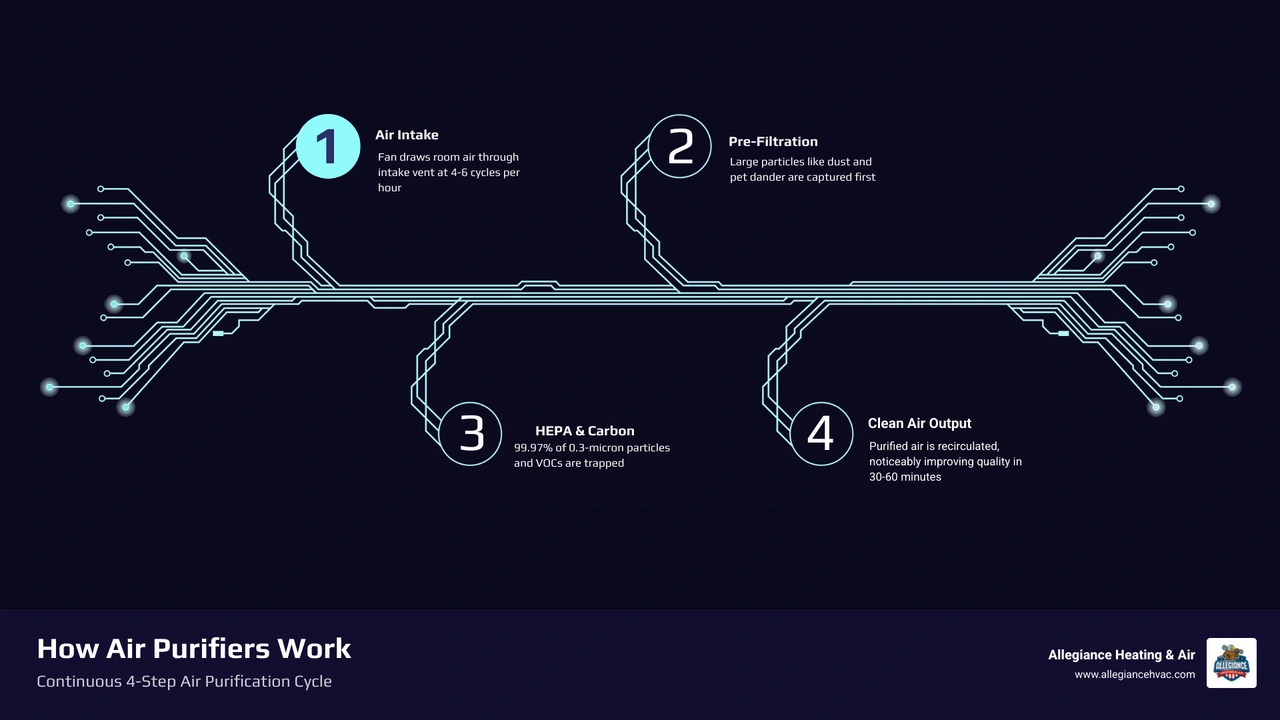
1. Draw in air - A fan pulls room air into the unit through an intake vent
2. Filter it - Air passes through one or more filter stages (pre-filter, HEPA, activated carbon, etc.) that trap or neutralize pollutants
3. Recirculate clean air - Purified air is pushed back into the room
4. Repeat - The cycle runs continuously, cleaning the room's air multiple times per hour
Most quality units complete this cycle 4-6 times per hour, noticeably improving air quality within 30-60 minutes.
Most people assume the air inside their home is clean. It usually isn't. According to the EPA, indoor air can commonly be 2 to 5 times more polluted than the air outside — and in a well-sealed home in Greenville, IN, that gap can be even wider.
Dust, pet dander, pollen, mold spores, cooking smoke, and volatile organic compounds (VOCs) from everyday household products all build up indoors. You can't see most of them. But your lungs feel them — especially if anyone in your home deals with allergies, asthma, or other respiratory sensitivities.
That's where air purifiers and filtration systems come in. Whether you're looking at a portable unit for a single room or a whole-home system tied into your HVAC, understanding how these systems actually work helps you choose the right one and get the most out of it.
This guide breaks down the mechanics, the technologies, and the real-world performance factors — so you can make a confident, informed decision for your home.
Understanding the Mechanics: How Do Air Purifiers and Filtration Systems Work?
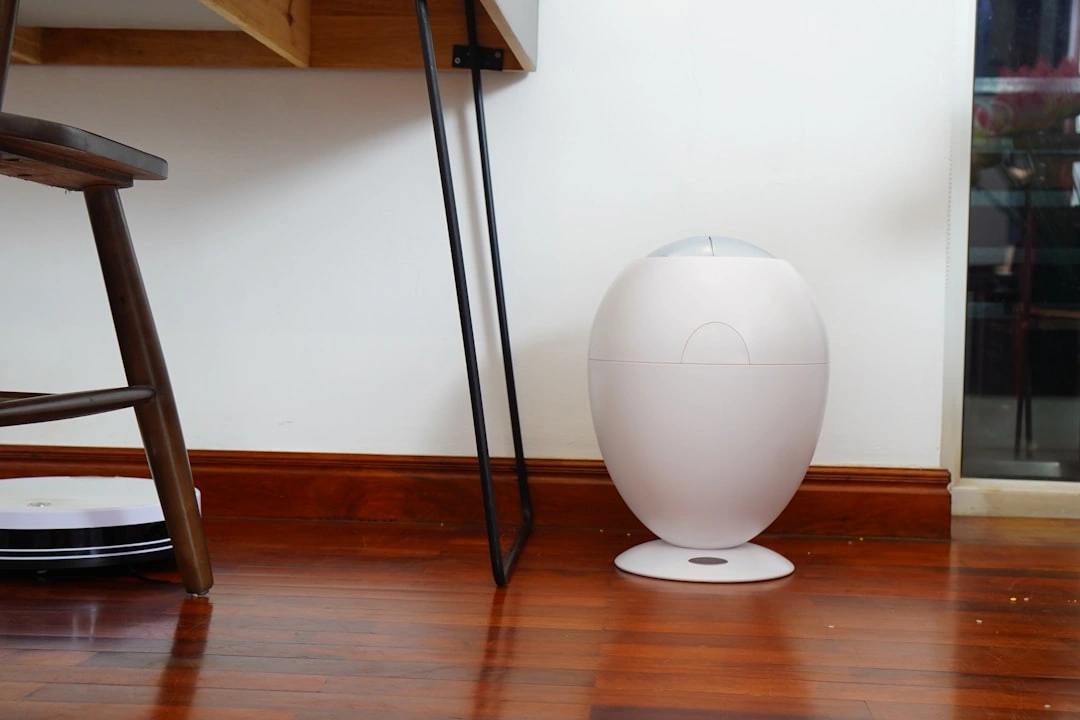
At its heart, an air purifier is a straightforward machine. It doesn't use magic to "vanish" dust; it uses physics. To understand how do air purifiers and filtration systems work, you have to look at the relationship between the motor, the fan, and the filter media.
The process begins when the internal motor spins the fan blades, creating a pressure differential. This suction draws air from your living room or bedroom through an intake grill. Once inside, the air is forced through a series of increasingly dense materials. These materials act like a high-tech sieve, catching particles that are far too small for the human eye to see.
Because pollutants are constantly being generated—think of a dog shaking its coat or the steam from a stovetop—the system must run several times an hour to be effective. For a deeper dive into the specific options available for your home, you can explore the Different Types of Air Cleaners and Their Benefits.
The Core Components of Air Filtration
Every effective air cleaner relies on a few "unsung heroes" inside the chassis:
• The Pre-Filter: This is the first line of defense. It’s a coarse mesh designed to catch the "big stuff"—hair, large dust bunnies, and carpet fibers. By stopping these, it prevents the more expensive internal filters from getting clogged too quickly.
• The Fan Assembly: This determines how much air the unit can move. High-quality fans are designed to move a large volume of air (measured in Cubic Feet per Minute, or CFM) while remaining quiet enough for a bedroom.
• Internal Sensors: Modern "smart" purifiers use laser sensors to detect the concentration of particulate matter in the air. When you fry bacon or the wind kicks up pollen outside, these sensors tell the fan to speed up.
• Air Return: This is the vent where the scrubbed air exits. Many designs aim the air upward or at an angle to ensure it circulates throughout the entire room rather than just hovering around the device.
If you’re considering adding a dedicated system to your home, professional Air Purifier Installation ensures the unit is positioned for maximum airflow and efficiency.
Portable vs. Whole-Home Systems
When homeowners in the Louisville area ask us about air quality, they often wonder if they should buy a "plug-in" unit or upgrade their HVAC system.
Portable Purifiers are designed for single-room coverage. They are excellent for apartments or for targeting a specific "trouble spot," like a bedroom where an allergy sufferer sleeps. They work independently of your heating and cooling system.
Whole-Home Systems, on the other hand, are integrated directly into your HVAC ductwork. These systems clean the air every time your furnace or air conditioner runs. They are much more powerful and can handle the entire square footage of a house simultaneously. For a head-to-head breakdown, see our Air Purifier vs Air Filtration System Comparison.
Comparing Different Air Filtration Technologies
Not all filters are created equal. Depending on whether you're fighting seasonal allergies in Floyds Knobs or smoke odors in New Albany, you'll need different technology.
• HEPA — Best For: Dust, Pollen, Dander — How it Works: Mechanical trapping of 99.97% of particles
• Activated Carbon — Best For: Odors, VOCs, Smoke — How it Works: Adsorption (molecular sticking)
• UV-C Light — Best For: Bacteria, Viruses — How it Works: DNA disruption via light waves
• Electrostatic — Best For: Fine Particles — How it Works: Magnetic-like attraction using charges
HEPA: The Gold Standard
HEPA (High-Efficiency Particulate Air) filters are the industry benchmark. To be called "True HEPA," a filter must capture 99.97% of particles as small as 0.3 microns. To give you some perspective, a human hair is about 70 microns wide. HEPA is incredibly effective against the physical "stuff" floating in our air. If your primary concern is sneezing and itchy eyes, read more about Air Purification vs Filtration: Which is Better for Allergies.
Activated Carbon: The Odor Eater
HEPA filters are great for dust, but they can't stop smells. That’s because odors and gases are molecular, not particulate. Activated carbon filters use a process called adsorption. The carbon is "activated" with oxygen to open up millions of tiny pores between the carbon atoms. These pores trap gas molecules from smoke, cooking, and chemicals, neutralizing them before they can reach your nose.
How Do Air Purifiers and Filtration Systems Work to Remove Pathogens?
In recent years, more homeowners have become concerned about biological threats like bacteria and viruses. This is where UV-C technology shines. Unlike a standard filter that "holds" a particle, UV-C light actually attacks the DNA and RNA of microorganisms.
By exposing the air to specific wavelengths of ultraviolet light, the system renders pathogens unable to reproduce, effectively "killing" them. This technology is often used in hospitals and is a great addition to a multi-stage home system. If you're unsure what's actually in your air, we recommend Professional Home Air Quality Testing to identify specific biological or chemical concerns.
How Do Air Purifiers and Filtration Systems Work with Electrostatic Charges?
Some systems use "electrostatic precipitation" or ionization. These units release negatively charged ions into the air. These ions attach to airborne particles (which are usually positively charged), making them clump together.
Once clumped, these particles become heavy and fall out of the air onto the floor or furniture, or they are attracted to a positively charged internal plate within the purifier. This is a very quiet way to clean the air, but it’s important to ensure the unit doesn't produce harmful levels of ozone. You can learn more about how air movement affects these systems in our guide on Airflow & Air Quality.
Performance Metrics and Choosing the Right System
Choosing a system can feel like alphabet soup with all the acronyms. Here are the two most important ones to know:
1. CADR (Clean Air Delivery Rate): This measures how many cubic feet of clean air a portable unit produces per minute. There are usually separate scores for smoke, dust, and pollen. A good rule of thumb is that the CADR should be at least two-thirds of your room’s square footage.
2. MERV (Minimum Efficiency Reporting Value): This rating is used for HVAC filters. Ratings range from 1 to 20. For most residential homes in the Greenville area, a MERV 13 filter is the "sweet spot"—it’s high enough to catch bacteria and smoke but won't restrict your HVAC system’s airflow so much that it causes damage.
When deciding between a portable unit and a heavy-duty HVAC upgrade, check out our comparison on Whole House Air Purifier vs Upgraded HVAC Filter.
Maximizing Effectiveness and Maintenance in Greenville Homes
Once you have a system, you have to treat it right. We’ve seen many homeowners buy a high-end purifier only to let it sit in a corner, blocked by a sofa, with a three-year-old filter inside.
To get the most out of your investment:
• Run it Continuously: Air pollution doesn't take breaks. Running your system on a low, "whisper" setting 24/7 is more effective than blasting it on high for just an hour a day.
• Placement Matters: Keep portable units at least 2-3 feet away from walls and furniture. They need "room to breathe" to pull in air from all directions.
• The Bedroom is Priority: Since we spend about a third of our lives sleeping, the bedroom is the most impactful place for a purifier.
• Filter Schedules: Pre-filters should be checked monthly and cleaned if they are washable. HEPA filters typically need replacement every 6 to 12 months, while carbon filters may need changing every 3 to 6 months depending on the "smell load" in your home (looking at you, pet owners!).
Regular maintenance ensures you keep enjoying the 8 Impressive Benefits of Having an In-Home Air Filtration System.
Frequently Asked Questions about Air Purification
Do air purifiers produce harmful byproducts like ozone?
Most high-quality mechanical purifiers (HEPA and Carbon) produce zero ozone. However, some older ionizers and "ozone generators" do produce O3, which can be a lung irritant. We always recommend choosing "ozone-free" certified models, especially for households with asthma.
How often should I replace the filters in my system?
On average, HEPA filters last 12 months, and carbon filters last 6 months. However, if you live in a high-dust area or have multiple pets, you might need to swap them sooner. Many modern units have a "filter change" light that tracks actual fan runtime to give you an accurate reminder.
Can air purifiers effectively remove pet dander and odors?
Yes! A combination of a HEPA filter (for the physical dander) and a thick activated carbon filter (for the "doggy smell") is incredibly effective. It won't replace vacuuming, but it will significantly reduce the amount of dander floating in the air you breathe.
Conclusion
Understanding how do air purifiers and filtration systems work is the first step toward a healthier, more comfortable home. Whether you are dealing with the heavy pollen seasons we see in southern Indiana or just want to ensure your family is breathing the cleanest air possible, there is a solution that fits your needs.
At Allegiance Heating & Air, LLC, we’ve been "Taking Home Comfort Under Our Wing" since 2005. As a family-owned business serving Greenville, IN, and surrounding communities from Clarksville to Corydon, we take indoor air quality seriously. Our licensed and professional technicians are here to help you navigate HEPA, UV-C, and whole-home filtration to find the perfect setup for your unique house.
If you're concerned about the air quality in your house and want to explore Advanced Air Purification Systems in Greenville, IN, give us a call today. We’d be honored to help you breathe easier.
Contact Us Or Schedule Expert Service
Other Blogs
ready to transform your home?
Discover our exceptional home services tailored to meet your needs and enhance your living space.
WHAT OUR CLIENTS HAVE TO SAY ABOUT US

We had a complete HVAC system and a hot water heater installed. The guys were professional, well mannered, and completed the work in a timely manner. Would definitely use them again.
I was nervous at first because my AC broke in the middle of 80 degree weather which is strange for April, but Allegiance Heating and Air was incredibly prompt and professional. The technician arrived within an hour, explained the problem clearly, and completed the repair. The technician , Mr. Garrett Moon was a very nice and courteous young man. He found the problem and fixed it within a timely manner. I highly recommend them for any heating or cooling needs. I’ll definitely give them a call again should I ever have another issue, but hopefully not. Knock on wood 😁. Give them a call… you won’t be disappointed!
From the moment I called to schedule a service, the team was quick to respond and arrived right on time. The technician was professional, friendly, and clearly knowledgeable about my heating system. He explained the repair options in plain language and completed the job efficiently. I appreciated the reliable service and the fact that the work was done the same day. I would definitely recommend Allegiance Heating and Air for any residential HVAC needs.
5/5 stars – I was very impressed with the efficient, affordable and timely service from Allegiance Heating and Air. The technician arrived on time, and performed the service quickly, no repairs needed at this time. Communication was clear and the whole experience felt hassle‑free. I would definitely recommend them for any residential HVAC needs.
Knowledgeable, experienced individual.
Explains Allegiance Heating and Air was incredibly reliable, professional and affordable. They arrived right on time, kept the work area clean and finished the furnace repair quickly. The technician explained everything clearly and the price was a great value. If happiness had a location on Google Maps, it would be here.
Gilbert had to go above and beyond because York is no longer making the part for my furnace. But he was able to find a way to construct a housing bracket for my furnace. Ingenuity, determination and integrity is what finally got my furnace fixed. Gilbert is truly a one of a kind technician.
Thank you for always going the extra mile. Gilbert is always respectful and helpful with any concerns.
"Great service, most knowledgeable and capable HVAC business in Kentuckiana!! Pete Flemming and Bryan the owner, are HVAC encyclopedias. They have the highest integrity of any HVAC business I have ever used. Allegiance has put numerous units in for me over the last 17 years. I will continue to use and trust them."
"Fast response from Allegiance when our heat was out on New Year’s day! Service technician was friendly and efficient. He took the time to explain the problem, tell us about the temporary fix and the plan for permanent repair. We were impressed!"
"Love Allegiance! Their technicians, in particular Benjamin, explain everything. Fast and thorough. A/C was out on a Sunday. Called Allegiance and within a few hours Benjamin arrived. Such a comfort as he was the one who last serviced our units. He quickly replaced part and cooling is restored!"
"My heat pump went out and I had to call after hours. The technician (Garrett) was outstanding and thorough. He got my system up and working until Monday and gave me several options of units. Also took the time to explain the issue to my Home warranty company. I highly recommend this company."
"Right on time :) respectful, fast, and polite. Even gave my fur babies some attention."
"Had Garrett out today to fix our AC. Fantastic tech. He showed up exactly when he said he would and kept us informed of what he was checking and what he found. Highly recommend!"
"Lucas with Allegiance showed up on time as promised, was professional and extremely patient and responsive with all my questions. He took care of the issue, and I feel he was trustworthy! He had us back to cool and comfortable on one of the hottest days of the year."
"Lucas did a great job! Very professional and expedient. Explained the process very well and represented Allegiance as a truly professional and reputable company."
"Arrived on time and work diligently to fix issue. These guy are great. Worked quickly to resolve my issues."
"Lucas was great - he spent a lot of time trying to figure out what was going on and explained everything he was doing. I trust Allegiance and wouldn’t want anyone else working on/in my house!!"

RELATED ARTICLES

How to Fix High Humidity Inside House Even With AC Running
Telltale Signs Your Mini Ductless AC Needs Professional Service in Jeffersonville