Why HVAC Maintenance Mistakes Homeowners Make Cost Greenville, IN Homeowners More Than They Expect
The most common hvac maintenance mistakes homeowners make include neglecting air filter changes, skipping annual professional tune-ups, closing vents in unused rooms, blocking the outdoor condenser unit, mismanaging the thermostat, and attempting complex DIY repairs. These small, easy-to-overlook habits quietly chip away at your system's efficiency, comfort, and lifespan — often long before anything breaks down dramatically.
Here is a quick overview of the most costly mistakes and what they lead to:
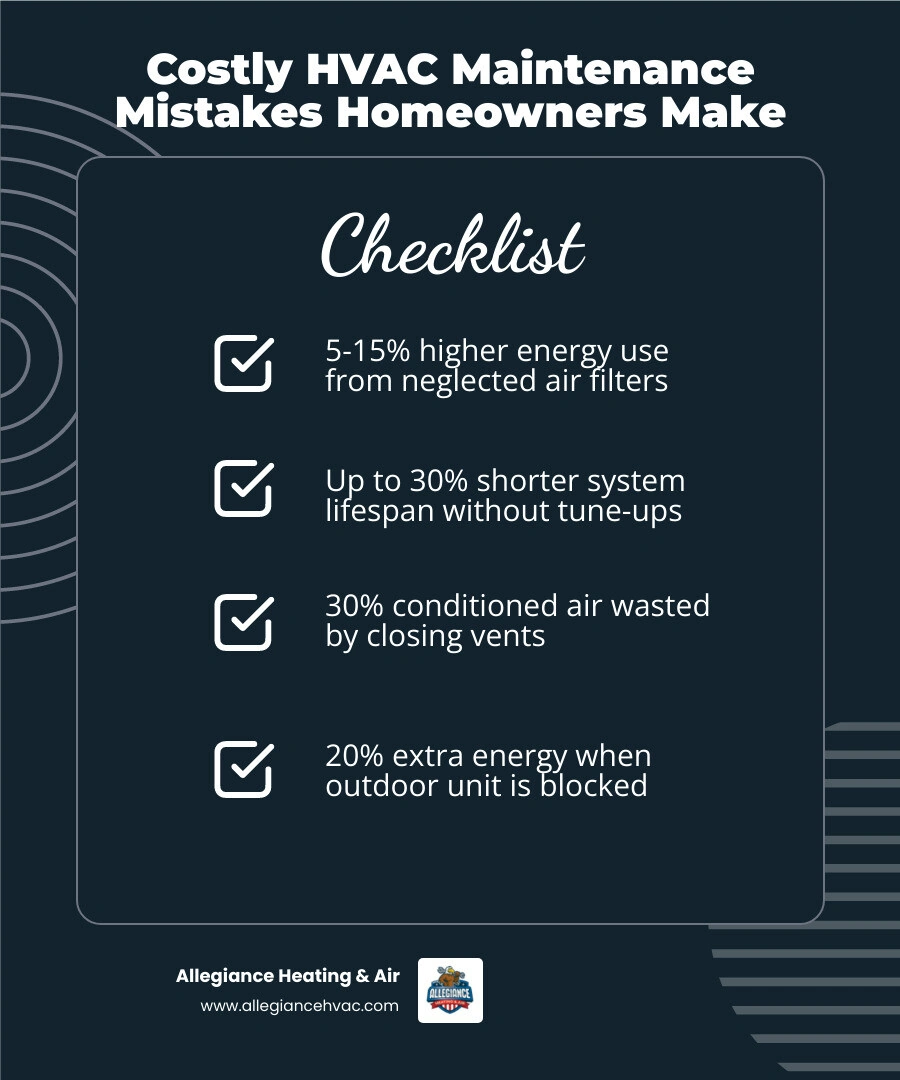
- Not changing air filters regularly — raises energy use by 5% to 15% and can cause frozen coils
- Skipping professional tune-ups — can shorten system lifespan by up to 30%
- Closing vents in unused rooms — increases duct pressure and wastes up to 30% of conditioned air
- Blocking the outdoor condenser — drives energy consumption up by as much as 20%
- Misplacing or misusing the thermostat — causes false readings, short cycling, and unnecessary wear
- Attempting DIY electrical or refrigerant repairs — risks injury, system damage, and voided warranties
- Installing an improperly sized system — leads to short cycling, humidity problems, and higher bills
Your HVAC system handles close to half of your home's total energy use. In Greenville, IN — where summers can push your cooling system hard and winters demand reliable heat — small maintenance oversights compound fast. A system that runs fine today can quietly develop problems that lead to an expensive breakdown or premature replacement if basic care is ignored.
The good news? Most of these mistakes are completely preventable once you know what to watch for.
The Most Costly HVAC Maintenance Mistakes Homeowners Make
When we think about home maintenance, we often focus on highly visible projects like painting, landscaping, or fixing a squeaky floorboard. Because your heating and cooling system operates mostly behind closed walls and in utility closets, it is incredibly easy to take for granted. However, ignoring your system is one of the most expensive decisions a homeowner can make.

When systems are neglected, their lifespan is routinely cut short. In fact, neglected HVAC systems can see their lifespan reduced by up to 30%. In Southern Indiana, where we experience a full spectrum of extreme weather—from freezing winter nights in Floyds Knobs to humid, sweltering July afternoons in Jeffersonville—your system is forced to work double-time. Running a system under these conditions without proper care is like driving your car for 50,000 miles without an oil change.
The consequences are not always immediate. Instead, the damage builds up slowly. Over time, dust coats the internal components, friction wears down the motor bearings, and minor electrical issues strain the compressor. To help you understand the full scope of what is at risk, we have put together a detailed guide on What Happens If You Skip HVAC Maintenance. By prioritizing preventative care, you protect your wallet, keep your utility bills low, and ensure your family stays perfectly comfortable regardless of the weather outside.
Neglecting Air Filters: The Most Common HVAC Maintenance Mistakes Homeowners Make
If your HVAC system had a voice, its very first request would be: "Please, change my air filter!" Neglecting the air filter is single-handedly the most common of all the hvac maintenance mistakes homeowners make.
An air filter's primary job is not actually to clean the air you breathe (though it certainly helps with indoor air quality); its main purpose is to protect the sensitive internal machinery of your furnace and air conditioner from dust and debris. When a filter becomes clogged with dust, pet hair, and lint, it acts like a chokehold on your system. The blower motor has to work significantly harder to pull air through the blocked material. This restricted airflow can increase your system's energy consumption by 5% to 15% almost instantly.
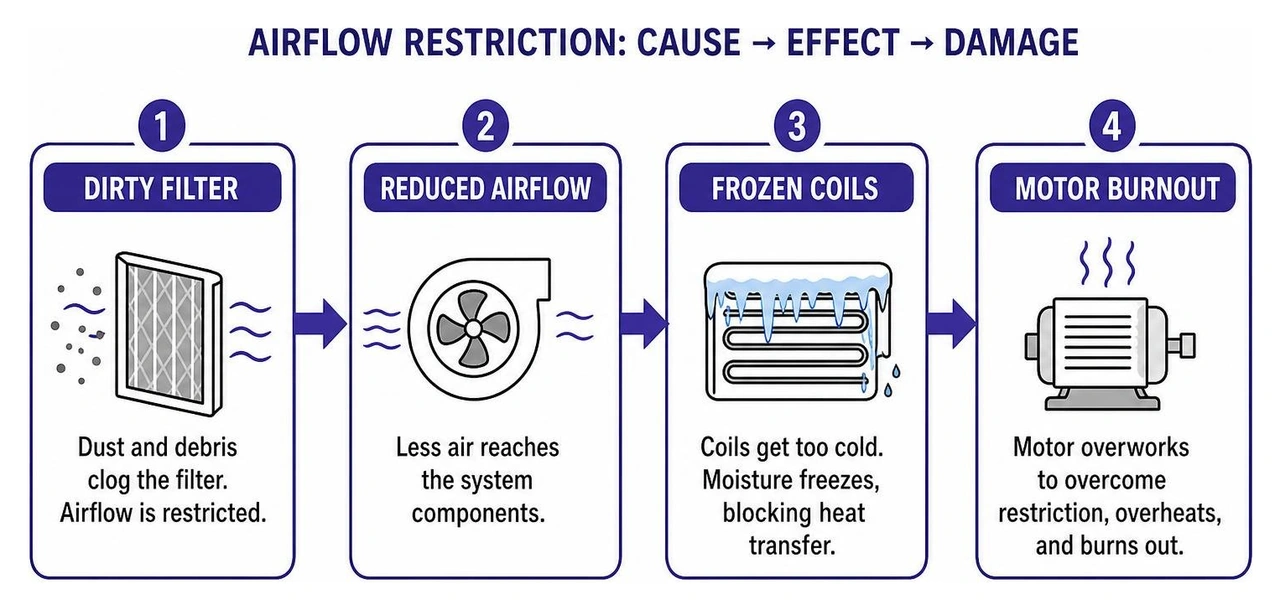
Beyond higher utility bills, a dirty filter can cause severe physical damage to your equipment:
- Frozen Evaporator Coils: In the summer, your air conditioner relies on a steady stream of warm indoor air passing over the cold evaporator coils to transfer heat. When airflow is restricted by a dirty filter, the temperature around the coils drops below freezing. Moisture in the air condenses on the coils and quickly turns to ice, completely freezing up the system and blocking cooling altogether.
- Overheated Furnaces: In the winter, restricted airflow prevents heat from leaving the furnace heat exchanger. This causes the system to overheat, triggering the safety limit switch to shut the system down. Repeatedly overheating can crack your heat exchanger, which is a dangerous and costly failure.
To avoid these issues, you must select the right filter type and replace it on a strict schedule. Air filters are rated using the MERV (Minimum Efficiency Reporting Value) scale, which ranges from 1 to 16 for residential systems. While it might seem logical to buy the highest MERV rating available to capture the most microscopic particles, filters with very high MERV ratings (like MERV 13 to 16) are exceptionally thick and can actually restrict airflow in standard residential systems. For most homes in the Greenville and New Albany areas, a pleated MERV 8 to MERV 11 filter offers the perfect balance of filtration and airflow.
As for replacement frequency, a general rule of thumb is to inspect your filter every 30 days. While a clean home without pets might stretch a filter's life to 90 days, households with pets, local pollen allergies, or those affected by seasonal wildfire smoke should replace their filters every 30 to 60 days.
Closing Vents and Blocking Airflow: Why These Are Major HVAC Maintenance Mistakes Homeowners Make
There is a persistent myth in the home improvement world that closing supply vents in unused guest rooms or basements saves energy by "redirecting" conditioned air to the rooms you are currently using. In reality, this is one of the most damaging hvac maintenance mistakes homeowners make.
Modern HVAC systems are carefully engineered to operate with a precise volume of airflow, known as static pressure. Your ductwork is sized specifically to handle the amount of air your blower motor pushes out. When you close supply vents, you do not tell the system to produce less air; instead, you simply create a barrier. This increases the static pressure inside your ductwork, forcing the air to find other ways to escape.
This excess pressure leads directly to:
- Severe Duct Leaks: The high pressure forces air out of the seams and joints in your ductwork. Given that duct leaks can already waste up to 30% of conditioned air in a typical home, artificially increasing the pressure only sends more of your paid-for heating and cooling straight into your attic, crawlspace, or wall cavities.
- Blower Motor Burnout: The blower motor is designed to push against a specific amount of resistance. When static pressure spikes because vents are closed, the motor must work much harder to circulate air, leading to overheating and premature electrical failure.
- Frozen or Overheated Coils: Just like a dirty filter, blocked vents restrict overall system airflow, leading to frozen AC coils in July or an overheated furnace in January.
To illustrate the difference, take a look at how keeping your vents open protects your system compared to closing them:
| System Metric | All Vents Open (Recommended) | Multiple Vents Closed (Avoid) |
|---|---|---|
| Duct Static Pressure | Balanced & within manufacturer specs | High pressure, straining seams and joints |
| Blower Motor Workload | Normal, energy-efficient operation | Excessively high, leading to motor burnout |
| Conditioned Air Loss | Minimal (if ducts are properly sealed) | Up to 30% or more wasted through leaks |
| Risk of Coil Freezing / Overheating | Very Low | High risk of frozen coils or tripped limits |
| Temperature Distribution | Even, consistent comfort | Hot and cold spots throughout the house |
Keep all supply registers and return air grilles completely open and unobstructed by furniture, heavy drapes, or toys. Your system needs to breathe to keep your home comfortable and efficient!
Skipping Professional Tune-Ups and Ignoring System Warning Signs
Another major trap that homeowners fall into is adopting an "if it isn't broken, don't fix it" mentality. Skipping annual professional maintenance is incredibly costly because it allows minor, invisible issues to snowball into catastrophic mid-season failures.
During a professional tune-up, a certified technician does far more than just look at your system. They perform critical safety checks, clean hard-to-reach components, and measure electrical draws to ensure everything is running safely and efficiently. For a complete breakdown of what goes on behind the scenes during these visits, check out our Annual HVAC Maintenance Complete Guide and our detailed walkthrough of an HVAC Maintenance Visit Complete Guide.
One of the most common issues caught during these professional visits is a clogged condensate drain line. As your air conditioner cools your home, it pulls gallons of moisture out of the humid Southern Indiana air. This water collects in a drain pan and flows out of your home through a small plastic line. Over time, algae, mold, and dust can clog this line. Without professional flushing, the water will back up and overflow, leading to severe water damage to your ceilings, walls, or floors.
Additionally, skipping professional tune-ups means ignoring early warning signs that your system is struggling. Homeowners often overlook subtle performance red flags, assuming they are just "normal quirks" of an aging system. You should never ignore:
- Strange Noises: Squealing, rattling, or loud grinding sounds usually indicate a failing motor bearing, a loose belt, or an unbalanced blower wheel. Ignoring a grinding sound can cause the motor to seize entirely, resulting in a much larger repair bill.
- Musty Odors: A damp, musty smell when your system turns on points to biological growth on your evaporator coils or inside your drain pan, which directly degrades your indoor air quality.
- Short Cycling: If your system turns on and off rapidly every few minutes without ever reaching your set temperature, it is experiencing extreme strain. This is often caused by overheating, sensor failures, or airflow blockages.
Catching these issues early is the absolute best way to protect your investment. Learn more about How to Extend the Life of Your Heating and Cooling System to keep your home safe and comfortable for years to come.
A Simple Year-Round HVAC Care Routine for Indiana Homeowners
While professional service is essential, there are several simple, safe maintenance tasks you can handle yourself to keep your system running smoothly between visits. We recommend following this straightforward, year-round checklist:
Every Month:
- Inspect your air filter. If it looks grey, dusty, or covered in pet hair, replace it immediately.
- Check your indoor return grilles and supply vents to make sure they are clean and completely unblocked by furniture or rugs.
Every Spring (Before AC Season):
- Head outside and inspect your condenser unit. Clear away any fallen leaves, twigs, or weeds.
- Ensure there is at least a two-foot clear zone around all sides of the outdoor unit and a five-foot clear zone above it.
- Gently wash the outdoor coils with a garden hose (with the power shut off) to remove accumulated pollen and dust.
Every Fall (Before Heating Season):
- Check your thermostat batteries and replace them if necessary.
- Test your home's carbon monoxide detectors to ensure they are functioning properly.
- Schedule your professional heating tune-up to prepare your furnace or heat pump for the cold winter months ahead.
Curious about how to structure your professional service visits? Read our guide on How Often Should You Service Your HVAC System to stay perfectly on schedule.
Thermostat Mismanagement and Outdoor Unit Neglect
Your thermostat is the brain of your entire heating and cooling system, yet its placement and usage are frequently overlooked. Placing a thermostat in the wrong spot can lead to "ghost readings"—false temperature measurements that force your system to run when it doesn't need to.
If your thermostat is installed in direct sunlight, near a drafty window, or close to a heat source like a kitchen stove or fireplace, it will read the temperature of that specific localized spot rather than the average temperature of your home. A thermostat baked by afternoon sunlight will register a temperature much higher than the actual room temperature, causing your air conditioner to run constantly, short cycle, and run up your electric bills.
Similarly, playing "thermostat whack-a-mole" by constantly cranking the temperature way down to 60°F in the summer or up to 80°F in the winter is highly inefficient. Your HVAC system cools and heats at one steady rate; setting an extreme temperature will not make it reach comfort levels any faster. It only guarantees that the system will overshoot the target, waste energy, and put unnecessary wear and tear on the compressor.
Outside the home, neglecting your outdoor condenser unit is just as costly. The condenser's job is to release the heat collected from inside your home into the outdoor air. If the unit is choked by thick shrubs, decorative fencing, or overgrown weeds, it cannot dissipate heat effectively. This obstruction can increase your system's energy consumption by up to 20%.
Furthermore, if you have outdoor pets, be highly vigilant. Dog urine is extremely acidic and can quickly corrode the delicate aluminum fins on your condenser coils. Over time, this corrosion leads to refrigerant leaks, which are highly expensive to repair and can completely ruin your compressor. To protect your outdoor equipment and learn how a structured care plan can save you money, check out our guide on How a Maintenance Plan Extends Equipment Life.
Technical Errors: Improper Sizing and Risky DIY Repairs
When it comes to replacing or repairing an HVAC system, there are two massive mistakes that can haunt a homeowner for years: installing an improperly sized system and attempting complex DIY mechanical repairs.
During installation, a professional contractor must always perform a Manual J load calculation. This scientific calculation takes into account your home's square footage, insulation levels, window orientations, local climate, and layout to determine the exact heating and cooling capacity your home requires.
Unfortunately, many homeowners make the mistake of assuming "bigger is always better." An oversized HVAC system will quickly cool or heat a home, but it will do so too fast. This leads to a phenomenon called short cycling, where the system turns on, runs for a few minutes, blasts the home with air, and shuts off before it can complete a proper cycle. Because an air conditioner must run continuously for a period to pull humidity out of the air, an oversized system will leave your home feeling damp, clammy, and uncomfortable. It also drives energy costs up dramatically, often causing monthly bills to skyrocket from a normal level to hundreds of dollars of wasted energy per unit annually.
On the other hand, attempting complex DIY repairs on your HVAC system is incredibly dangerous. Modern systems rely on high-voltage electricity, natural gas lines, and chemical refrigerants. Working on these systems without proper training risks severe electrical shock, gas leaks, carbon monoxide poisoning, or home fires.
Furthermore, under EPA Section 608, it is illegal for anyone without federal certification to handle or purchase chemical refrigerants. Attempting to repair your own compressor or recharge your own refrigerant not only violates federal law but will also immediately void your manufacturer's warranty, leaving you financially responsible for any future repairs.
When you are facing system issues, it is crucial to make an informed decision. Explore our resources on When to Repair vs Replace Your HVAC System and How to Decide Between HVAC Repair and Replacement to find the safest, most cost-effective path forward.
Frequently Asked Questions About HVAC Maintenance
How often should I change my air filter if I have pets?
If you share your home with furry family members, your air filter needs extra attention. Pet hair and dander quickly accumulate on the filter fibers, clogging it much faster than dust alone.
With one dog or cat, you should move to a strict 60-day replacement cycle. If you have multiple pets, long-haired breeds, or family members with asthma or allergies, you should check your filter every 20 to 30 days. Keeping a fresh filter in place is essential for maintaining healthy indoor air quality and keeping dander from bypassing the filter and coating your system's internal coils.
What are the signs that my HVAC system is improperly sized?
An improperly sized HVAC system will show several clear warning signs:
- Short Cycling: The system turns on and off frequently (every 5-10 minutes) without ever running a full, steady cycle.
- High Indoor Humidity: In the summer, your home feels sticky or clammy even though the air is cool.
- Uneven Temperatures: You experience dramatic temperature swings between different rooms or different floors of your home.
- Constant Operation: An undersized system will run continuously all day long without ever reaching your thermostat's set temperature.
Why is professional maintenance better than DIY?
While homeowners can easily handle basic tasks like changing filters and clearing debris, professional maintenance requires specialized training, tools, and safety equipment.
A certified technician can safely perform electrical testing, measure refrigerant charge levels, inspect gas heat exchangers for deadly carbon monoxide leaks, and clean complex internal components. Most importantly, having documented annual professional maintenance is a strict requirement for keeping your manufacturer's parts warranty valid. To see if a structured plan is right for you, read our article on Is an HVAC Maintenance Plan Worth It.
Conclusion
Avoiding the common hvac maintenance mistakes homeowners make is the single best way to ensure your home remains a comfortable, safe sanctuary all year long. By changing your filters regularly, keeping your vents open, clearing your outdoor unit, and scheduling regular preventative care, you can save thousands of dollars in premature replacements and emergency repair costs.
At Allegiance Heating & Air, LLC, we have been "Taking Home Comfort Under Our Wing" as a family-owned business since 2005. Serving Greenville, IN, and our neighboring Southern Indiana and Louisville-area communities, our licensed and insured technicians are dedicated to providing honest, transparent, and customer-centric service.
Whether you are looking to protect your system with a long-term plan or just need a seasonal tune-up, we are here to help. Take a look at our HVAC Membership Plan vs Pay Per Visit Comparison to find the perfect option for your home, and Schedule a professional tune-up with our team today to keep your heating and cooling systems running perfectly!
Contact Us Or Schedule Expert Service
Other Blogs
ready to transform your home?
Discover our exceptional home services tailored to meet your needs and enhance your living space.
WHAT OUR CLIENTS HAVE TO SAY ABOUT US

We had a complete HVAC system and a hot water heater installed. The guys were professional, well mannered, and completed the work in a timely manner. Would definitely use them again.
I was nervous at first because my AC broke in the middle of 80 degree weather which is strange for April, but Allegiance Heating and Air was incredibly prompt and professional. The technician arrived within an hour, explained the problem clearly, and completed the repair. The technician , Mr. Garrett Moon was a very nice and courteous young man. He found the problem and fixed it within a timely manner. I highly recommend them for any heating or cooling needs. I’ll definitely give them a call again should I ever have another issue, but hopefully not. Knock on wood 😁. Give them a call… you won’t be disappointed!
From the moment I called to schedule a service, the team was quick to respond and arrived right on time. The technician was professional, friendly, and clearly knowledgeable about my heating system. He explained the repair options in plain language and completed the job efficiently. I appreciated the reliable service and the fact that the work was done the same day. I would definitely recommend Allegiance Heating and Air for any residential HVAC needs.
5/5 stars – I was very impressed with the efficient, affordable and timely service from Allegiance Heating and Air. The technician arrived on time, and performed the service quickly, no repairs needed at this time. Communication was clear and the whole experience felt hassle‑free. I would definitely recommend them for any residential HVAC needs.
Knowledgeable, experienced individual.
Explains Allegiance Heating and Air was incredibly reliable, professional and affordable. They arrived right on time, kept the work area clean and finished the furnace repair quickly. The technician explained everything clearly and the price was a great value. If happiness had a location on Google Maps, it would be here.
Gilbert had to go above and beyond because York is no longer making the part for my furnace. But he was able to find a way to construct a housing bracket for my furnace. Ingenuity, determination and integrity is what finally got my furnace fixed. Gilbert is truly a one of a kind technician.
Thank you for always going the extra mile. Gilbert is always respectful and helpful with any concerns.
"Great service, most knowledgeable and capable HVAC business in Kentuckiana!! Pete Flemming and Bryan the owner, are HVAC encyclopedias. They have the highest integrity of any HVAC business I have ever used. Allegiance has put numerous units in for me over the last 17 years. I will continue to use and trust them."
"Fast response from Allegiance when our heat was out on New Year’s day! Service technician was friendly and efficient. He took the time to explain the problem, tell us about the temporary fix and the plan for permanent repair. We were impressed!"
"Love Allegiance! Their technicians, in particular Benjamin, explain everything. Fast and thorough. A/C was out on a Sunday. Called Allegiance and within a few hours Benjamin arrived. Such a comfort as he was the one who last serviced our units. He quickly replaced part and cooling is restored!"
"My heat pump went out and I had to call after hours. The technician (Garrett) was outstanding and thorough. He got my system up and working until Monday and gave me several options of units. Also took the time to explain the issue to my Home warranty company. I highly recommend this company."
"Right on time :) respectful, fast, and polite. Even gave my fur babies some attention."
"Had Garrett out today to fix our AC. Fantastic tech. He showed up exactly when he said he would and kept us informed of what he was checking and what he found. Highly recommend!"
"Lucas with Allegiance showed up on time as promised, was professional and extremely patient and responsive with all my questions. He took care of the issue, and I feel he was trustworthy! He had us back to cool and comfortable on one of the hottest days of the year."
"Lucas did a great job! Very professional and expedient. Explained the process very well and represented Allegiance as a truly professional and reputable company."
"Arrived on time and work diligently to fix issue. These guy are great. Worked quickly to resolve my issues."
"Lucas was great - he spent a lot of time trying to figure out what was going on and explained everything he was doing. I trust Allegiance and wouldn’t want anyone else working on/in my house!!"

RELATED ARTICLES
Telltale Signs Your Mini Ductless AC Needs Professional Service in Jeffersonville

Our Story