
Why Heat Pump Benefits and How They Work Matter for Greenville, IN Homeowners
Understanding heat pump benefits and how they work can help you make a smarter, more informed decision about your home's heating and cooling system. If you're a homeowner in Greenville, IN wondering whether a heat pump could lower your energy bills and keep your family comfortable year-round, here's the short answer:
What a heat pump does — at a glance:
• Heats and cools your home using a single system
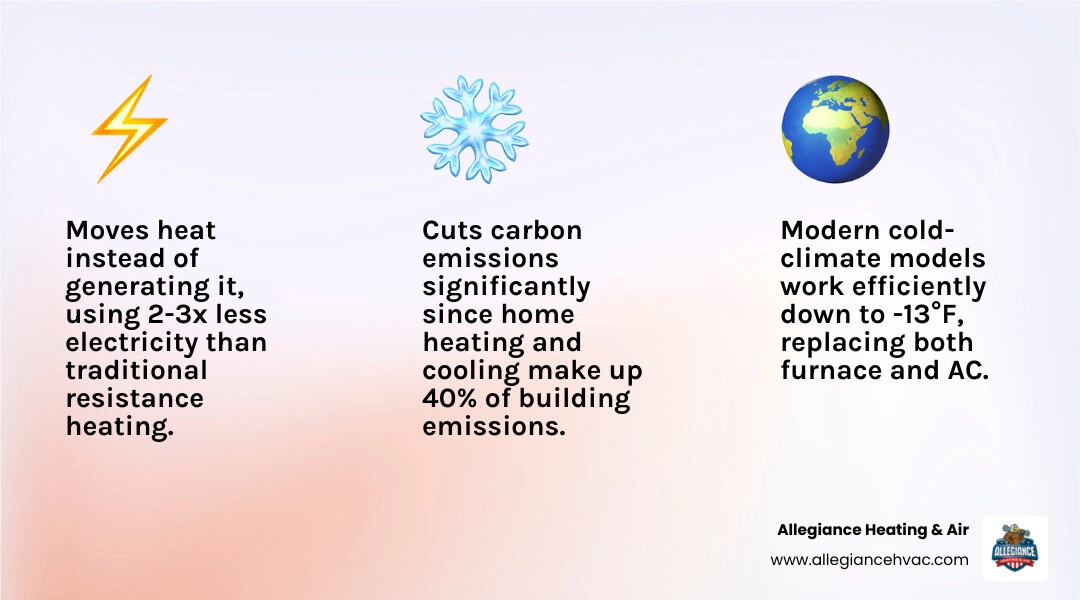
• Moves heat rather than generating it, making it 2–3x more efficient than electric resistance heating
• Reduces electricity use for heating by up to 75% compared to electric furnaces and baseboard heaters
• Works in cold weather — modern cold-climate models operate effectively down to -13°F or lower
• Replaces both your furnace and air conditioner with one unit
• Cuts carbon emissions — home heating and cooling accounts for roughly 40% of global building emissions
Many homeowners in southern Indiana are still running aging furnaces or separate AC units without realizing a single heat pump system could handle both jobs more efficiently. The average household switching to a heat pump saves around $370 per year on energy bills — and those replacing fuel oil, propane, or electric resistance heating can save closer to $1,000 per year.
Heat pumps have been around since the 1960s, but today's technology has transformed them into one of the most capable and cost-effective home comfort solutions available. Whether you're in a new build or retrofitting an older home, there's likely a heat pump configuration that fits your situation.
Understanding Heat Pump Benefits and How They Work
To appreciate why these systems are taking the HVAC world by storm, it helps to understand the fundamental science of heat transfer. Traditional heating systems, like gas furnaces or electric baseboards, must create heat through combustion or electrical resistance. This process is limited by the laws of physics—at best, an electric furnace can only achieve 100% efficiency, meaning every unit of electricity is converted into one unit of heat.
Heat pumps rewrite this equation entirely. Instead of generating heat, they act as heat transporters. They collect existing thermal energy from the outdoor environment and pump it indoors. Because moving heat requires significantly less energy than creating it, a heat pump can achieve efficiencies of 300% to 500%. In other words, for every single kilowatt-hour (kWh) of electricity consumed, the system delivers three to five times that amount in heating or cooling output.

This incredible efficiency is why learning about How Does Heat Pump Work is so valuable for homeowners looking to modernize their properties. By utilizing a closed-loop refrigeration cycle, a heat pump keeps your home perfectly conditioned while consuming only a fraction of the electricity required by older, more traditional setups.
The Core Science: Heat Pump Benefits and How They Work in Winter
It might sound counterintuitive that a heat pump can keep your home warm when the winter wind is howling across southern Indiana. However, even when temperatures drop to 0°F, the outdoor air still contains about 85% of the heat energy present at 70°F.
Here is a step-by-step breakdown of how the system extracts this ambient warmth:
1. Absorption: The outdoor unit contains a cold liquid refrigerant. As outdoor air is blown across the outdoor coil (the evaporator), the refrigerant absorbs the ambient heat from the air. Because the refrigerant has an incredibly low boiling point, even freezing outdoor air causes it to warm up and evaporate into a low-pressure gas.
2. Compression: This gas travels along refrigerant lines to the compressor. The compressor squeezes the gas, which dramatically increases its pressure and temperature.
3. Condensation: The hot, high-pressure gas is sent to the indoor coil. A fan blows indoor air across this coil, absorbing the heat from the refrigerant and distributing it through your home's ductwork. As the refrigerant loses its heat, it condenses back into a high-pressure liquid.
4. Expansion: The liquid refrigerant passes through the expansion valve, which lowers its pressure and temperature, preparing it to return to the outdoor unit to start the cycle all over again.
Understanding How a Heat Pump Works in the winter reveals why it is such an elegant solution. By relying on basic thermodynamic principles, it keeps your living spaces cozy without burning fossil fuels inside your home.
Summer Cooling: Heat Pump Benefits and How They Work in Warm Weather
When the humid Indiana summer arrives, a heat pump does not require a secondary system to keep you cool. With the simple click of your thermostat, a specialized component called the reversing valve changes the direction of the refrigerant flow.
In cooling mode, the system operates exactly like a standard air conditioner:
• The indoor coil becomes the evaporator, absorbing excess heat and humidity from your indoor air.
• The refrigerant carries this captured heat outside to the outdoor coil (which now acts as the condenser).
• A fan blows outdoor air across the outdoor coil, releasing the indoor heat into the atmosphere.
• The cooled refrigerant returns indoors to continue lowering your home's temperature.
This dual-action capability provides year-round comfort out of a single piece of equipment, eliminating the need to maintain both a separate furnace and a central air conditioner.
Key Types of Heat Pump Systems for Your Property
Every home is built differently. Some historic homes in areas like New Albany or Georgetown lack the ductwork required for central systems, while newer homes in Floyds Knobs are designed with expansive ducted layouts. Fortunately, there are several distinct Heat Pump Systems for Your Property depending on your architectural needs and comfort preferences.
Ducted vs. Ductless Mini-Split Systems
If your home already has a functional network of air ducts, a ducted heat pump is a seamless replacement for an old furnace and AC combo. The outdoor unit connects directly to your existing indoor air handler, distributing conditioned air evenly to every room.
For homes without ductwork, or for additions like a finished basement or garage apartment, ductless mini-split systems are the ideal alternative. These systems consist of a small outdoor condenser connected to one or more indoor air-handling units mounted directly on the wall or ceiling.
Key advantages of choosing a ductless mini-split include:
• Zoned Comfort: Each indoor unit operates independently, allowing you to heat or cool specific rooms rather than the entire house.
• Easy Installation: Only a small, three-inch hole through the exterior wall is required to run the refrigerant and electrical lines.
• Improved Efficiency: Traditional ductwork can lose up to 30% of its energy through leaks and uninsulated spaces. Ductless systems deliver conditioned air directly to the room, eliminating these losses entirely.
When you are ready to upgrade, taking the time to Choose the Best Heat Pump configuration for your specific layout will ensure you enjoy maximum comfort and utility savings.
Ground-Source Geothermal vs. Air-Source Systems
While air-source heat pumps extract heat from the outdoor air, ground-source (geothermal) heat pumps look beneath the surface. The earth maintains a remarkably constant temperature of around 50°F to 55°F just a few feet underground, regardless of how hot or cold the weather is in southern Indiana.
Geothermal systems utilize a series of underground pipes, known as ground loops, filled with water or a refrigerant mixture.
• In Winter: The fluid absorbs heat from the relatively warm ground and carries it to the indoor heat pump.
• In Summer: The system reverses, drawing heat from the home and depositing it back into the cool earth.
While geothermal systems have higher upfront installation complexities due to the excavation required for ground loops, they are exceptionally efficient. High-efficiency geothermal heat pumps use up to 61% less energy than standard models, and their underground loops can last for over 50 years.
Comparing Heat Pumps to Traditional HVAC Systems
To truly appreciate the heat pump benefits and how they work, it helps to see how they stack up against the traditional combinations of furnaces and air conditioners that have dominated homes for decades.
• Primary Function — Heat Pump System: Heating & Cooling — Standard Gas Furnace: Heating Only — Standard Central AC: Cooling Only
• Energy Source — Heat Pump System: Electricity — Standard Gas Furnace: Natural Gas, Propane, or Oil — Standard Central AC: Electricity
• Operating Efficiency — Heat Pump System: 300% to 500% (COP 3.0-5.0) — Standard Gas Furnace: 80% to 98% AFUE — Standard Central AC: Up to 23 SEER2
• Environmental Impact — Heat Pump System: Very low (zero direct emissions) — Standard Gas Furnace: Moderate to high (CO2 combustion) — Standard Central AC: Low (cooling only)
• Average Lifespan — Heat Pump System: 15 to 20 years — Standard Gas Furnace: 15 to 25 years — Standard Central AC: 15 to 20 years
When planning an HVAC upgrade, many homeowners ask, "Do You Need Both AC and a Furnace or Just a Heat Pump?" For most properties in our region, a properly sized heat pump can successfully replace both units, simplifying your home maintenance and lowering your utility bills.
Heat Pumps vs. Standard Air Conditioners
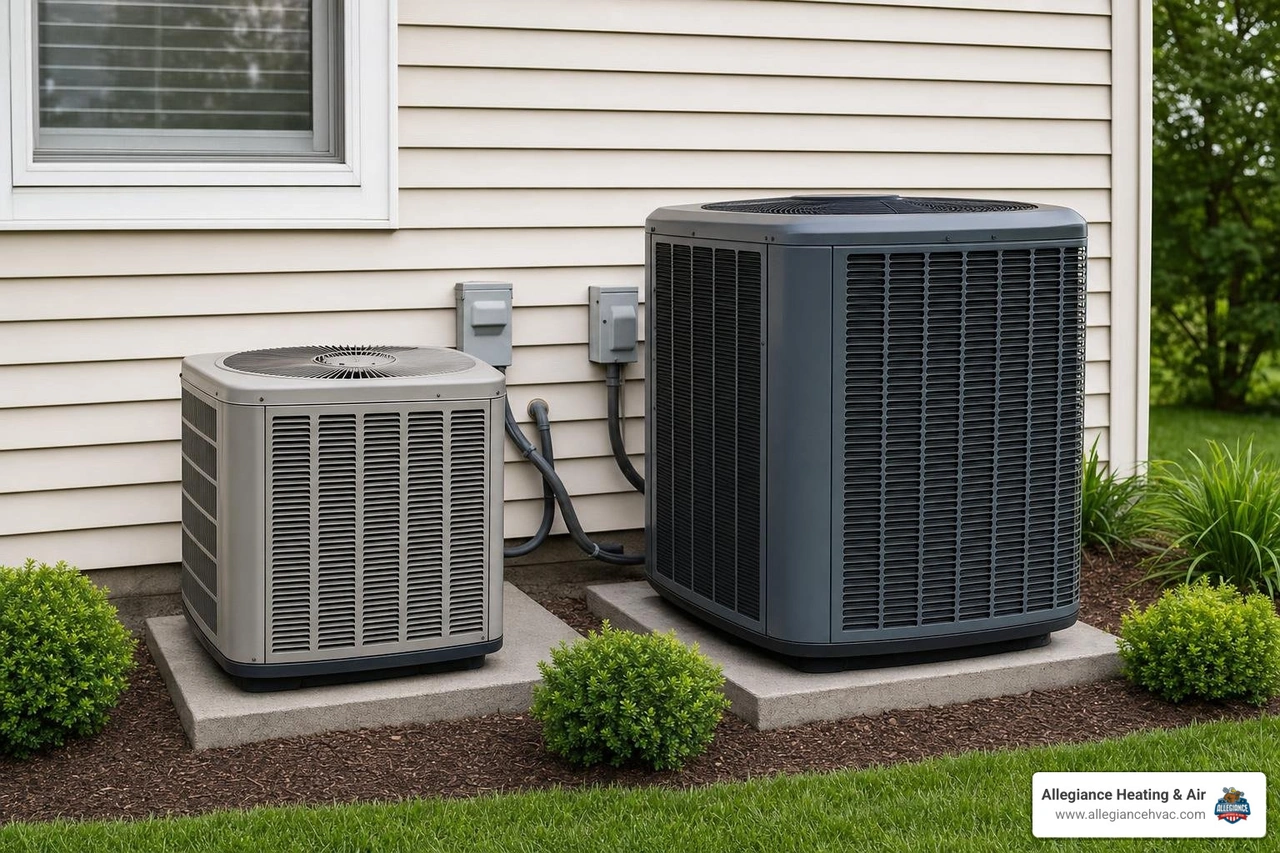
At first glance, an outdoor heat pump looks identical to a standard central air conditioner. They use the same cabinet, the same compressor, and the same electrical connections. However, a standard air conditioner is a "one-way street"—it can only pump heat out of your home.
The defining difference is the reversing valve inside the heat pump. This valve allows the refrigeration cycle to run backward, transforming a highly efficient cooling system into an equally efficient heating system. When evaluating Central AC vs Heat Pump for Your Home, a heat pump offers far greater versatility and year-round utility for a very similar physical footprint.
Hybrid and Dual-Fuel Configurations
For homeowners who want the ultimate peace of mind during the coldest winter snaps, a hybrid or dual-fuel system is an excellent strategy. This setup pairs an electric heat pump with a high-efficiency gas furnace.
The system uses smart controls to switch between the two heat sources automatically based on the outdoor temperature:
• Mild Winter Days (above 35°F): The heat pump handles the heating load, running at peak electrical efficiency.
• Extreme Cold Snaps (below 30°F): The system automatically switches to the gas furnace, which easily handles sub-freezing temperatures without relying on electric backup heat strips.
This hybrid approach ensures you are always heating your home using the most cost-effective and energy-efficient source available at any given moment.
Cold Climate Performance and Advanced Technology
A common myth is that heat pumps do not work when the temperature drops below freezing. While this may have been true of early models from the late 20th century, modern engineering has completely changed the game.
How Cold Climate Heat Pumps Handle Freezing Temperatures
Today's cold-climate heat pumps are designed specifically to perform in sub-zero weather. Many models carry the ENERGY STAR Cold Climate label, certifying their ability to provide reliable heating at temperatures as low as -15°F to -25°F.
They achieve this through several technological breakthroughs:
• Variable-Speed Inverter Compressors: Instead of turning fully "on" or "off," these compressors adjust their speed dynamically in tiny increments. They can ramp up to maximum power during a freeze, and then scale back to a low, energy-saving sip of electricity when the home is stable.
• Flash Injection Technology: This process injects a small amount of intermediate-pressure refrigerant directly into the compressor, boosting its capacity and allowing it to produce hotter air even when the outdoor air is freezing.
• Demand-Defrost Controls: Older systems used timed defrost cycles that ran regardless of whether ice was present. Modern systems monitor coil temperatures and only initiate a brief defrost cycle when actual frost accumulation is detected, saving significant energy.
Modern Technological Advancements
In addition to cold-weather performance, several other advancements have made modern heat pumps incredibly reliable and quiet:
• Variable-Speed Blower Motors: These motors run at whisper-quiet speeds, circulating air continuously to eliminate hot or cold spots while filtering your indoor air more effectively.
• Desuperheaters: Some high-end heat pumps—especially geothermal units—can be equipped with a desuperheater. This auxiliary heat exchanger uses excess heat from the compressor to heat your domestic hot water, providing hot water up to three times more efficiently than a standard electric water heater.
• Eco-Friendly Refrigerants: The industry is actively transitioning to next-generation refrigerants, such as R-32 and R-454B, which have a significantly lower Global Warming Potential (GWP) than older refrigerants.
Maintenance, Lifespan, and Environmental Impact
Beyond direct financial savings, choosing a heat pump is one of the most impactful steps a homeowner can take to reduce their carbon footprint. Because space heating and cooling account for roughly 15% of global CO2 emissions, moving away from fossil-fuel combustion is vital to achieving regional and national climate goals. As the local electrical grid incorporates more renewable energy sources, your heat pump automatically becomes cleaner and greener over time.
Essential Maintenance and Lifespan Expectations
With regular care, a high-quality air-source heat pump will reliably serve your home for 15 to 20 years, while geothermal indoor units can easily last up to 24 years. However, because a heat pump runs year-round to provide both heating and cooling, staying on top of routine maintenance is essential.
You can handle several key tasks yourself:
• Change Filters Monthly: A clogged air filter restricts airflow, forcing the system to work harder and increasing wear on the compressor.
• Clear Outdoor Debris: Keep leaves, grass clippings, snow, and ice clear of the outdoor unit. Maintain at least two feet of clearance around the cabinet to ensure proper airflow.
• Keep Vents Open: Closing off registers in unused rooms can disrupt system pressure and reduce overall efficiency.
In addition to these DIY steps, scheduling a professional tune-up twice a year—once in the spring before the cooling season and once in the fall before the heating season—is the best way to prevent unexpected Heat Pump Performance Problems. Our professional technicians can inspect electrical connections, measure refrigerant levels, and clean the coils to keep your system running at peak performance.
Troubleshooting Underperformance
If you notice your system is running constantly without keeping your home comfortable, or if your electricity bills spike unexpectedly, it is important to address the issue early. Learning how to go about Identifying Malfunctions Heat Pump System components can help you catch minor issues before they turn into major repairs.
Common Reasons Heat Pump System is Underperforming include:
• Refrigerant Leaks: Low refrigerant levels prevent the system from transferring heat efficiently.
• Thermostat Misconfiguration: If your thermostat is not calibrated correctly, it may prematurely trigger your auxiliary electric heat strips, which consume significantly more electricity.
• Dirty Coils: Dust and grime on the indoor or outdoor coils act as insulation, blocking the heat transfer process.
Frequently Asked Questions about Heat Pumps
Do heat pumps work effectively in extreme cold weather?
Yes! While older heat pumps struggled when temperatures dropped below freezing, modern cold-climate heat pumps are engineered to perform beautifully in sub-zero temperatures. High-performance units utilize inverter-driven compressors and advanced refrigerants to extract heat from outdoor air even at temperatures as low as -15°F. For extreme weather, dual-fuel systems or integrated auxiliary electric heat strips ensure your home remains perfectly warm no matter how low the temperature drops.
What incentives and tax credits are available for heat pumps in 2026?
Under the Inflation Reduction Act, homeowners can take advantage of the Energy Efficient Home Improvement Credit (Section 25C). This provides a federal tax credit of up to 30% of the total installation cost for qualified air-source heat pumps, capped at $2,000 per year. Geothermal heat pump installations qualify for an even larger tax credit of up to 30% of the total cost with no upper limit. Additionally, local utility companies in southern Indiana often offer residential energy efficiency rebates that can further reduce your upfront investment.
What should I expect during a heat pump installation?
A successful installation begins long before the physical equipment arrives at your home. A professional HVAC contractor must first perform a detailed Manual J load calculation. This calculation takes into account your home's square footage, insulation levels, window placement, and local climate to determine the exact heating and cooling capacity required.
Once the correct size is determined, the installation process typically involves placing the outdoor condenser, installing the indoor air handler or ductless units, running refrigerant and electrical lines, and thoroughly testing the system's pressure and airflow. Knowing What to Expect Heat Pump Installation day ensures a smooth, stress-free transition to your new system.
Conclusion
Upgrading to a modern heat pump is one of the smartest investments you can make for your home's comfort, your wallet, and the environment. By understanding heat pump benefits and how they work, you can take control of your utility bills and enjoy reliable, whisper-quiet heating and cooling all year long.
At Allegiance Heating & Air, LLC, we have been "Taking Home Comfort Under Our Wing" since 2005. As a family-owned business serving Greenville, IN and surrounding southern Indiana communities—including Floyds Knobs, Georgetown, New Albany, and Clarksville—we pride ourselves on our trusted, professional technicians and our unwavering commitment to customer satisfaction.
Whether you need a routine seasonal tune-up, a quick repair, or a complete system replacement, our team is here to provide honest, transparent service you can rely on.
Ready to experience the incredible comfort and efficiency of a modern heat pump? Schedule your professional heat pump service today with our local experts!
Contact Us Or Schedule Expert Service
Other Blogs
ready to transform your home?
Discover our exceptional home services tailored to meet your needs and enhance your living space.
WHAT OUR CLIENTS HAVE TO SAY ABOUT US

We had a complete HVAC system and a hot water heater installed. The guys were professional, well mannered, and completed the work in a timely manner. Would definitely use them again.
I was nervous at first because my AC broke in the middle of 80 degree weather which is strange for April, but Allegiance Heating and Air was incredibly prompt and professional. The technician arrived within an hour, explained the problem clearly, and completed the repair. The technician , Mr. Garrett Moon was a very nice and courteous young man. He found the problem and fixed it within a timely manner. I highly recommend them for any heating or cooling needs. I’ll definitely give them a call again should I ever have another issue, but hopefully not. Knock on wood 😁. Give them a call… you won’t be disappointed!
From the moment I called to schedule a service, the team was quick to respond and arrived right on time. The technician was professional, friendly, and clearly knowledgeable about my heating system. He explained the repair options in plain language and completed the job efficiently. I appreciated the reliable service and the fact that the work was done the same day. I would definitely recommend Allegiance Heating and Air for any residential HVAC needs.
5/5 stars – I was very impressed with the efficient, affordable and timely service from Allegiance Heating and Air. The technician arrived on time, and performed the service quickly, no repairs needed at this time. Communication was clear and the whole experience felt hassle‑free. I would definitely recommend them for any residential HVAC needs.
Knowledgeable, experienced individual.
Explains Allegiance Heating and Air was incredibly reliable, professional and affordable. They arrived right on time, kept the work area clean and finished the furnace repair quickly. The technician explained everything clearly and the price was a great value. If happiness had a location on Google Maps, it would be here.
Gilbert had to go above and beyond because York is no longer making the part for my furnace. But he was able to find a way to construct a housing bracket for my furnace. Ingenuity, determination and integrity is what finally got my furnace fixed. Gilbert is truly a one of a kind technician.
Thank you for always going the extra mile. Gilbert is always respectful and helpful with any concerns.
"Great service, most knowledgeable and capable HVAC business in Kentuckiana!! Pete Flemming and Bryan the owner, are HVAC encyclopedias. They have the highest integrity of any HVAC business I have ever used. Allegiance has put numerous units in for me over the last 17 years. I will continue to use and trust them."
"Fast response from Allegiance when our heat was out on New Year’s day! Service technician was friendly and efficient. He took the time to explain the problem, tell us about the temporary fix and the plan for permanent repair. We were impressed!"
"Love Allegiance! Their technicians, in particular Benjamin, explain everything. Fast and thorough. A/C was out on a Sunday. Called Allegiance and within a few hours Benjamin arrived. Such a comfort as he was the one who last serviced our units. He quickly replaced part and cooling is restored!"
"My heat pump went out and I had to call after hours. The technician (Garrett) was outstanding and thorough. He got my system up and working until Monday and gave me several options of units. Also took the time to explain the issue to my Home warranty company. I highly recommend this company."
"Right on time :) respectful, fast, and polite. Even gave my fur babies some attention."
"Had Garrett out today to fix our AC. Fantastic tech. He showed up exactly when he said he would and kept us informed of what he was checking and what he found. Highly recommend!"
"Lucas with Allegiance showed up on time as promised, was professional and extremely patient and responsive with all my questions. He took care of the issue, and I feel he was trustworthy! He had us back to cool and comfortable on one of the hottest days of the year."
"Lucas did a great job! Very professional and expedient. Explained the process very well and represented Allegiance as a truly professional and reputable company."
"Arrived on time and work diligently to fix issue. These guy are great. Worked quickly to resolve my issues."
"Lucas was great - he spent a lot of time trying to figure out what was going on and explained everything he was doing. I trust Allegiance and wouldn’t want anyone else working on/in my house!!"

RELATED ARTICLES

Professional Home Air Quality Testing in Jeffersonville, IN
The Ins and Outs of Single Stage vs Variable Speed AC