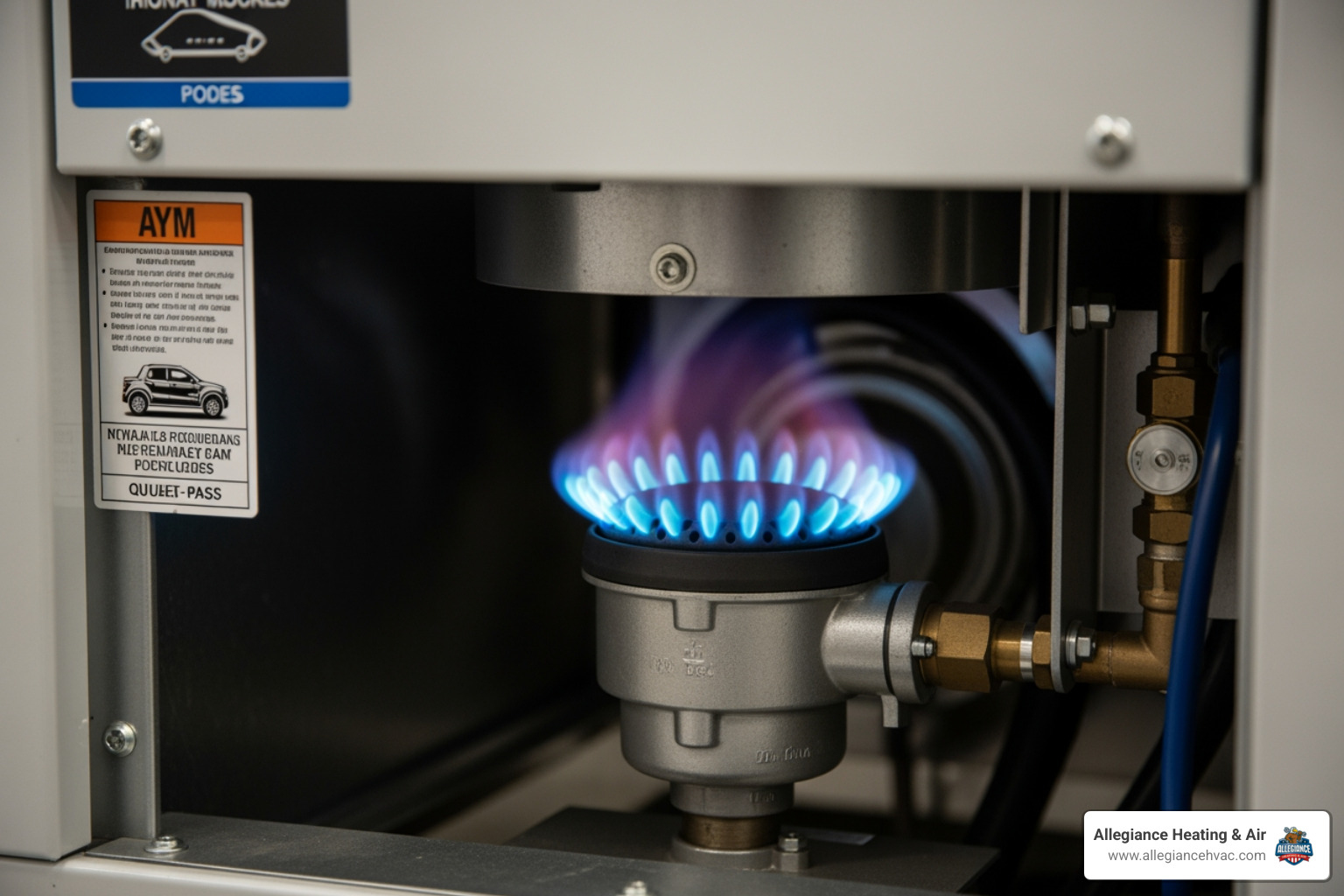

I'm looking to save on my HVAC upgrade. How do the federal tax credits for furnace and AC replacement work in Greenville?
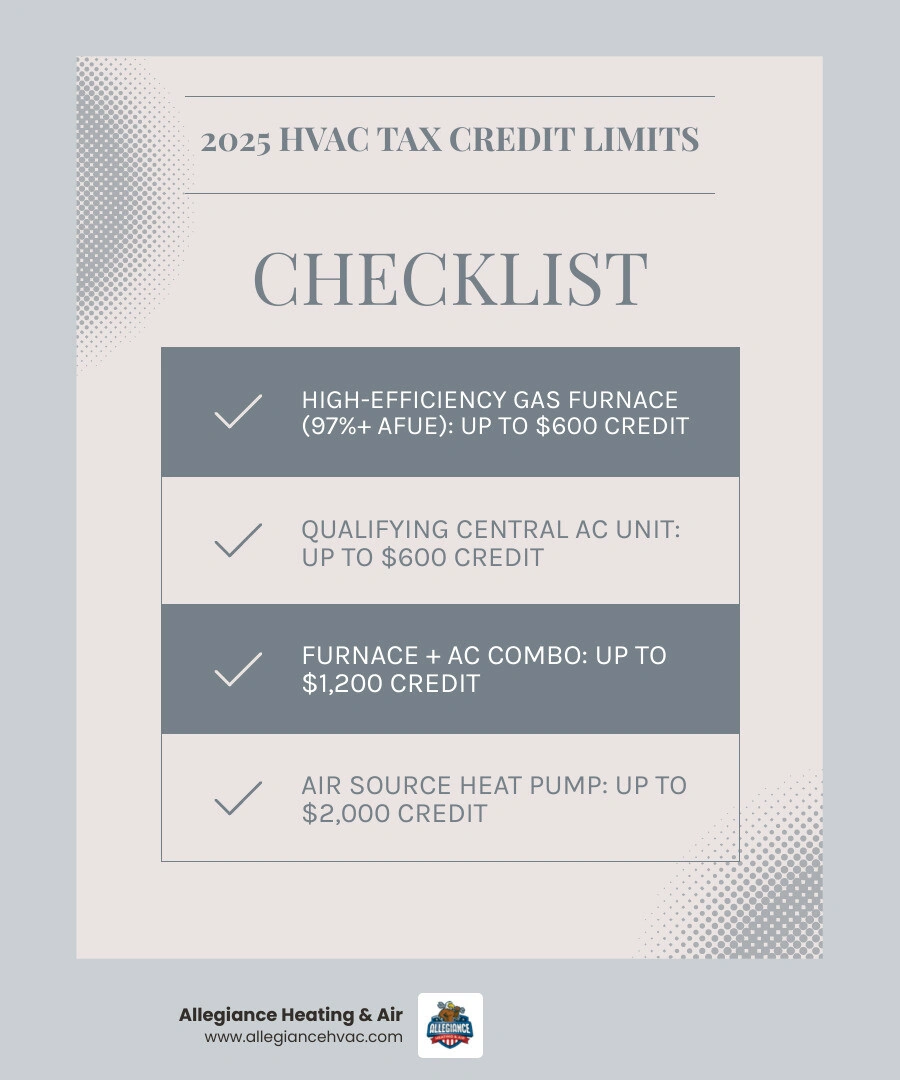
Federal tax credits for furnace and AC replacement let eligible homeowners claim up to 30% of qualifying installation costs back on their federal taxes — here's a quick breakdown:
• High-efficiency gas furnace (97%+ AFUE) — Max Tax Credit: Up to $600
• Qualifying central AC unit — Max Tax Credit: Up to $600
• Furnace + AC replaced together — Max Tax Credit: Up to $1,200
• Air source heat pump — Max Tax Credit: Up to $2,000
• All energy efficiency improvements combined — Max Tax Credit: Up to $3,200/year
These credits apply to installations completed on or before December 31, 2025 — and that deadline is firm. The 119th Congress budget bill cut short the original Inflation Reduction Act extension, which had been set to run through 2032. If you've installed qualifying equipment in 2025, there is still time to take advantage when you file your taxes.
Heating and cooling account for roughly 43% of the average homeowner's energy costs. In a place like Greenville, IN — where winters bite and summers push your AC hard — that's a real number on your monthly bill. A qualifying system replacement doesn't just lower your utility costs going forward. It can also put hundreds of dollars back in your pocket when you file your taxes.
The credits fall under Section 25C of the Internal Revenue Code, formally called the Energy Efficient Home Improvement Credit. They're non-refundable, meaning they reduce what you owe in taxes — but won't generate a refund beyond your actual tax liability. Still, for most homeowners replacing aging HVAC equipment, that's meaningful savings.
One important update: the IRS now requires a Qualified Manufacturer Identification Number (QMID) to be reported on your tax return for any qualifying furnace, AC, or heat pump installed. Without it, the credit won't be allowed — so keeping your documentation straight matters more than ever.
Understanding Federal Tax Credits for Furnace and AC Replacement in Louisville
When we talk about upgrading your home’s comfort, we know that the initial investment is often the biggest hurdle. Fortunately, the federal government provides a significant "discount" through the tax code. If you are looking into Furnace Replacement Services, you can claim a credit equal to 30% of the total installation cost, including labor, up to a maximum of $600 for a qualifying high-efficiency gas furnace.
The same 30% rule applies to your cooling system. A qualifying central air conditioner can also earn you a credit of up to $600. If you decide to tackle both at once—which is often the most efficient way to ensure your indoor air quality and comfort are balanced—you can combine these amounts. This means a qualified split system replacement could net you up to $1,200 in total credits.
For those of us living in the Kentuckiana area, whether you need HVAC Replacement Louisville KY or help in southern Indiana, these credits are designed to offset the cost of the highest-tier equipment. It’s important to note that the overall aggregate limit for energy efficiency tax credits in a single year is $3,200, but there is a specific $1,200 annual cap that applies to the combination of central ACs, furnaces, and home envelope improvements (like windows or insulation).
Residence Requirements for Federal Tax Credits for Furnace and AC Replacement
To claim these savings, your home must meet specific criteria. The good news is that unlike some other energy credits, the federal tax credits for furnace and AC replacement are relatively flexible regarding where the equipment is installed.
1. Primary Residence: Your main home, where you live most of the year, is always eligible. This home must be located in the United States and be an existing residence, not a new construction.
2. Second Homes: Interestingly, you can claim the credit for energy property like furnaces and central AC units installed in a second home or vacation home that you use as a residence. However, you cannot claim the credit for a property that you rent out and do not live in yourself.
3. Renters: If you are a renter and make these improvements to your primary residence (with the landlord's permission, of course), you may still be eligible to claim the credit.
Non-Refundable Nature of Energy Credits
We always want our customers to understand the financial mechanics of these incentives. This credit is non-refundable. This means it can reduce your federal tax liability (the amount you owe Uncle Sam) down to zero, but it will not result in a check being mailed to you for any "leftover" credit amount.
For example, if you owe $1,000 in taxes and qualify for a $1,200 credit, your tax bill drops to $0, but you don't get the remaining $200 back as a refund. Additionally, for the Energy Efficient Home Improvement Credit (25C), you cannot "carry forward" unused portions to the next tax year. This makes 2025 and 2026 critical years to plan your installation and match your expected tax liability.
What Efficiency Standards Must My New System Meet?
Not every unit at the warehouse qualifies for these savings. To protect the environment and your wallet, the government requires that the equipment meets high efficiency "tiers" established by the Consortium for Energy Efficiency (CEE).
When you are trying to Choose the Right AC for Replacement, looking for the ENERGY STAR label is a great start, but for the tax credit, you must hit the "Highest Efficiency Tier" (excluding the advanced tier). Understanding When to Repair vs Replace Your HVAC System often comes down to whether a new, qualifying system will save you enough in energy and taxes to justify the upgrade.
Specific Efficiency Standards for Federal Tax Credits for Furnace and AC Replacement
For current installations, the bar is set high to ensure maximum energy reduction:
• Gas Furnaces: Must achieve an Annual Fuel Utilization Efficiency (AFUE) of 97% or higher. This means 97 cents of every dollar you spend on gas goes directly into heating your home, with only 3% lost through the flue.
• Split System Central AC: These must meet SEER2 ≥ 17.0 and EER2 ≥ 12.0. SEER2 is the modern standard for measuring seasonal cooling efficiency, and these numbers represent a significant step up from older models.
• Packaged Central AC: These units must meet SEER2 ≥ 16.0 and EER2 ≥ 11.5.
The ENERGY STAR Most Efficient Requirement
A major shift occurring recently involves air source heat pumps. To qualify for the higher $2,000 credit, these units must now be recognized as ENERGY STAR Most Efficient. There are two pathways for this: one for "Cold Climate" (heating-dominated) and one for cooling-dominated or dual-fuel applications.
In areas like Greenville and Louisville, many homeowners are opting for dual-fuel systems—combining an electric heat pump with a gas furnace backup. This setup can often qualify for a combined credit of up to $2,600 if planned correctly, as it utilizes the $2,000 heat pump limit and the $600 furnace limit.
How Do I Claim the Credit on My Tax Return?
Claiming your credit isn't automatic; you have to ask for it when you file. You will use IRS Form 5695, specifically Part II, which deals with the Energy Efficient Home Improvement Credit. We recommend our neighbors in the HVAC Replacement Sellersburg IN area keep a dedicated folder for their HVAC project to make tax season a breeze.
The New Qualified Manufacturer Identification Number (QMID)
As of 2025, the IRS has introduced a new requirement to prevent fraud and ensure equipment truly qualifies. For every furnace, AC, or heat pump you install, you must report a Qualified Manufacturer Identification Number (QMID) or a specific PIN on your tax return.
For many manufacturers, this code (such as K3A8 for certain brands) is found on the manufacturer's certification statement. We make sure our customers have this information in hand before we leave the driveway, as the credit will be flat-out denied without this specific identifier.
Required Documentation for Audit Protection
While you don't necessarily have to mail in your receipts with your return, you absolutely must keep them for at least three years in case of an audit. Your documentation package should include:
• The Sales Receipt: Showing the date of purchase and the price paid.
• Manufacturer Certification Statement: A signed document from the manufacturer certifying the product meets the required efficiency tiers.
• AHRI Certificate: This proves that the specific combination of indoor and outdoor units you installed (the "matched system") hits the required SEER2 and AFUE ratings.
• Installation Invoice: This should clearly break down labor costs, as labor is included in the 30% calculation for furnaces and ACs.
Maximizing Your Benefits: Combining HVAC Upgrades
If you’re planning a major home overhaul, you can actually "stack" these credits to reach a total of $3,200 in a single year. This is a huge win for homeowners in the HVAC Replacement Clarksville IN area who want to maximize their ROI.
• Central AC — Individual Limit: $600 — Total Annual Cap: Part of $1,200 aggregate
• Gas Furnace — Individual Limit: $600 — Total Annual Cap: Part of $1,200 aggregate
• Insulation/Air Sealing — Individual Limit: $1,200 — Total Annual Cap: Part of $1,200 aggregate
• Home Energy Audit — Individual Limit: $150 — Total Annual Cap: Part of $1,200 aggregate
• Heat Pump / HP Water Heater — Individual Limit: $2,000 — Total Annual Cap: Separate $2,000 cap
• Combined Maximum — Individual Limit: -- — Total Annual Cap: $3,200
Stacking Federal Tax Credits with Indiana and Kentucky Energy Rebates
Tax credits are just one piece of the puzzle. Depending on your income level, you may also qualify for rebates through the High-Efficiency Electric Home Rebate Program (HEEHRA). These are state-administered and can provide thousands of dollars in "point-of-sale" discounts for heat pumps and electrical upgrades.
Furthermore, local utility companies in Louisville and southern Indiana often offer their own incentives for installing high-efficiency equipment. While federal law requires you to subtract any utility subsidies from your "qualified expenses" before calculating your 30% tax credit, you can still layer these benefits to significantly lower your out-of-pocket costs.
Strategic Multi-Year Planning for HVAC Upgrades
Because there is no "lifetime limit" on the 25C credit (only an annual limit), you can be strategic. For example, you might choose to focus on Air Conditioner Maintenance and Replacement and attic insulation this year (claiming $1,200), and then install a heat pump water heater next year (claiming another $2,000).
We often suggest starting with a Home Energy Audit. Not only does this qualify for a $150 credit, but it also identifies where your home is leaking air. Sealing those leaks first ensures that when you do install that new furnace, it doesn't have to work as hard, saving you even more money over the long term.
Frequently Asked Questions
Can I claim federal tax credits for furnace and ac replacement if I install them myself?
Technically, the IRS allows you to claim the credit for the cost of the equipment if you install it yourself. However, we strongly advise against this for several reasons. First, labor costs for "residential energy property" (like furnaces and ACs) are eligible for the credit, but only if you pay a professional to do the work—you cannot claim a credit for the value of your own labor.
Second, to qualify for the credit, the system must meet strict SEER2 and AFUE standards. If a system is not installed and "charged" correctly by a licensed technician, it may never actually achieve the efficiency ratings listed on the box, which could jeopardize your eligibility and the lifespan of the equipment.
What is the deadline for installing qualifying equipment to receive these tax credits?
The current deadline for installation is December 31, 2025. While the Inflation Reduction Act originally intended for these credits to last through 2032, recent legislative changes by the 119th Congress have accelerated the expiration. To ensure you receive the credit, the equipment must be "placed in service" (fully installed and operational) by the end of the 2025 calendar year to be claimed on your upcoming tax return.
Can I claim the credit for a furnace in my vacation home?
Yes! You can claim the federal tax credits for furnace and AC replacement for equipment installed in a second home or vacation home, provided you use it as a residence. However, you cannot claim the $150 credit for a home energy audit or credits for "building envelope" improvements (like windows and doors) for any home other than your primary residence.
Conclusion
Navigating federal tax incentives can feel like a full-time job, but it’s a job that pays well! By choosing high-efficiency systems, you aren't just doing something good for the planet; you're making a smart financial move for your family's future.
At Allegiance Heating & Air, we’ve been "Taking Home Comfort Under Our Wing" since 2005. As a family-owned business serving Greenville, IN, and the surrounding Louisville area, we take pride in helping our neighbors maximize their savings. Our technicians are experts in the latest SEER2 and AFUE standards, and we’ll make sure you have every piece of documentation you need to claim your credits with confidence.
Don't wait until the deadline is staring you in the face. Schedule your high-efficiency heat pump consultation today and let us help you build a more comfortable, affordable home.
Contact Us Or Schedule Expert Service
Other Blogs
ready to transform your home?
Discover our exceptional home services tailored to meet your needs and enhance your living space.
WHAT OUR CLIENTS HAVE TO SAY ABOUT US

We had a complete HVAC system and a hot water heater installed. The guys were professional, well mannered, and completed the work in a timely manner. Would definitely use them again.
I was nervous at first because my AC broke in the middle of 80 degree weather which is strange for April, but Allegiance Heating and Air was incredibly prompt and professional. The technician arrived within an hour, explained the problem clearly, and completed the repair. The technician , Mr. Garrett Moon was a very nice and courteous young man. He found the problem and fixed it within a timely manner. I highly recommend them for any heating or cooling needs. I’ll definitely give them a call again should I ever have another issue, but hopefully not. Knock on wood 😁. Give them a call… you won’t be disappointed!
From the moment I called to schedule a service, the team was quick to respond and arrived right on time. The technician was professional, friendly, and clearly knowledgeable about my heating system. He explained the repair options in plain language and completed the job efficiently. I appreciated the reliable service and the fact that the work was done the same day. I would definitely recommend Allegiance Heating and Air for any residential HVAC needs.
5/5 stars – I was very impressed with the efficient, affordable and timely service from Allegiance Heating and Air. The technician arrived on time, and performed the service quickly, no repairs needed at this time. Communication was clear and the whole experience felt hassle‑free. I would definitely recommend them for any residential HVAC needs.
Knowledgeable, experienced individual.
Explains Allegiance Heating and Air was incredibly reliable, professional and affordable. They arrived right on time, kept the work area clean and finished the furnace repair quickly. The technician explained everything clearly and the price was a great value. If happiness had a location on Google Maps, it would be here.
Gilbert had to go above and beyond because York is no longer making the part for my furnace. But he was able to find a way to construct a housing bracket for my furnace. Ingenuity, determination and integrity is what finally got my furnace fixed. Gilbert is truly a one of a kind technician.
Thank you for always going the extra mile. Gilbert is always respectful and helpful with any concerns.
"Great service, most knowledgeable and capable HVAC business in Kentuckiana!! Pete Flemming and Bryan the owner, are HVAC encyclopedias. They have the highest integrity of any HVAC business I have ever used. Allegiance has put numerous units in for me over the last 17 years. I will continue to use and trust them."
"Fast response from Allegiance when our heat was out on New Year’s day! Service technician was friendly and efficient. He took the time to explain the problem, tell us about the temporary fix and the plan for permanent repair. We were impressed!"
"Love Allegiance! Their technicians, in particular Benjamin, explain everything. Fast and thorough. A/C was out on a Sunday. Called Allegiance and within a few hours Benjamin arrived. Such a comfort as he was the one who last serviced our units. He quickly replaced part and cooling is restored!"
"My heat pump went out and I had to call after hours. The technician (Garrett) was outstanding and thorough. He got my system up and working until Monday and gave me several options of units. Also took the time to explain the issue to my Home warranty company. I highly recommend this company."
"Right on time :) respectful, fast, and polite. Even gave my fur babies some attention."
"Had Garrett out today to fix our AC. Fantastic tech. He showed up exactly when he said he would and kept us informed of what he was checking and what he found. Highly recommend!"
"Lucas with Allegiance showed up on time as promised, was professional and extremely patient and responsive with all my questions. He took care of the issue, and I feel he was trustworthy! He had us back to cool and comfortable on one of the hottest days of the year."
"Lucas did a great job! Very professional and expedient. Explained the process very well and represented Allegiance as a truly professional and reputable company."
"Arrived on time and work diligently to fix issue. These guy are great. Worked quickly to resolve my issues."
"Lucas was great - he spent a lot of time trying to figure out what was going on and explained everything he was doing. I trust Allegiance and wouldn’t want anyone else working on/in my house!!"

RELATED ARTICLES
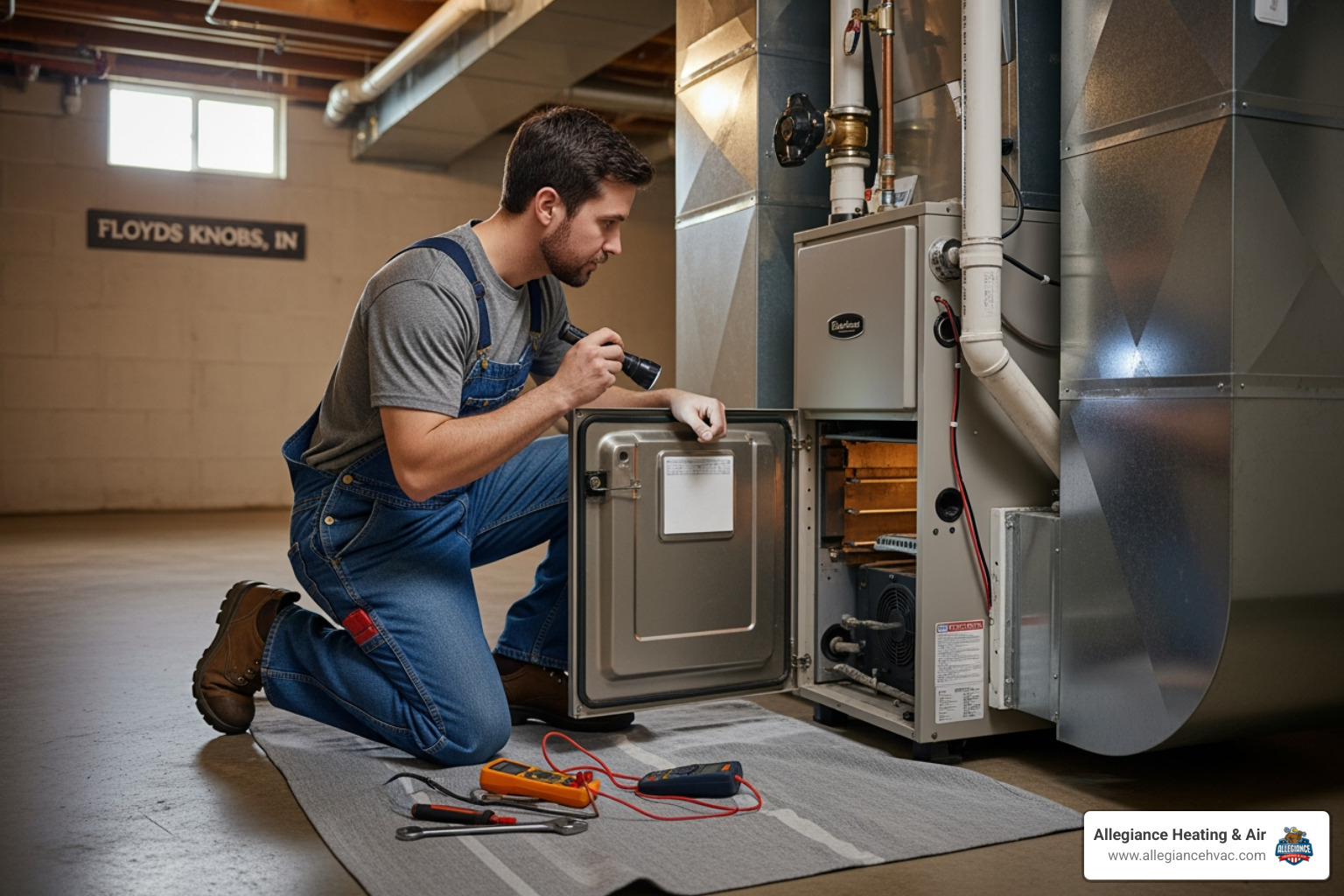
Professional Furnace Care: Why Floyds Knobs Trusts Our Experts

Why Regular Maintenance for Your AC in Jeffersonville Matters