


Why Knowing the Signs Your AC Needs Repair Before Summer Can Save You from a Breakdown
Knowing the signs your AC needs repair before summer could be the difference between a comfortable July and an emergency service call during the hottest week of the year. Most AC systems don't fail without warning — they give you clues weeks in advance. The problem is that most homeowners in Greenville, IN don't know what to look for until it's too late.
Here are the most common signs your AC needs attention before summer arrives:
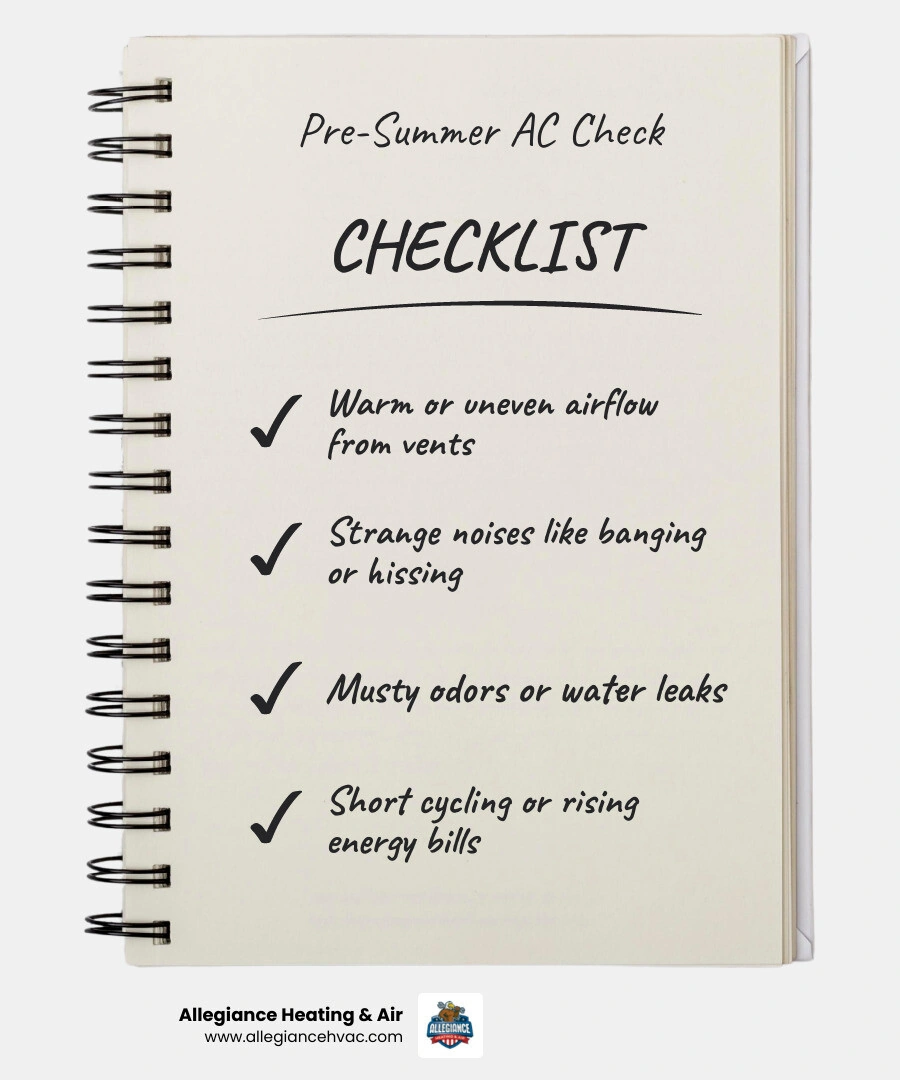
- Warm or uneven airflow from vents when cooling is running
- Strange noises such as banging, hissing, or screeching during operation
- Musty or burning odors coming from vents
- Water pooling or ice buildup around the indoor or outdoor unit
- Short cycling — the system turns on and off more frequently than normal
- Rising energy bills without any change in how you use your AC
- High indoor humidity even when the system is running
- Thermostat not responding accurately to your settings
If you notice one or more of these warning signs right now, the smart move is to schedule a professional inspection before summer demand peaks and wait times stretch out.
Most air conditioners will show weeks of declining performance before they fail completely. A unit that struggled through last August or made an odd sound when you first tested it this spring is already telling you something. Catching these issues in late spring — before the first real heat wave rolls into southern Indiana — means faster service, lower repair costs, and a system that's actually ready when you need it most.
Red Flags and Signs Your AC Needs Repair Before Summer
When you turn on your air conditioner for the first time after a long winter, you should pay close attention to how it behaves. The transition from cold weather to warm spring days is a prime time for dormant issues to make themselves known. Electrical components, mechanical parts, and refrigerant lines have been sitting idle for months, exposed to temperature swings and moisture.
If your air conditioner is struggling, it will wave several red flags. Some of these are loud and obvious, while others require you to pay a little closer attention to your home's overall environment. Understanding the Top Signs HVAC System Needs Service can help you protect your investment and avoid a sudden system failure.
To help you perform a quick check, we have compiled a comprehensive Guide to Air Conditioner Repair that details how a typical central cooling system functions and when its primary components begin to fail. By training your senses to look for airflow changes, odd noises, and unusual odors, you can catch minor issues before they escalate into major headaches.
Subtle Signs Your AC Needs Repair Before Summer in Indiana
Not all air conditioning problems present themselves with a dramatic breakdown. In fact, some of the most common signs your AC needs repair before summer are incredibly subtle. They creep up slowly, causing your comfort to degrade and your energy consumption to rise.
First among these is uneven cooling. If you walk from your living room into a back bedroom and notice a significant temperature difference, your system is struggling. While this can sometimes be attributed to poor damper settings or closed registers, it often points to ductwork issues or a blower motor that is losing its strength. When your AC Isn't Cooling Evenly, it has to work twice as hard to satisfy the thermostat, leading to accelerated wear on the compressor.
Another subtle indicator is indoor humidity. Your air conditioner's job isn't just to lower the temperature; it is also designed to act as a dehumidifier. In humid weather, a standard system can pull anywhere from 20 to 50 gallons of condensate water out of your indoor air every single day. If your home feels sticky, clammy, or smells slightly damp even when the AC is running, your system is failing to regulate moisture levels. Properly Preparing Your AC for a Humid Indiana Summer ensures that your evaporator coil can handle the heavy moisture load heading our way.
Finally, keep an eye on your utility bills. A typical American home’s central air unit uses about 2,500 kilowatt-hours each year. While some fluctuation is normal as seasonal temperatures rise, a sudden, unexplained spike in your energy bill is a clear warning sign. If your electricity bills are climbing compared to the same month last year, but your household habits haven't changed, your AC is likely running inefficiently due to dirty coils, failing capacitors, or restricted airflow.
Mechanical Signs Your AC Needs Repair Before Summer Heat Waves
As we head deeper into the year, mechanical issues will transition from minor annoyances to complete system failures. When the outdoor temperatures rise, the pressure inside your cooling system increases, putting intense strain on mechanical parts.
If your vents are blowing lukewarm or flat-out warm air, you have a mechanical issue that must be addressed immediately. There are several reasons Why AC Is Blowing Warm Air, ranging from a simple thermostat miscalibration to a failing compressor or a severe refrigerant leak. Because refrigerant handling is strictly regulated, diagnosing and fixing a leak is not a DIY project; it requires a certified professional to locate the leak, repair the line, and recharge the system.
Short cycling is another mechanical red flag. This occurs when your air conditioner turns on, runs for a couple of minutes, shuts off, and then repeats the process over and over. This rapid cycling prevents the system from completing a full, efficient cooling run. It places immense strain on the compressor and fan motors, drastically shortening their lifespans.
Lastly, look out for water leaks around your indoor unit. While condensation is normal, that water is supposed to drain safely outside through a dedicated condensate line. If you notice water pooling around your indoor furnace or air handler, you likely have a clogged drain line or a frozen evaporator coil. Ignoring this can lead to severe water damage, structural rot, and mold growth in your utility spaces. If you spot active water pooling or suspect a refrigerant leak, look for the Signs You Need Emergency AC Repair to protect your home from costly structural damage.
Distinguishing Minor Maintenance from Serious AC Problems
As a homeowner, it can be tough to know when you can handle an issue yourself and when you need to pick up the phone to call in the professionals. Some AC issues are incredibly simple to resolve, while others involve high-voltage electricity, complex refrigeration chemistry, and expensive components.
Simple tasks like changing your system's air filter should be done every 30 to 90 days. A clogged filter restricts airflow, which is the root cause of many common AC issues, including weak airflow and frozen coils. Similarly, keeping your outdoor condenser unit clear of grass clippings, weeds, and fallen leaves is a basic chore that helps your system breathe.
However, once you move past filters and basic cleaning, you enter the realm of professional diagnostics. Attempting to service electrical contactors, replace capacitors, or handle refrigerant lines without the proper tools and training is highly dangerous. Knowing which AC Problems That Require Expert Repair will save you from accidentally turning a minor repair into an expensive system replacement. For instance, understanding the Common Causes AC Compressor Failure can help you spot early electrical or mechanical issues before they destroy the most expensive component in your outdoor unit.
To help you quickly determine your next steps, review this comparison table:
| DIY Maintenance Tasks (Safe for Homeowners) | Professional HVAC Repairs (Requires a Licensed Technician) |
|---|---|
| Replacing standard 1-inch air filters every 30-90 days | Testing and recharging refrigerant levels |
| Clearing weeds, leaves, and debris from around the outdoor unit | Replacing failed start/run capacitors or contactors |
| Gently rinsing the outdoor condenser coils with a garden hose | Repairing electrical wiring and control boards |
| Ensuring all indoor supply and return vents are open and unblocked | Replacing a failed blower motor or outdoor fan motor |
| Flushing the condensate drain line with diluted white vinegar | Diagnosing and replacing a failing or locked compressor |
| Replacing batteries in your digital thermostat | Repairing or sealing leaky, damaged ductwork |
The Risks of Ignoring Early Warning Signs
It is incredibly tempting to ignore a faint squealing sound or a slightly elevated energy bill, especially when life gets busy. However, air conditioners are closed, highly pressurized systems. A minor issue with one component will quickly cascade, causing damage to other parts of the system.

Take a neglected air filter or minor duct leak, for example. According to ENERGY STAR, about 20% to 30% of the air moving through typical home ducts is lost through leaks, holes, and poor connections. When you combine leaky ducts with a dirty filter, your system has to run significantly longer to cool your home. This extra run time causes the evaporator coil to drop below freezing temperatures, leading to ice buildup.
Once your coil freezes, it blocks all airflow, forcing the compressor to work under extreme pressure. This is one of the primary Reasons Your AC Fails in the Heat. What could have been a simple filter replacement or duct sealing service can quickly turn into a catastrophic compressor failure.
Furthermore, ignoring system issues can severely impact your indoor air quality and overall home safety. When an AC system fails to dehumidify your home properly, relative humidity levels can climb far past the ideal 30% to 50% range. High humidity creates a breeding ground for mold and mildew inside your ductwork and around your indoor air handler. To learn more about how moisture levels impact your home environment, read our guide on How Humidity Affects Your HVAC and Comfort.
Frequently Asked Questions About Pre-Summer AC Repairs
We understand that HVAC systems can seem mysterious. To help you troubleshoot, we have gathered some of the most common questions our customers ask when preparing their systems for the summer heat.
Why is my AC blowing warm air when I first turn it on?
If your system blows warm air for the first 30 to 60 seconds of a cycle, this is generally normal—it is simply clearing the warm air out of the ductwork in your attic or crawlspace. However, if it continues to blow warm air after several minutes, you have a problem.
First, check your thermostat settings. Ensure it is set to "Cool" and the fan setting is on "Auto," not "On." If the fan is set to "On," it will blow air continuously even when the cooling compressor is turned off. If your settings are correct, you may be dealing with a tripped outdoor circuit breaker, dirty coils, low refrigerant, or a failing compressor. For a deeper look into this issue, check out our troubleshooting tips on why your AC Might Be Blowing Warm Air.
What causes my air conditioner to cycle on and off frequently?
This issue is known as short cycling. It is highly inefficient and incredibly damaging to your system's electrical components. Common causes include:
- A dirty air filter: Restricts airflow, causing the system to overheat and shut down as a safety precaution.
- Thermostat placement: If your thermostat is located near a drafty window, exterior door, or direct sunlight, it will read temperatures inaccurately and cycle the system constantly.
- An oversized AC unit: A system that is too large for your home will cool the air too quickly without removing humidity, leading to rapid cycling.
- Low refrigerant: Causes pressure fluctuations that trigger safety switches to shut the system down.
If you are experiencing these symptoms, read our detailed guide on why your AC Cycles On and Off Frequently to find out how to stop this wear-and-tear cycle.
When should I call for emergency AC repair?
While a system that won't cool is frustrating, some situations pose immediate risks to your safety and property. You should shut off your system at the breaker and call for immediate service if you notice:
- A burning odor: Indicates electrical wiring insulation is melting or an HVAC motor is overheating.
- Screeching or clanking noises: Suggests a loose blower wheel or broken fan blade that could cause severe internal damage if left running.
- Active water flooding: Can quickly ruin drywall, flooring, and ceilings.
- Hissing sounds: Often indicates a high-pressure refrigerant leak.
Knowing When to Call HVAC Emergency Repair protects your family and keeps a bad situation from turning into a disaster.
Conclusion
Taking care of your air conditioning system before the summer heat settles in is the best way to ensure reliable, energy-efficient comfort all season long. By recognizing the signs your AC needs repair before summer, you can schedule service on your own terms rather than waiting for an emergency breakdown during a heat wave.
At Allegiance Heating & Air, LLC, we have been "Taking Home Comfort Under Our Wing" since 2005. As a family-owned business based in Greenville, IN, we are proud to serve our neighbors across southern Indiana and the greater Louisville area—including communities like Floyds Knobs, Clarksville, New Albany, Jeffersonville, and Georgetown. Our licensed and insured technicians are committed to providing honest, transparent, and professional service that keeps your home comfortable year-round.
Before you turn your thermostat down for the summer, take a moment to review our Summer AC Maintenance Checklist for Homeowners. If you noticed any of the warning signs we discussed today, don't wait for your system to fail. Schedule your professional air conditioning service today and step into the summer months with complete peace of mind.
Contact Us Or Schedule Expert Service
Other Blogs
ready to transform your home?
Discover our exceptional home services tailored to meet your needs and enhance your living space.
WHAT OUR CLIENTS HAVE TO SAY ABOUT US

We had a complete HVAC system and a hot water heater installed. The guys were professional, well mannered, and completed the work in a timely manner. Would definitely use them again.
I was nervous at first because my AC broke in the middle of 80 degree weather which is strange for April, but Allegiance Heating and Air was incredibly prompt and professional. The technician arrived within an hour, explained the problem clearly, and completed the repair. The technician , Mr. Garrett Moon was a very nice and courteous young man. He found the problem and fixed it within a timely manner. I highly recommend them for any heating or cooling needs. I’ll definitely give them a call again should I ever have another issue, but hopefully not. Knock on wood 😁. Give them a call… you won’t be disappointed!
From the moment I called to schedule a service, the team was quick to respond and arrived right on time. The technician was professional, friendly, and clearly knowledgeable about my heating system. He explained the repair options in plain language and completed the job efficiently. I appreciated the reliable service and the fact that the work was done the same day. I would definitely recommend Allegiance Heating and Air for any residential HVAC needs.
5/5 stars – I was very impressed with the efficient, affordable and timely service from Allegiance Heating and Air. The technician arrived on time, and performed the service quickly, no repairs needed at this time. Communication was clear and the whole experience felt hassle‑free. I would definitely recommend them for any residential HVAC needs.
Knowledgeable, experienced individual.
Explains Allegiance Heating and Air was incredibly reliable, professional and affordable. They arrived right on time, kept the work area clean and finished the furnace repair quickly. The technician explained everything clearly and the price was a great value. If happiness had a location on Google Maps, it would be here.
Gilbert had to go above and beyond because York is no longer making the part for my furnace. But he was able to find a way to construct a housing bracket for my furnace. Ingenuity, determination and integrity is what finally got my furnace fixed. Gilbert is truly a one of a kind technician.
Thank you for always going the extra mile. Gilbert is always respectful and helpful with any concerns.
"Great service, most knowledgeable and capable HVAC business in Kentuckiana!! Pete Flemming and Bryan the owner, are HVAC encyclopedias. They have the highest integrity of any HVAC business I have ever used. Allegiance has put numerous units in for me over the last 17 years. I will continue to use and trust them."
"Fast response from Allegiance when our heat was out on New Year’s day! Service technician was friendly and efficient. He took the time to explain the problem, tell us about the temporary fix and the plan for permanent repair. We were impressed!"
"Love Allegiance! Their technicians, in particular Benjamin, explain everything. Fast and thorough. A/C was out on a Sunday. Called Allegiance and within a few hours Benjamin arrived. Such a comfort as he was the one who last serviced our units. He quickly replaced part and cooling is restored!"
"My heat pump went out and I had to call after hours. The technician (Garrett) was outstanding and thorough. He got my system up and working until Monday and gave me several options of units. Also took the time to explain the issue to my Home warranty company. I highly recommend this company."
"Right on time :) respectful, fast, and polite. Even gave my fur babies some attention."
"Had Garrett out today to fix our AC. Fantastic tech. He showed up exactly when he said he would and kept us informed of what he was checking and what he found. Highly recommend!"
"Lucas with Allegiance showed up on time as promised, was professional and extremely patient and responsive with all my questions. He took care of the issue, and I feel he was trustworthy! He had us back to cool and comfortable on one of the hottest days of the year."
"Lucas did a great job! Very professional and expedient. Explained the process very well and represented Allegiance as a truly professional and reputable company."
"Arrived on time and work diligently to fix issue. These guy are great. Worked quickly to resolve my issues."
"Lucas was great - he spent a lot of time trying to figure out what was going on and explained everything he was doing. I trust Allegiance and wouldn’t want anyone else working on/in my house!!"

RELATED ARTICLES
Greenville's Commercial Comfort: Top Furnace Repair for Businesses
5 Small Low Refrigerant Signs Changes That Have Big Results
